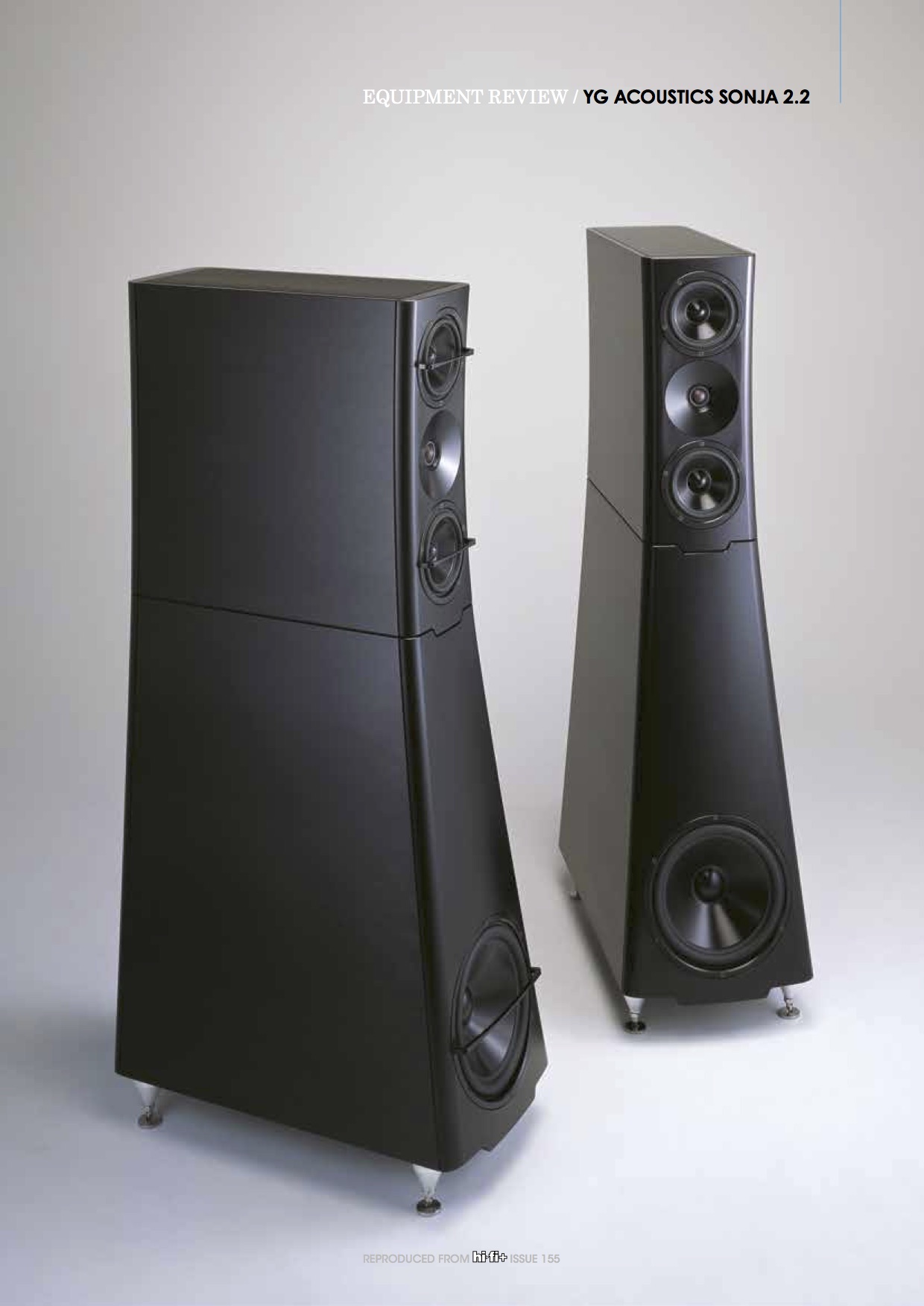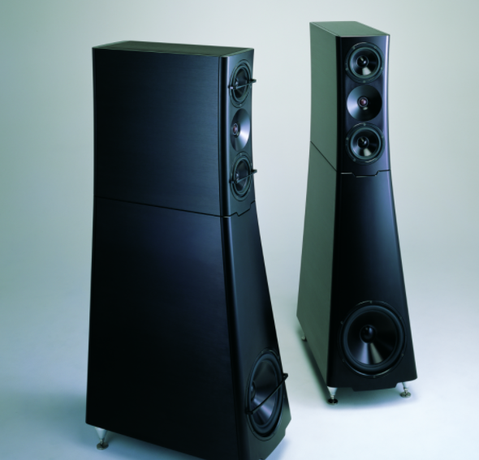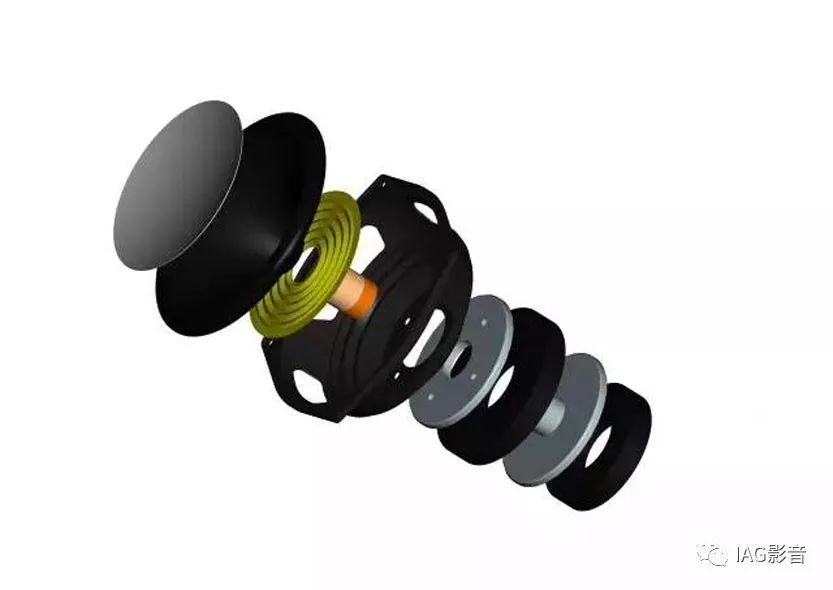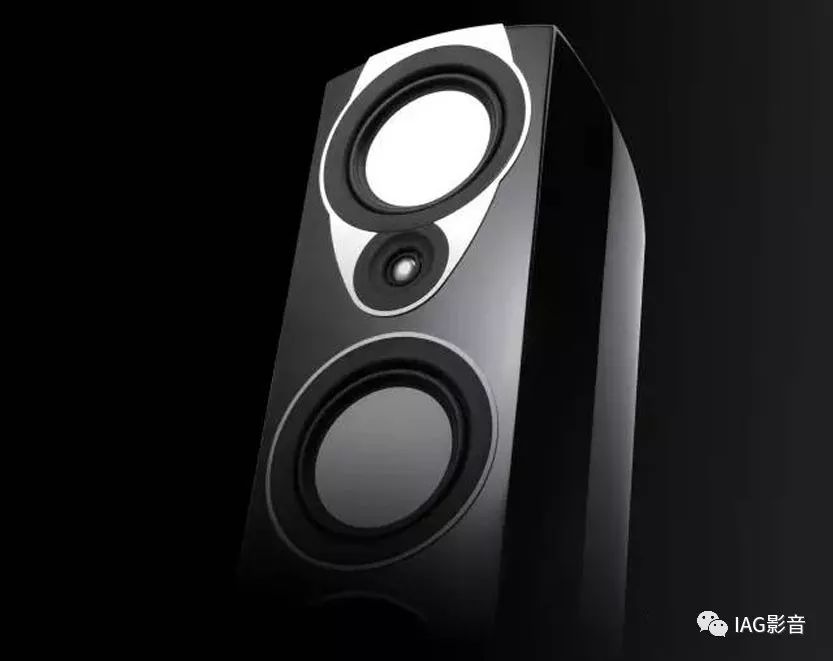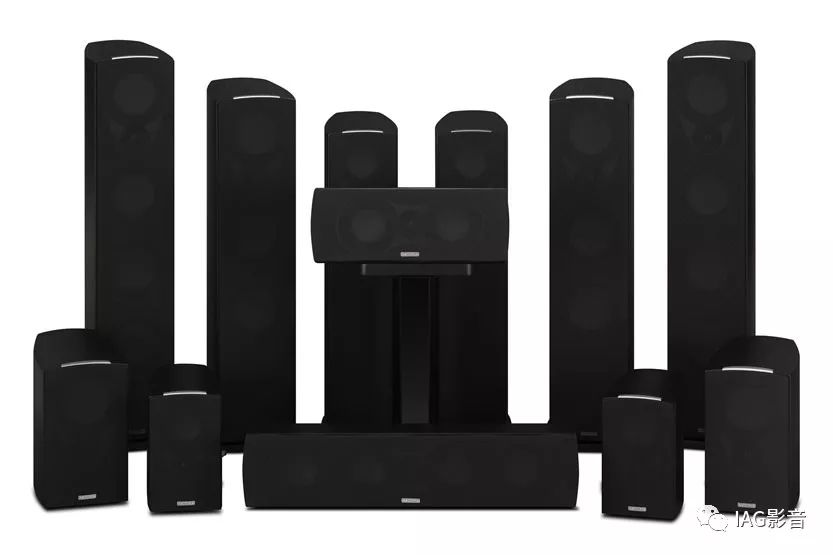


YG Acoustics Sonja 2.2 Loudspeaker – Serving the Music

Rarely does a high-end manufacturer make a new product available for review well in advance of its official release. Usually a new product is announced at an audio show like Munich High End, and its market delivery is targeted for several months after the announcement. Yoav Geva, principal designer at YG Acoustics, was way ahead of schedule in the case of the Sonja 2.2. He and his manufacturing team were able to make an advanced production pair available exclusively to TAS several months before the speaker’s official release, scheduled—as of this writing—for sometime in December, 2017, most likely at special showings hosted by YG and Bill Parish at GTT Audio.

I reviewed the original Sonja 1.2 in Issue 256. As good as that speaker still is, the new 2.2 is better in some significant ways. I will cover the engineering changes that are responsible for the increased performance later—such as a brand-new kind of dome tweeter—but let me summarize the primary sonic improvements as follows: higher resolution of fine detail coupled with an increase in overall “ease,” a bit more bass heft, better definition of complex musical lines during demanding musical passages, and an expanded and more continuously rendered soundstage such that the speakers blend into the soundscape even more seamlessly than before. I didn’t believe such improvements were possible to the extent YG has wrought, given the 1.2’s already outstanding performance, but the company has indeed done just that. The Sonja 2.2 is worthy of serious consideration for anyone in the market at its $76,800 price level—and even higher, for that matter.

This price segment of the market has been filling up with more products for some time now, and the upper end pricing is rising even further. $500k+ speakers and $150k+ turntables are now well within price frontiers, just like $5 million Manhattan condos and $100k automobiles are not considered unusual anymore. I don’t condone it, nor do I play at that those price levels, personally. I am merely characterizing what seems to be trend in the broader “luxury” market. Having said that, I do not believe the 2.2’s $76,800 price is unduly elevated simply because others are doing it. YG designs and manufactures high-quality speakers in the U.S. where labor and other costs are higher than, say, Asia, and it makes the vast majority of its products’ constituent parts at its factory just outside of Denver, Colorado. Driver membranes, cabinets, toroidal inductors, internal braces, joiners, and even custom binding posts are all manufactured in-house. YG uses high-grade raw materials for the parts it manufactures and top-quality parts from vendors such as Mundorf (capacitors and inductors) for the components it must source from others, all of which increase costs.

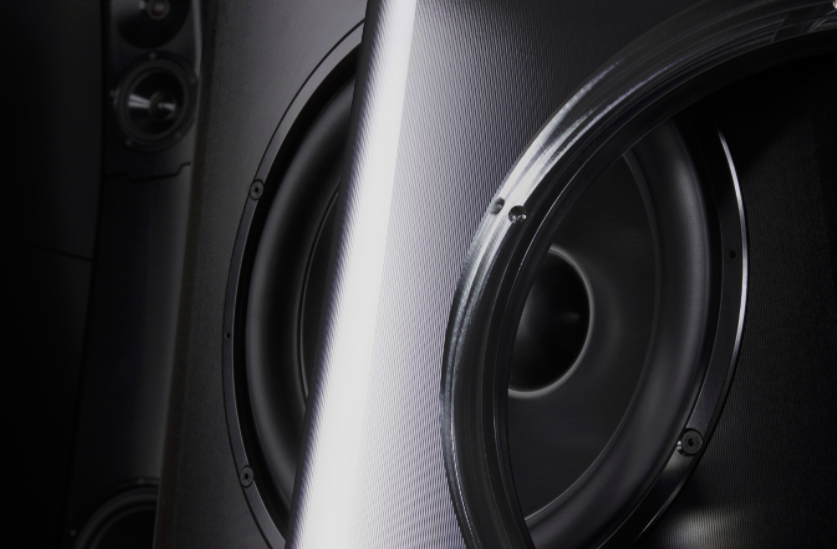
What are some of the other costs? YG machines the vast majority of its speakers from aircraft grade (6061-T651) aluminum billet—to a 20-micron (0.0008″) tolerance in some applications. Many of the billets are large and heavy, so raw material stock and shipping costs are high. The various milling and turning machines needed to meet YG’s capacity and exacting demands are expensive, over $2 million combined thus far. The costs of the skilled labor to program and maintain the CNC (computer numeric control) machines and the consumables (tool heads, bits, etc.) are considerable. YG machines driver cones from solid aluminum blocks, which it calls “BilletCore.” Each BilletCore radially- and concentrically-ribbed driver cone takes about four hours to mill on a five-axis CNC milling and turning machine imported from Germany, a Gildemeister CTX Beta 1250 TC.

Background Technology 
YG’s principal defining technological difference lies in its crossovers and how they are implemented in a very tightly controlled interplay among the drivers and other parts of the finished loudspeaker. Yoav Geva founded YG Acoustics based on this unique—as far as I know—crossover technology, which YG claims comes closer to a sort of ideal in multi-driver loudspeaker design than most others, simultaneously achieving near-zero relative phase and near-flat frequency response. Apparently, either frequency response or phase angle performance is usually sacrificed for the other in most other designs. Geva’s “DualCoherent” crossover—based on an algorithm he developed from signal processing in a completely different application—serves as the basis from which the rest of YG’s engineering follows. In order for the crossover to work as intended, though, a very high level of precision in all aspects of the design is required; hence, YG’s emphasis on high-quality parts and attention to every detail in its engineering and manufacturing. It is also why YG uses so much machined aluminum. It has good strength-to-weight ratio, relatively high resistance to corrosion and high temperature, the ability to be made into a wide variety of custom shapes to precise tolerances, and ideal resonance-damping properties when properly constructed. (For more information about the company, please see the YG Acoustics section in The Absolute Sound’s Illustrated History of High-End Audio, Volume One: Loudspeakers or read past YG reviews in TAS.)

Product Description
The only obvious visual difference between the Sonja 1 and 2 versions is in the rear panel binding post arrangement. Otherwise, the dimensions are the same, as are the number and sizes of the drivers and the configuration of the cabinet modules. For readers who are not familiar with the Sonja, the next two paragraphs are an edited description taken from my Sonja 1.2 review, updated to show the current Sonja 2.2 particulars and some additional details. (Readers who are already familiar with the speaker may want to skip the next two paragraphs.)

The Sonja 2.2 is a two-module design (main unit and bass unit) and is now available only as a fully passive system; the former powered bass module option is no longer offered. Consumers may opt for the Sonja 2.3, which adds a different bass module, bringing the price from $76,800 to $112,800. The three-module configuration increases the height from 51″ to 70″ and the weight from 271 to 481 pounds. The main, upper module houses two 6″ aluminum BilletCore mid-woofers (unchanged), and a brand-new 1″ waveguide-mounted “BilletDome” silk and airframe dome tweeter in a D’Appolito (MTM) arrangement. (I will cover more on this groundbreaking, patent-pending tweeter below.) The crossover point remains at 65Hz between the bass module and main module and at 1.75kHz between the mid/bass drivers and the tweeter. The two-way, 124-pound main, upper module (known as Sonja 2.1) can be purchased separately as a stand-mounted monitor (for $40,800) to which the bass module can be added later to form the three-way Sonja 2.2 system reviewed here. The 2.2 bass module has one BilletCore 10.25″ driver, which is positioned fairly low in its gently curved, tapered cabinet. YG found that this location maximized consistent bass performance through the driver’s proximity to the floor, in addition to minimizing cabinet resonances.

Each module has an inner cabinet, which is mounted inside an outer cabinet. They are not merely double-layered as such. Each box has its own joints and can function as a stand-alone cabinet. This extra manufacturing complexity must surely add significantly to the overall cost, but YG says it makes each complete cabinet much more rigid and better damped than either an equivalently thick single-layered or a shared-joint, double-layered enclosure. Sonja 2, Sonja XV Jr., and XV (YG’s $265,900 four-tower flagship) are the only models in the line with this cabinet-in-cabinet construction. The new BilletDome tweeter is also currently only available in Sonja models. YG does not use any batting or other soft materials inside its cabinets to dampen the drivers’ backwaves. YG says such materials cause mechanical loss and degrade performance. All internal damping is handled by precise placement of braces and by an unspecified material in a proprietary method of pinpoint resonance control that YG calls FocusedElimination. Incidentally, the other speaker with which I am familiar that also does not contain soft internal damping material (or only a bare minimum of it), like those from Arabesque and Gamut, share a dynamic vibrancy with YG speakers.

New Version 
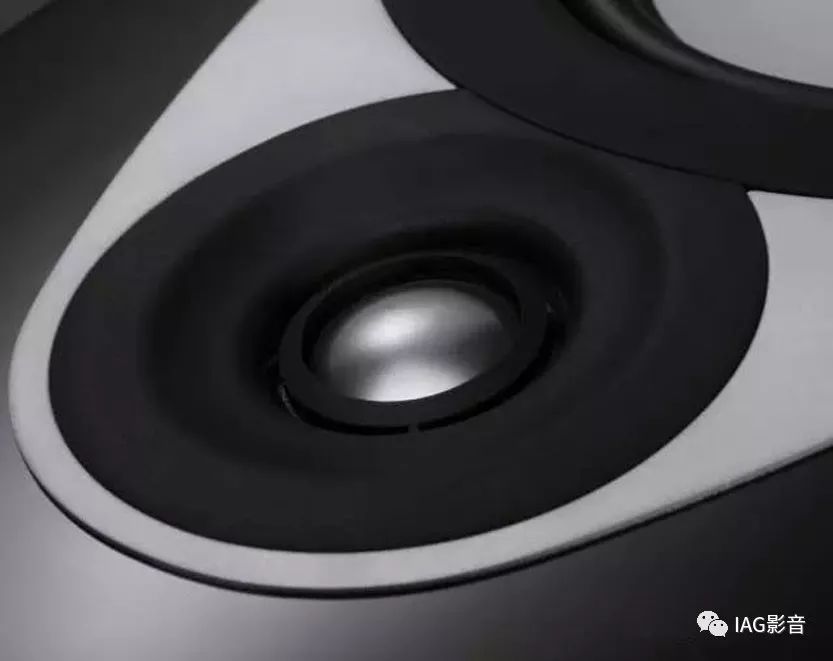
The new Sonja 2.2 has three main changes (and one minor one) over the previous 1.2. First, and most significantly, all Sonja 2 models have a new kind of tweeter. Geva has merged a soft-dome membrane with a supporting lightweight, rigid, acoustically transparent frame made from—you guessed it—precision-machined aluminum billet. YG’s new BilletDome soft-dome/frame tweeter actually represents a technical breakthrough in tweeter design for which the company is applying for a patent. Soft domes can sound very good, but they are simply not stiff enough to withstand the acceleration forces exerted on them while playing at higher frequencies and at higher amplitudes without deforming, resulting in distortion. Many metal-dome tweeters (regular or inverted) can also sound quite good and are generally stronger and more uniformly pistonic in their motion, but they are also known for “ringing” at high frequencies, thus creating unwanted resonances and a different sort of distortion. Even if the ringing can be shown to be above the limits of human hearing, many listeners can still discern a harshness in some speakers with metal tweeters, especially during demanding music passages. These are basic generalities, of course. I am leaving out other tweeter types, such as ribbons, electrostats, and magnetostats because I am simply not qualified to discuss them. (Ceramic and diamond-coated domes also have their pros and cons, but, again, I am not qualified to speak to them.) After nearly two years of R&D, Geva successfully bonded a high-quality silk dome membrane over a strong and very lightweight (30 milligrams) “airframe.” This apparently makes the resulting tweeter stronger than the strongest all-metal tweeter but without a metallic ringing quality. YG has done acceleration tests (based on pressure measurements) of titanium and beryllium tweeters and can demonstrate that its BilletDome tweeter withstands about twice as many G-forces as a titanium tweeter and about 38% more than a beryllium one. The airframe is shaped to be acoustically transparent, very strong, and light enough so the that combined moving mass of the soft dome and its airframe are roughly equivalent to that of a metal dome. I will say, I have heard some great-sounding speakers with treated metal dome tweeters such as the upper-level Focal models—and I tend to be agnostic about specific materials in general—but the YG BilletDome tweeter sounds fabulous in the Sonja 2.2 and Sonja XV.

Second, the crossover was changed to accommodate the new tweeter’s electrical and acoustic properties, and also to allow the speaker to perform more efficiently in the lower frequencies. YG says that rather than having the speaker favor mainly higher-powered, high-current amplifiers, a greater variety of amps can now extract more of the Sonja’s available bass extension.

Third, the bass module cabinet is now 25 pounds lighter and also stiffer. According to YG, “the new construction is 8% lighter and over 10% stronger, which leads to an overall 20% improvement in the enclosure’s strength-to-weight ratio.”

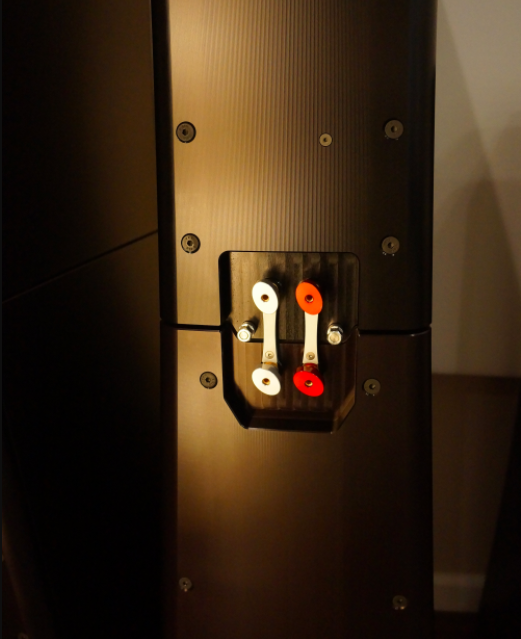
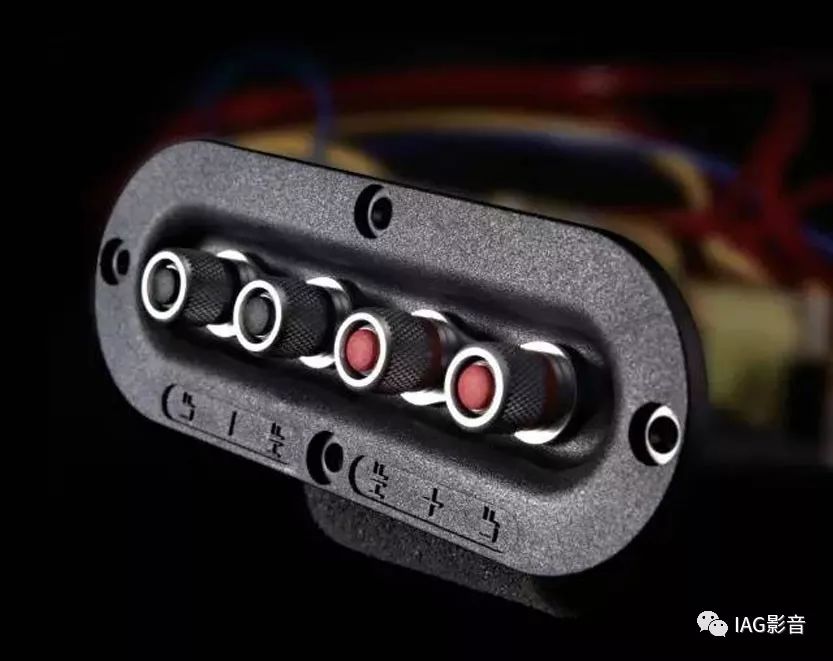
The fourth change is more a matter of rear-panel cosmetics and user convenience than a performance-enhancing update. The older 1.2 has three pairs of binding posts. The new 2.2 has two pairs and is the only readily apparent visual difference between Sonja 1.2 and 2.2 (unless you look closely at the tweeter). The back of the Sonja 2.2 is cleaner looking because the two modules’ binding posts are now in matching insets that meet each other at the modules’ junctures.

Listening 
In my review of the original 1.2, I wrote the following to frame my overall impression, “the Sonja 1.2 is simply stunning—dynamic range, frequency extension, tonal purity, transparency, soundstaging, and imaging…all stunning and sometimes goosebump-inducing and involuntary grin-forming as it calmly goes about its musical business. The Sonja 1.2 does not have an easily identifiable dominant sonic character such as ‘liveliness’ or ‘silkiness,’ nor does it have an apparent bottom-up or top-down tonal balance. Rather, the 1.2 seems to simply convey the content of the recordings it is tasked to play back—and the characteristics of the gear with which it is partnered, of course—without much apparent imposition of its own.”

That summary still applies to the new 2.2 but is augmented by even greater resolution, ease, and general facility. The sonic sum of the Sonja 2 changes seem to amount to more than their updated constituent parts would initially indicate, although the new BilletDome tweeter certainly is an obvious technological advancement. The level of resolution of fine detail is improved. Initial transients and timbre are better fleshed out. Decays and spatial cues are clearer and easier to follow. Loud peaks are more explosive while also sounding more composed or “cleaner.” In short, music simply sounds more present and impactful—as the recordings themselves allow. A real bonus with the new version’s increase in fine resolution is that it is not accompanied by a tonal emphasis shift, which can make a speaker sound as if it is forcing details on the listener, a flaw too often associated with speakers with “high-resolution” ambitions. In fact, the Sonja 2.2’s greatest strength, in my opinion, is its uncanny level of resolution and its lack of apparent artifice or strain. One can more easily relax and enjoy the music as it unfolds because there is so little hardness in the upper frequencies. “Detail and ease” seems to be a theme that a select group of excellent speakers embody to a much greater extent than merely good speakers do. Count the Sonja 2.2 among that select group.

The outer extent of the soundscape is also expanded, especially horizontally. This expansion is not overwhelmingly better than with the previous version, in which soundstaging was already a strong point, but it does impart an impression of greater openness. Recording and upstream system quality permitting, the stage extends well outside the cabinets in a room-boundary-defying display that helps mitigate the limitations of my smallish 12.5′ x 17′ room. Compared to most other speakers, the soundstage sounds as if the YGs were placed about two feet farther apart and in a slightly larger room than they actually are. Individual images within the larger soundscape are focused, not in an exaggerated, hyped-up way, but in a manner that simply makes subtle musical elements more discernible. On the Stravinsky Song of the Nightingale LP [Oue/Minnesota, RR], I could easily visualize the orchestral sections arrayed before me, and there was enough information to convincingly portray individual instruments within those sections. Overall soundstage depth and height were also strong points, as were individual image depth and image density. Perhaps the most salient soundstaging characteristic lay in the continuousness of its entire sound envelope such that the speakers are sometimes not discernible as the source of the sound. On some recordings, like the Classic Records LP reissue of the Prokofiev Lieutenant Kije[Reiner/CSO, RCA], it is as if the 2.2s just happen to occupy the same part of the room where the soundscape exists, so complete is the apparent detachment of the sound from the speakers.

Complex passages sound cogent and discernible. The timpani part in the RR Nightingale uses flams and short rolls in the opening section of the “Chinese March” movement as if to say, “brrrum…brrrum…brrrum” instead of “boom….boom…boom.” Details like these emerge readily through the 2.2 but can become swallowed up in a less differentiated mass of sound through less revealing speakers. Subtle fingers-on-strings or singers’ lip sounds in small, intimate music come through very clearly, thereby allowing a higher level of the human expressiveness in the music to be readily conveyed to the listener. Again, nothing sounds forced to achieve this lovely resolution. Music unfolds in a balanced way—tonally, dynamically, harmonically, and visually proportionally realistic within its overall soundscape.

Basically, the Sonja 2.2 carries through whatever the characteristics of the upstream system give it and does so with a kind of assuring competency. Of course, if you play a bad recording or a system mismatch exists upstream, the 2.2 will let you know. Neither of the two Sonja models I have lived with fall into the “twitchy racehorse” category of speakers, requiring only a relatively narrow selection of partnering electronics and cabling to make them rewarding to listen to over the long haul. On the contrary, I find the 1.2 and now the 2.2 to be a great all-rounders with both tonal neutrality and affording flexibility in system-matching. The only caveat on this point is that—even though the crossover has been updated to accommodate less powerful amplifiers—I would still recommend using an amplifier with at least 100 watts (YG recommends at least 60), and I would still favor high-current solid-state amplifiers or higher-powered tube amps over other types.

As already mentioned, the new version has a bit more low-end weight. The characteristic YG bass speed and articulation are still there, but the low end is now just filled in a little better. Dynamic punch is also a touch better. Some of this dynamic precision may come from the easier load presented to the powering amplifier via the 2.2 crossover adjustment, but it may also stem from the new tweeter. It is simply able to handle the acceleration forces better. Even though much of our sense of dynamic force comes from power and speed in the bass region, the upper frequency range has to keep up and maintain its composure as well, or the whole illusion of a grand dynamic sweep won’t be convincing. The Sonja 2.2 is just a little more exciting to listen to than the 1.2—not that the 1.2 was a slouch by any means. Rock and pop music both have a hair more drive, and orchestral crescendos have a bit more impact.

Like many sealed-cabinet (air suspension) designs, the Sonja 2.2’s bass performance favors agility, tunefulness, and pitch-definition over raw bass power and the “room loading” quality more typically associated with ported (bass-reflex) designs. The 2.2’s lower frequency extension is indeed very low—full-range for all intents and purposes in my setup—but it does not overtly “pressurize” the room with gut-moving bass like some similarly sized ported speakers do. Very low notes on electronica by artists like Björk and Aphex Twin are projected into the room with exhilarating impact, but they are not overblown or out of control. YG lists the frequency range as, “usable output extends from below 20Hz to above 40kHz.” I presume this means the listed bass response takes into account how the speaker interacts with typical domestic room boundaries and may be more meaningful than traditional -/+3dB anechoic chamber specifications. All I can say here is that bass extension and power are excellent in my setup—as are bass tunefulness and articulation. I have also heard the older Sonja 1.2 in a few other rooms—usually larger than mine—and the bass performance never sounded deficient in those systems.

Just like the Sonja 1.2, the 2.2 does not have an obvious sonic personality. Some recordings sound a bit calmer and more “organized,” less strained and jumbled, than they do through many other speakers. So, this clean and organized quality is about as close to a sonic personality as I can determine. Other than that, the sound I heard through the 2.2 seemed to be more determined by the upstream gear than by the speaker’s own intrinsic sonic signature. The word calm might imply polite or even boring to some readers. The Sonja 2.2 is not at all sedate. On the contrary, the Sonja 2.2 allows music’s innate artistic qualities to be expressed in large measure. Subtle, contemplative music like some of the Third Stream material on the ECM label sounds evocative and moving, not merely moody and slightly quirky. Hard-driving rock selections from bands such as Tool take on near-frightening acceleration through their sheer intensity. Classical music sounds rewarding in its timbral complexity and structural richness. The Sonja 2.2 does not favor—nor is it limited to—a particular kind or scale of music, at least not in the confines of my room and even in some larger ones. If you really like the big stuff, played on a grand scale, and you have the spacious room and the rest of the system to support it, you’ll need a bigger speaker. (This is where the YG dealer will steer you towards the Sonja 2.3 or Sonja XV models.) For most listeners, though, I believe the 2.2 will be all that is needed. The technology YG likes to cite in its marketing material, like ToroAir (toroidal inductors), ForgeCore (driver motor system), and ViceCoil (vise-like housing for large inductors) draw attention to its differentiating engineering elements, but at the end of the day, the product needs to serve music reproduction, and, in my experience, the Sonja 2.2 does so admirably.

Considerations 
The nearly 275-pound weight of each speaker may deter some music lovers. Unloading, assembling, and placing the Sonja 2.2 is definitely at least a two-person job. (Your dealer will arrange to send one or two people out to your site to install them.) While the 2.2 does not dominate a room like many large speakers do, it is still a medium/large, all-metal floorstander, so it may not please some folks’ aesthetic sensibilities. As mentioned, the speaker favors high-current solid-state amplifiers or higher-powered tube amps over their lower-powered cousins. To really take advantage of the resolving and dynamic abilities of the Sonja 2.2, it helps to use the best partnering gear and cabling one can assemble, which also adds to the cost of ownership. Some audiophiles may prefer the bass quality of a similarly sized ported speaker. I find the 2.2’s bass extension, impact, and definition to be flawless in my setup.

Conclusion 
What I had said about the original Sonja 1.2 in my concluding remarks in Issue 256 also applies to the new 2.2: “The Sonja 1.2 is revealing without sounding exaggerated. It is dynamically alive without sounding forced. It is tonally neutral without sounding clinical.” How can I top that sort of praise? I am now in the slightly awkward position of having to say, essentially, “Yes, what I said then, and now more…more detail, more dynamic ease, more expressiveness, more bass weight, more soundstage continuousness.” The Sonja 2.2 is a speaker that serves the music, no matter what kind, with great facility and aplomb. And again, the new version gets my highest recommendation.

Specs & Pricing

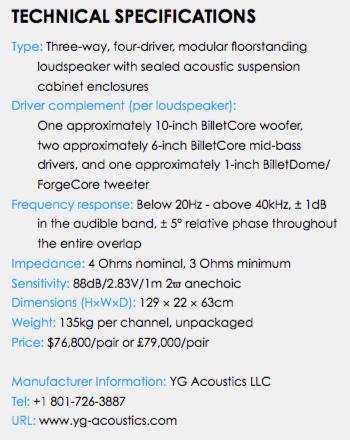
Driver complement: One 1″ YG BilletDome tweeter, two 6″ YG BilletCore mid-woofers (main module), one 10.25″ YG BilletCore woofer (bass module)
Frequency response: Usable output below 20Hz to above 40kHz
Sensitivity: 88dB/2.83V/1m anechoic
Impedance: 4 ohms nominal, 3 ohms minimum
Recommended amplifier power: Minimum, 60 high-current watts
Crossover points: 65Hz and 1.75kHz
Cabinet: Aircraft-grade milled aluminum
Dimensions: 13″ x 51″ x 25″
Weight: 271 lbs. each
Price: $76,800 per pair, available in black finish (silver by special request)

YG ACOUSTICS LLC
4941 Allison, St., Unit 10
Arvada, CO 80002
(801) 726-3887
yg-acoustics.com

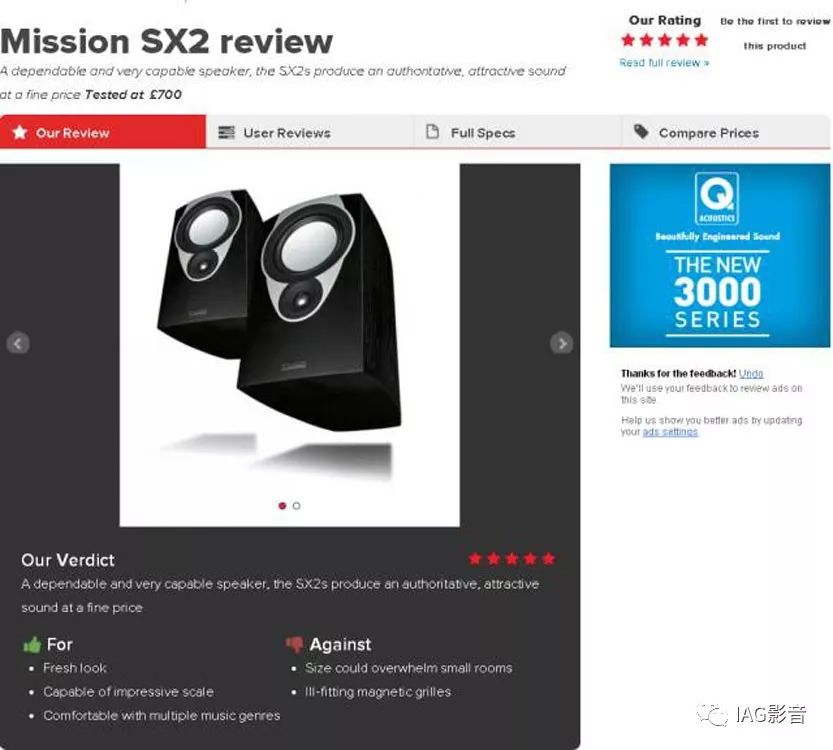
五星推薦的英國之聲:Mission(美聲)SX系列音箱

一直以來,英國美聲(mission)這個品牌及其產品在中國音響市場上有著很好的知名度和口碑。從品牌成立到現在,美聲推出的獲得各類榜單與專業音響媒體推薦的產品可謂是不計其數。正是在這樣的背景之下,其經年的發展為其在技術積累及設計方面打下了很好的基礎。這也從反過來的角度為其推出更有創意的新系列奠定了理想的條件。

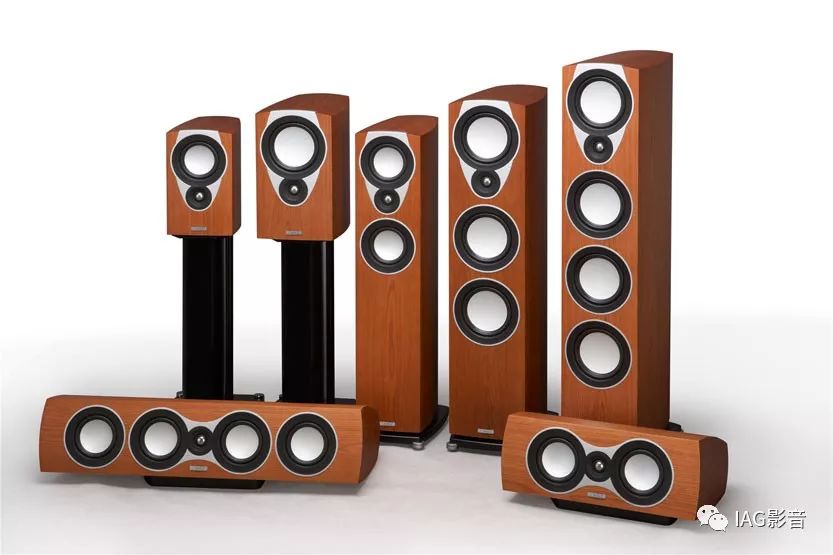
Mission(美聲)的SX系列音箱,包括兩對書架箱 SX1 和 SX2,三對落地箱 SX3、SX4 和 SX5,兩隻中置箱 SXC1 和 SXC2。產品推向市場后,就獲得多個 HiFi 權威機構五星推薦。

這個音箱系列專為追求音樂性能與設計藝術的完美性而創造,它傳承了美聲准確和真實的聲音水平。在總體上而言,該系列產品在做工與單元配置乃至於技術的分布上,都非常合理及平衡。

SX 系列箱體的弧線設計可以阻止內部駐波的產生,每一隻箱體都是精密計算的交叉木層結構,並經過 48 小時的高溫加壓,然后任其自然風干,內部的壓力就會消除。這樣便制造出一支帶有聲學屬性的箱體。

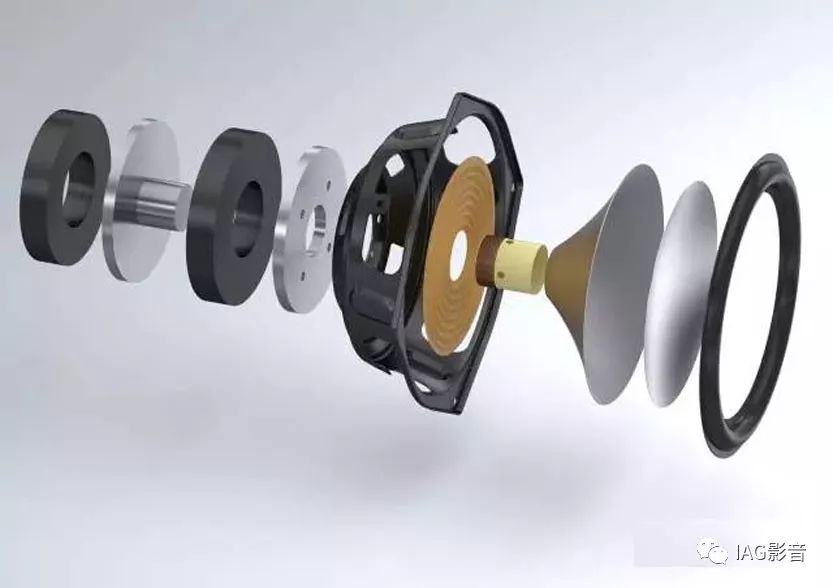
SX 系列的創新提升包括中音和低音單元的復合鋁膜,提供細致的聲效,並且由於材料剛硬帶來極低的失真。

高音單元由輕薄但堅硬的鈦金屬制造,從而重播出令人震驚的高頻,清晰而純淨。裝嵌在精細工藝的鑄模前障鋁板上,除可以保持單元的一致性,同時確保免受共振的干擾。

這種既有整體上又有局部配合的設計讓該系列中每一款產品都能夠表現出最佳的聲音狀態與音效活力來。而這也正是美聲有別於其它品牌的地方。

總而言之,SX 系列是一個在看點、賣點、聲音釋放點上都有著獨特且能呈現出品牌一直以來所追求的特性的系列。

從根本上來說,所有的技術突破與改進都是為聲音這個最終目的而進行的。從這個角度上來講,SX 系列顯然是能夠體現出 Mission(美聲)音響理念的產品。

事實上,SX 系列產品使用了統一的技術架構,同時也使用了相一致的單元配置,因此其在用於多聲道環節時,不但在每個頻段的頻率銜接上有著非常自然地呈現。而且,在聲音本底素質的體現上,也有著高一致性。

這種統一的技術架構在實戰時的理想展現則說明了統一化的技術理念在研發一個系列產品時的重要性。同時,由於構成整個系列的每一個型號的個別化產品都是相當不錯的。所以,音響愛好者隨便選擇書架箱還是落地箱的話,都能夠得到相當水准的表現。

The Funk Firm Gett! Turntable Review

Is it time to Gett! Funked?

What is the Funk Firm Gett!?

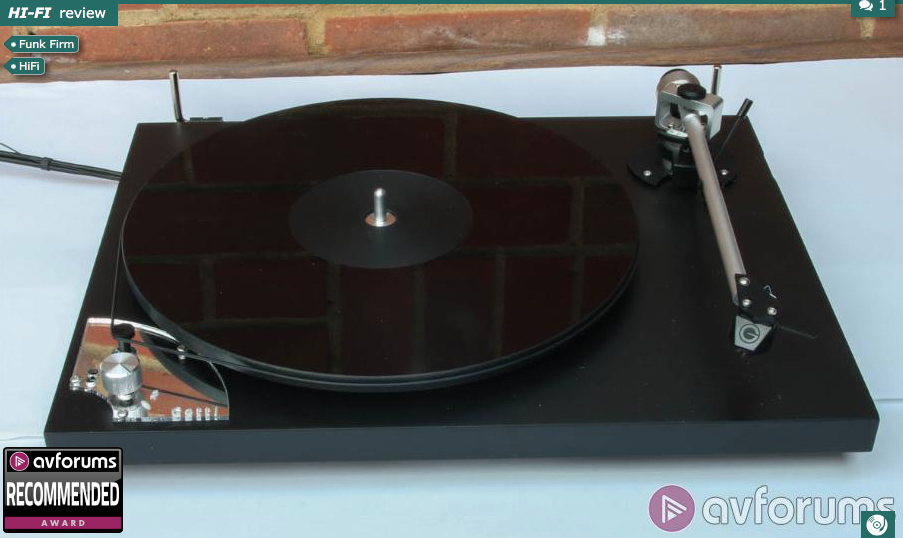
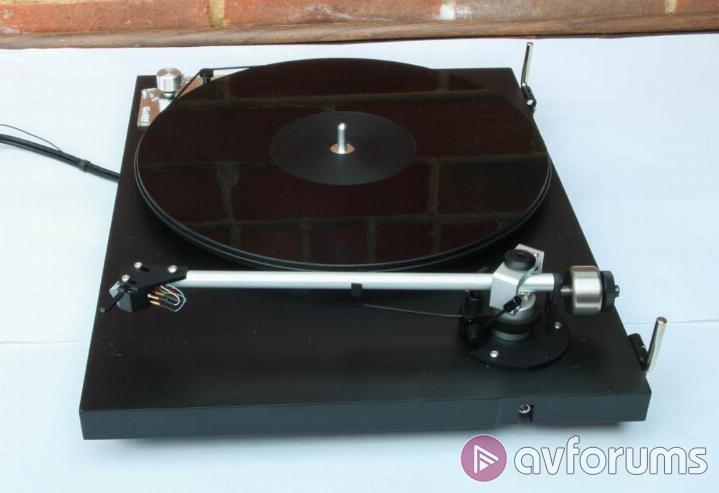
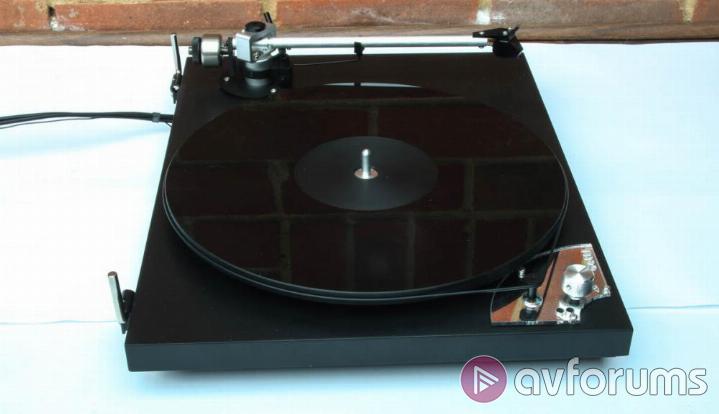
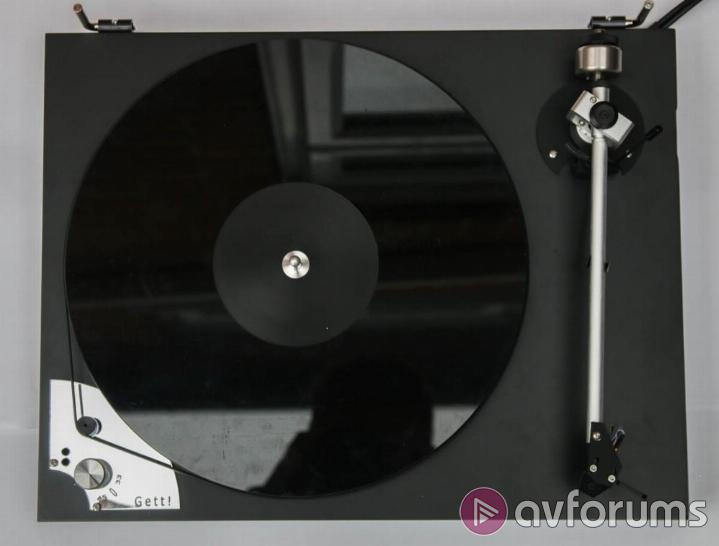
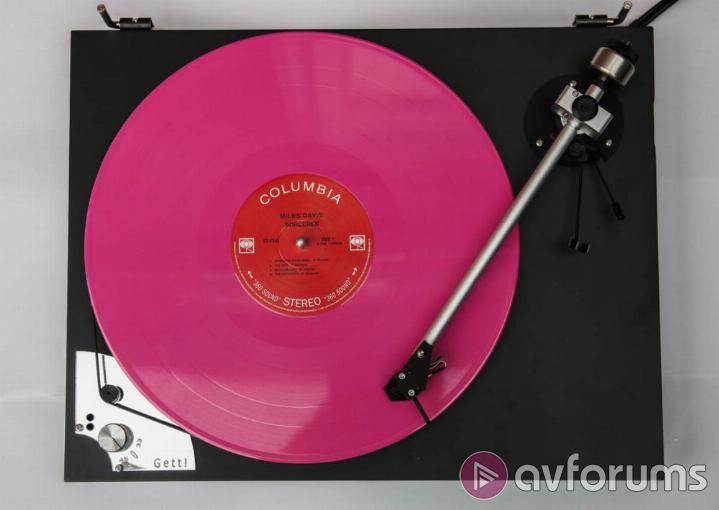
The Funk Firm Gett! is an unsuspended, belt driven turntable – in fact your first glance at it might as well be the archetype of the unsuspended, belt driven turntable. Appearances however, can be deceptive. There are aspects of the Gett! that are unusual regardless of price and some which are practically unheard of at the asking price.

And that asking price is critical because the Gett! pitches into the market at the exactingly specific price of £609. This means that it goes head to head with Rega’s Planar 3 and the Pro-Ject Xpression, products of such ability (and it must be said, ubiquity) that they can make this segment look like a two horse race. At first glance, logic would dictate that there is no reason to back the newcomer in a contest of this nature but things aren’t quite that simple.

This is because The Funk Firm as a company is the brainchild of Arthur Khoubesserian and it isn’t the first company he’s set up. In the eighties, he was responsible for Pink Triangle – a company that has had a disproportionate impact on the business of turntable design. The Gett! is a considered and condensed take on the business of making an affordable turntable and if anyone can bring something a little different to the business of affordable analogue it is likely to be Arthur. Does the Gett! do enough to tempt you away from the major players though?

Specifications

The nature of affordable turntables and the functions that they have to perform means that there really isn’t that much variation in their general layout but if you look closer at the pictures of the Gett!, you will note that there are some variations to its design that are distinctive and wholly deliberate. These distinctions hide other design decisions that are also significant.

The first is that the motor of the Gett! is placed at the front of the plinth in contrast to most rivals. An engineering theme that runs through Funk Firm turntables is the behaviour of the motor on the rest of the turntable. While placing the motor toward the back of the plinth is extremely convenient in terms of connecting everything else up, Funk argues that doing so allows it to generate resonances at exactly the most effective point to affect the playing surface. The motor then proceeds to act on the outside edge of the platter to minimise gyroscopic effect. In more advanced Funk models, it acts on a multi pulley arrangement which serves the same purpose but this isn’t practical for the Gett!

What isn’t visible but is no less important to the Funk philosophy is that the motor works on direct current rather than alternating current principles. This has been a key to both Funk and Pink Triangle designs from the outset and is effectively non-negotiable. The argument goes that a DC motor is not affected by the very slight ‘pulsing’ effect that is present in AC designs and therefore acts on the platter in a more benign way. This is a fairly rare thing to encounter in a relatively affordable turntable. No less useful is the ability to select between 33 and 45 rpm at the switch rather than by moving the belt.

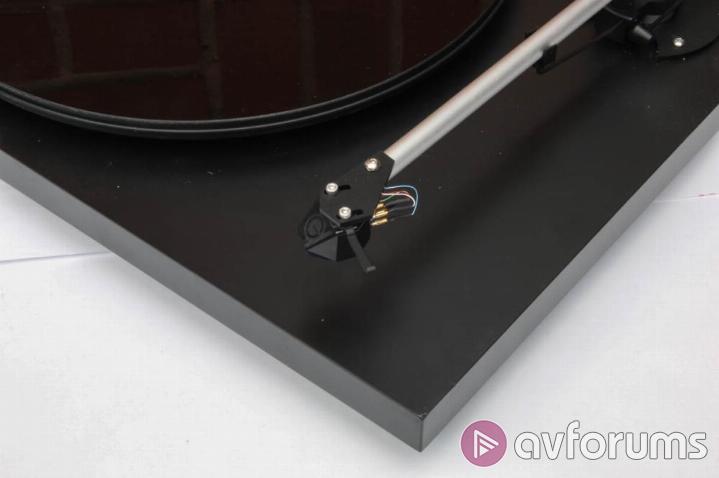
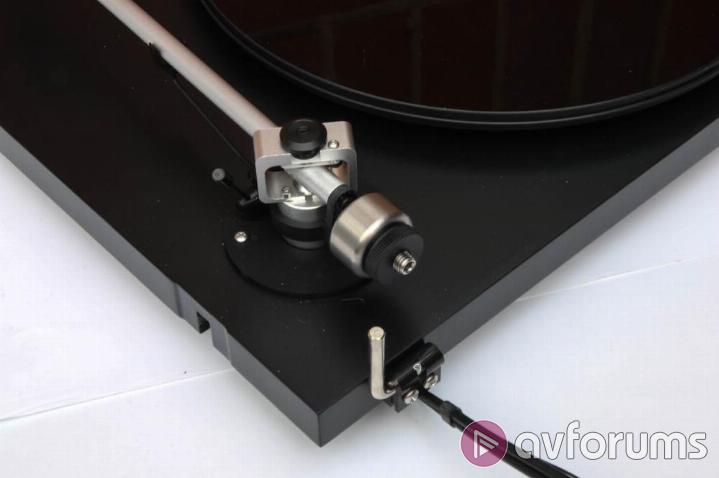
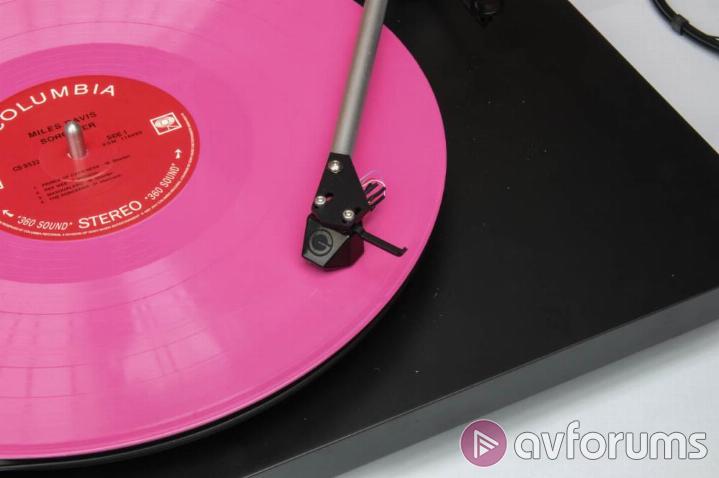
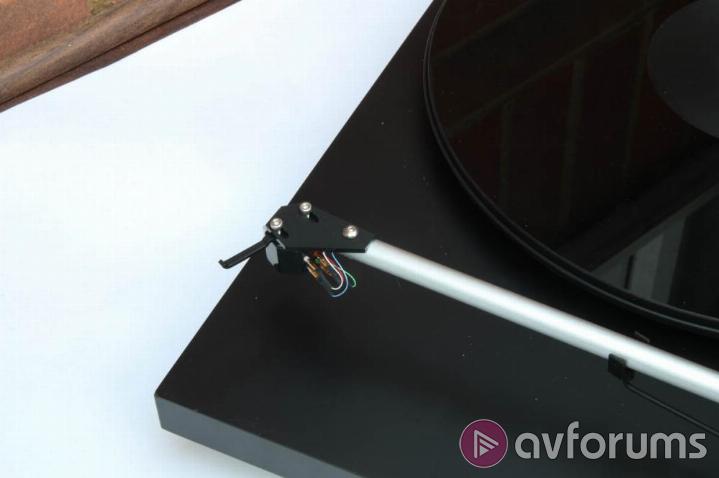
Very significant to the performance of the whole turntable is the tonearm. Thus far, turntables reviewed on AVForums have used either conventional bearing arms or unipivots. The Funk uses a thread bearing arm where a quantity of aluminium wire is used to support the horizontal and vertical axis of the arm’s movement. A knurled screw at the top can be used to increase the torsion of the thread and apply more antiskate. The result is an arm that does without captive bearings without the complete lack of restraint that applies to a unipivot arm. The only remotely similar system we’ve seen is used on the Elipson Omega but this only uses thread torsion for the antiskate rather than mounting. The arm itself is made from aluminium and then makes use of an acrylic headshell on the end for the mounting as the interaction of the two materials is intended to better control resonance. Crucially, this arm is fitted with the ability to adjust the vertical tracking angle (VTA) – the height which it sits over the record. This means that the Gett! can be persuaded to work with a selection of cartridges more easily than many rivals where the arm is at a fixed height.

The acrylic in the headshell isn’t the only use of this material either. The Gett! uses an acrylic platter. This is not terribly unusual in this day and age but it is worth pointing out that Pink Triangle was the first company to use acrylic in this way and held a patent for doing so. The platter itself is fairly thin but thanks to the adjustable VTA, you can add another Funk product and one that we have seen before. This is the Achromat – a sort of ‘blown acrylic’ mat that improves the damping and resonance control. I have a lipped Achromat that I have used on the various direct drive designs I have tested in preference to the supplied rubber mat.

The design ‘stretch’ doesn’t end there either. The Gett! is supplied with pliant rubber feet of a type not dissimilar to rivals. You can however unscrew them and add a system called the BOING (there are products in the Funk inventory that don’t automatically cause Word to go into a spasm of red and blue lines when typed but none are present for this review). This is effectively a decoupled and suspended foot that creates a suspended turntable when substituted for the existing feet. These feet can also be used on other turntables too.

Design

As noted, there are limits to what you can do with turntables at this price point that means that the Gett! does look pretty much like a conventional record player. Thanks to the various idiosyncrasies of the design, the Gett! is different in concept and execution to many rivals and it feels a little different too. Some of this is good. The tonearm can feel a little odd when you attach a cartridge to it but the movement is exceptionally smooth and non mechanical in nature and it feels more able to handle a wide variety of cartridges than most similarly priced rivals. The turntable itself is free of fripperies but it feels well thought out and it is no harder to use than key rivals.

It is harder to setup though. Fitting the belt to the Gett! is a dark art. With the thin platter and a round belt you need to use the approved method (feeding it slowly round the platter) or you’ll most likely never do it. The spindle is also a little on the large side. Having an extremely snug fit is another part of the Funk philosophy but as far as I’m concerned, the tolerances are a little on the tight side. I don’t necessarily believe this is an ideal first turntable – you would do well to ‘get your hand in’ with something simpler first.

It does represent strong value though. If we compare the Gett! to the Rega Planar 3, the Funk initially looks more expensive. The list price of the Gett! doesn’t include a cartridge so, initially at least, the Planar 3 with cart for £625 looks stronger value. Things aren’t quite that simple though. If you want speed control on the Planar 3, you will need to spring for the Neo PSU at £225. This will bring performance boosts as well but it raises the cost of the turntable significantly. Even if you remove the cartridge from the Planar 3 and specify a Goldring E3 – one of the most affordable designs to really do these turntables justice – and the Funk looks competitive.

“The turntable itself is free of fripperies but it feels well thought out and it is no harder to use than key rivals”

How was the Gett! tested?

The Gett! was set up less the BOING feet and Achromat. A £100 Goldring E3 cartridge was used initially but some testing has been undertaken with a Nagaoka MP150 (£275) and a Rega Ania As fitted to the Rega Planar 6 and £448). The BOING feet were added, and tested against a Quadraspire isolation platform. Testing was also carried out with the Achromat. Equipment used has been a Cyrus Phono Signature phono stage, Naim Supernait2 Integrated amplifier and Bowers & Wilkins 705 S2standmount speakers. The test material has been vinyl.

Sound Quality

The most important thing about the Gett! is that once it has been set up, those unusual design decisions do make themselves felt and they do so in a positive way. Exactly how this happens varies slightly on the material you choose to play but as one of the earliest pieces of music that it really made itself felt was Wide Open by the Chemical Brothers, it seems like a good place to start. The presentation of the Gett! is subtly but noticeably different to the way that a Planar 3 goes about the same track.

Firstly, the Gett! has a deeply impressive sense of space and scale for an affordable turntable. The soundstage is absolutely believable and there is more to the way this is handled than simply shoving the sound out to the extremities. Close your eyes and Beck’s vocals are in the centre of the mix and their relationship to the backing music is extremely well judged; nothing sounds detached from each other but it is easy to follow what is going on at all times. No less impressive is the bass response. Even judged as a £600 design, the Gett! is an extremely low mass design but there is a force to its presentation that can be genuinely surprising.

It isn’t perfect. If you listen to the standard torture tests of long sustained notes, the Funk isn’t as resolutely pitch stable as some rivals and nothing I’ve been able to do has completely eliminated this. Depending on how sensitive you are to such a thing, it might be an absolute deal breaker or a non event. The presentation of the Gett! is also a little more matter of fact than some rivals. It won’t sugar coat poor pressings and choosing an unsuitable cartridge might result in a somewhat bright presentation.

Choose the right cartridge though and the Gett! shows it can deliver a seriously impressive performance. The Goldring is excellent – it is unreasonably good for £100 – but moving to the superbly capable Nagaoka MP150 lifts the performance considerably. This is important because the Nagaoka is more expensive than you might traditionally pair with a turntable of this nature. Impressively, the Gett! still has more to give. Putting the Rega Ania on there – a cartridge fully 80% the all up price of the Gett! itself, still shows the Funk making progress. There is a considerable amount of stretch in this little turntable.

And not all of that stretch is down to changing the cart either. Adding the Achromat results in the noisefloor of the performance – already pretty low – dropping even further and the rhythmic edge of the Gett! improving too. For £60, this really should be the first thing you do to a Gett!. The BOING is a slightly different proposition. It actually seems to alter the presentation of the Gett! in that there is a sense of energy added that its normally quite down the line character doesn’t have. This is more engaging but I’m not completely sure it feels more accurate. Depending on what you want your turntable to do, you might find that this is not the direction you want to take it and something like a wall shelf might suit you better. Once again though, having the option to try it is noteworthy.

“There is a considerable amount of stretch in this little turntable”

Conclusion

For those of you that enjoy reading between the lines, the Gett! might be seen as an idiosyncratic product. You could leave a reasonably educated adult with no prior experience of vinyl setup in a room with many of its rivals and come back with the expectation of finding a functional record player. This is not something that is an absolute given with the Funk – it’s more fiddly and unforgiving. As I said earlier, this is not an ideal candidate for a first turntable.

If you’ve done your time with something else though first and learned about the foibles of the format, there’s no escaping the Gett!’s ability to make many rivals sound constrained and congested. Even with a £100 cartridge on it and none of the extra parts, it has a sheer ability that is noteworthy and the stretch the basic design has is considerable. This isn’t a turntable for everyone but for many people, the incredible capability of this deceptively simple looking design will be too impressive to ignore. For this reason, the Gett! is worthy of recommendation.


by Ed Selley Feb 22, 2018

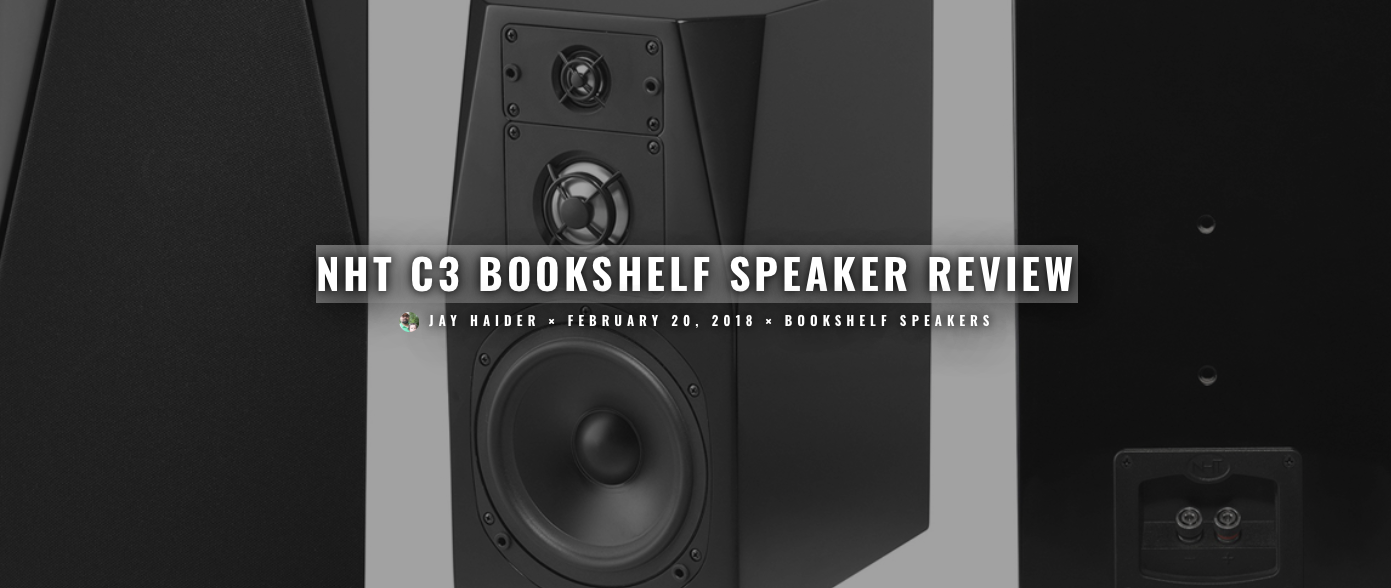
NHT C3 BOOKSHELF SPEAKER REVIEW

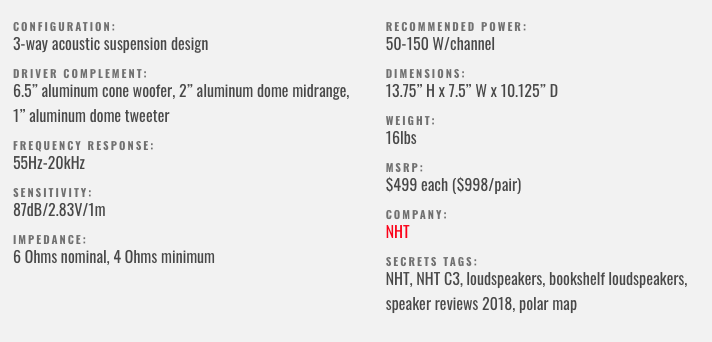
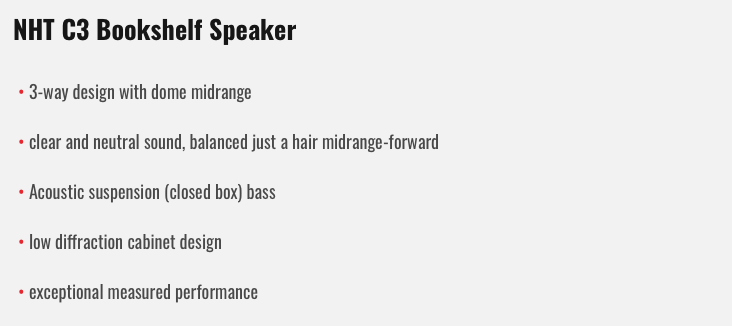
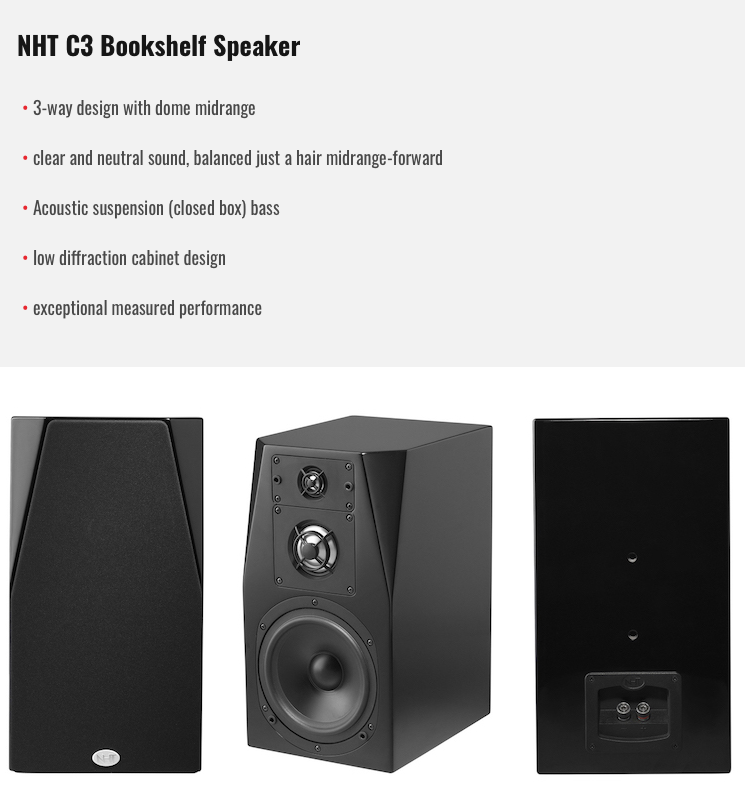
The NHT C3 is a compact 3-way bookshelf speaker with a dome midrange and acoustic suspension cabinet. The C3 replaces NHT’s best-selling Classic Three. NHT claims the C3 offers a modest sound quality improvement over the Classic Three, along with improved serviceability and sturdiness.

Three-way bookshelf speakers are rare. Adding a dedicated midrange can provide dispersion and distortion benefits, but adds complexity and cost. SECRETS recently covered two other 3-way bookshelf speakers: ELAC UniFi UB5 Slim and Bryston Mini A. These three speakers take three different approaches to the midrange in a 3-way: large dome (NHT), concentric cone/waveguide (ELAC), and small cone (Bryston).

I have owned a pair of Classic Threes for years. I currently use them as rears. When NHT offered their C3 speakers for review, I was eager to see and hear if they could best an, ahem, Classic.

Highlights

Introduction

NHT stands for “Now Hear This,” and has a special resonance for audiophiles who came of age in the late 1980s and early 1990s. NHT’s original lineup, from Model 1 to Model 3.3, were instantly recognizable by their slim baffles set at 21 degrees and anti-diffraction foam strips.

NHT BOOKSHELF LOUDSPEAKER REVIEW SPECIFICATIONS

NHT has mostly used acoustic suspension (sealed) cabinets. See the “Design” section below for more about this design choice. NHT’s founders, Ken Kantor and Chris Byrne, have moved on, but NHT continues their legacy of distinctive, affordable high-performance speakers.

NHT’s currently offers three tiers of freestanding speakers and a custom installation range. The C3 speaker reviewed here is NHT’s flagship bookshelf speaker.

Design

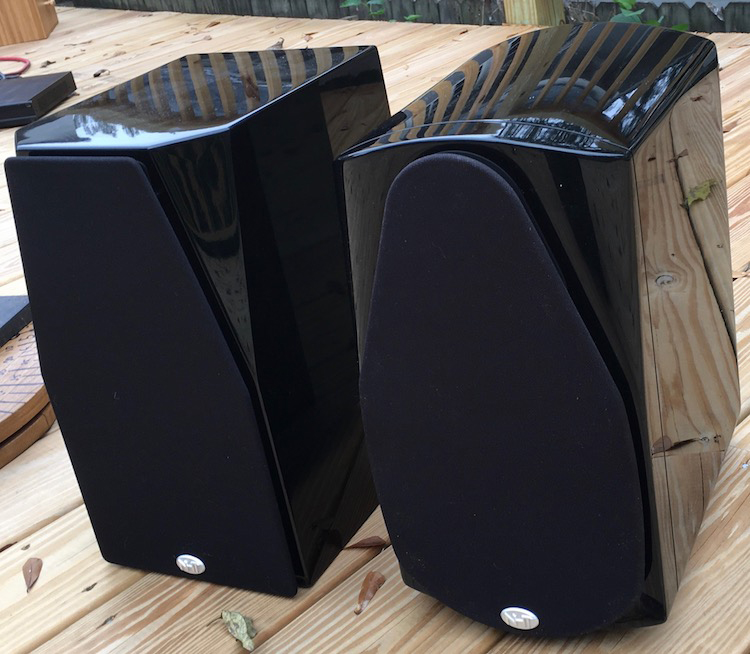
The NHT C3’s looks like an updated Classic Three at first glance. NHT straightened the walls and replaced curves with sharp angles. It was a successful update.

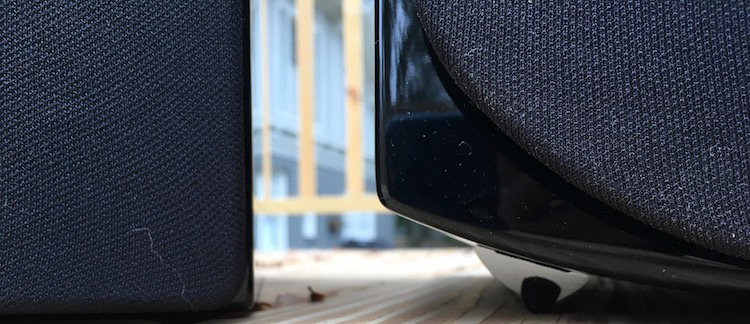
My wife quickly pronounced her preference for the C3’s “clean lines” over our Classic Threes’ “blobby curves.” The Classic Three is so curvy that it requires rubber-tipped aluminum rails to sit flat on a stand!

Angled facets flank the C3’s midrange and tweeter, providing some diffraction control and visual character. Closer inspection reveals that the facets are three separate triangles, not flat planes. I associate this level of cabinet detailing with more expensive brands, such Joseph Audio or Avalon Acoustics.
NHT offers the C3 in one finish: hand-polished gloss black with 7 coats of lacquer.

While gloss black is NHT’s signature finish, I think the C3 would look great the sycamore veneer from the Kantor era. A matte white finish would also suit these cabinets. The C3’s grille attaches with pegs that fit into the driver flanges.

NHT also updated the C3’s midrange and tweeter. The C3’s domes have individual faceplates, which makes driver replacement simpler and cheaper compared to the Classic Three’s ovoid mid-tweeter flange. The aluminum dome tweeter is now a 1″ unit. The foam is gone. NHT specifies crossovers at 817 Hz and 4750 Hz, no orders provided. The new dome midrange thus plays a little higher than the Classic Three’s midrange did.
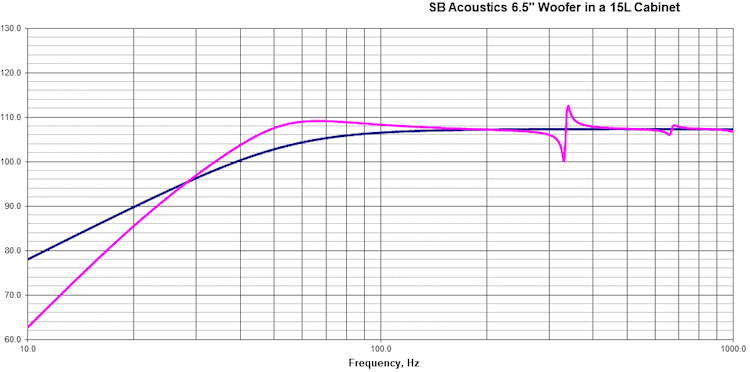

Like NHT speakers past, the C3 has a sealed cabinet.

Most speakers today have bass reflex cabinets.

The main advantages of going sealed are as follows: the box acts as a spring to prevent over-excursion; 12 dB/oct. low frequency rolloff; no colorations from port resonances. Bass reflex speakers offer higher efficiency just above port tuning. However, they roll off at 24dB/oct. below port tuning, do not protect the woofer, and can have midband pipe resonances. Below is a representative model of a 6.5-inch woofer in closed and vented boxes of roughly the NHT C3’s size. The closed box is blue and the vented box is pink.

Setup and In Use

I auditioned the NHT C3 alone and with subwoofers. Oddly, NHT does not provide placement recommendations in the box, and their website does not have a manual for the C3. I placed the C3s on 30″ tall subwoofer-stands, which put their tweeters at ear height. The speakers were 11.5 feet apart, and the distance from each speaker to the listening position was 13.3 feet.

Like the Bryston Mini A and Monitor Audio Silver 1, the NHT C3 is fairly inefficient. Still, three relatively lower-powered amps (ELAC EA101EQ-G, MartinLogan Forte, and Parasound Zamp v3) powered them satisfactorily. Obviously, my reference ATI AT4007 had no trouble driving them.

The treble was a little hot with the C3’s fired directly at the listening position. I found the best treble balance at a very NHT-appropriate 21 degree toe-in. I use Howard Massey’s SpeakerAngle iOS app to ensure symmetrical toe-in. By contrast, the Classic Threes sound best in this room firing straight ahead. As with the Classic Three, rotation had very little effect on midrange/bass tonality or imaging at the listening position.

NHT’s C3 speakers had no immediately obvious sonic signature. Their midrange and treble are substantially neutral. It took much listening to identify their subtle highlighting of details in guitar or vocal accompaniments as a slight forwardness. Image stability and dialog intelligibility held up very well when I stood up in the sweet spot. Run subless they sound lean, some might say “fast.” Their shallow closed box rolloff made subwoofer integration easy.

Iron and Wine “Beast Epic” I think of Iron & Wine as a modern Simon & Garfunkel, Cat Stevens, or Jim Croce. Like those men, Sam Beam is a skillful melodist with a warm, soothing voice that meshes well with acoustic guitar. He also has their knack for lyrical storytelling. “Beast Epic” is best enjoyed as a continuous rinse of music, not atomized tracks on a playlist.

So vinyl was the natural medium. The NHT C3s’s neutral, clear sound let the record wash over me.

The dome midrange and tweeter highlighted the Beam’s fret work at the beginning of “Thomas County Law” without hardening it. The multilayered vocals on the song were soothing and lush. The NHT C3’s slightly emphasized the pop of the bongos in “Call it Dreaming,” but otherwise smoothly conveyed the richly layered sound buried in the grooves and placed the musicians across our front wall. “The Truest Stars We Know” also sounded great, though the lowest notes were heard rather than felt in 2.0-channel mode.

Mahler Symphony No. 5. Minnesota Orchestra Osmo Vanska conducting

I had not listened to this symphony in quite a while, so when I saw this new interpretation on TIDAL I was curious. From the first bars, Vanska’s interpretation proved quite different from the hyper-dramatic Bernstein/Vienna Mahler 5 I grew up with. Comparatively, Vanska almost dissects the symphony.

For example, compare the second trumpet solo in the first movement, starting at around 5:27 on the Vanska and 6:10 on the Bernstein/VPO. Bernstein’s is a cyclone, Vanska’s a sonorous trumpet solo. Still, I think it is a recording to digest rather than rejecting because it’s unfamiliar. BIS offers it in 5.0 channel SACD, so guess what was recently added to the library!

The spacious and clear recording suits Vanska’s interpretation. The NHT C3’s threw a slightly flatter soundstage than my reference, but every bit of the recording’s width, separation, and dynamics came through. The NHT C3s pulled off the rich low brass sound captured in the recording. The treble range was open and clean, and the treble “bite” sounded a little more natural than on the Classic Threes.

Joy Division Unknown Pleasures (2007 remix)

Joy Division was a late-1970s/early-1980s post-punk supernova that morphed into New Order after singer-songwriter Ian Curtis’s death. “Unknown Pleasures” was their brooding, stormy debut album.

The NHT C3 speakers played “Unknown Pleasures” with clarity and detail.

 Curtis’s baritone-ish voice projected clearly, without the syrup an overripe upper bass can cause. The NHT C3’s clarity and neutrality suited the album’s opening track, “Disorder,” especially well.

The C3’s provided excellent separation between each part and effect, and slightly greater clarity than the Classic Three. Augmented with subwoofers, the NHT C3 deftly executed the “huge wall of sound playing through a tin can” spatial paradox of “New Dawn Fades,” and even subless Peter Hook’s bass line had enough heft to propel the song. The apparent size of the wall of sound was just smaller. The C3’s slightly forward midrange drew my attention to the electric guitar noodlings accompanying Curtis’s vocal entrance, but not distractingly so.

Pearl Jam 2016/04/11 Tampa, FL

Pearl Jam sells “official bootlegs” on their website in multiple formats. The highest-resolution options, lossless 24/96 “ALAC-HD” or “FLAC-HD,” cost about $20. Not a bad deal for 90-120 minutes of music! On Black Friday they had a half-price sale, so I picked up this show and a few others containing my favorite rarely-played Pearl Jam tracks.
One such track, “Red Mosquito” from No Code, convinced me that the NHT C3’s could really rock out. Matt Cameron’s kickdrum came through with nice punch and some tactility even without subwoofers, and his high-hat decayed crisply.

Mike McCready’s audacious slide guitar work soared unfettered into the room from those two metal domes. “Come Back,” from their oft-neglected – except at SECRETS! – eponymous “Avocado” album, is one of the few pure ballads in the Pearl Jam canon. It is one track where I would have preferred a more laid-back presentation than the NHT C3 provided. Pearl Jam closed the concert with a cover of Hendrix’s “Little Wing.” I have not heard Pearl Jam play Little Wing as a standalone song before, though they’ve often played parts of it in the outro to their traditional closer, “Yellow Ledbetter.” Through the NHT C3’s, you could almost hear the crowd being brought gently back to earth.

On The Bench

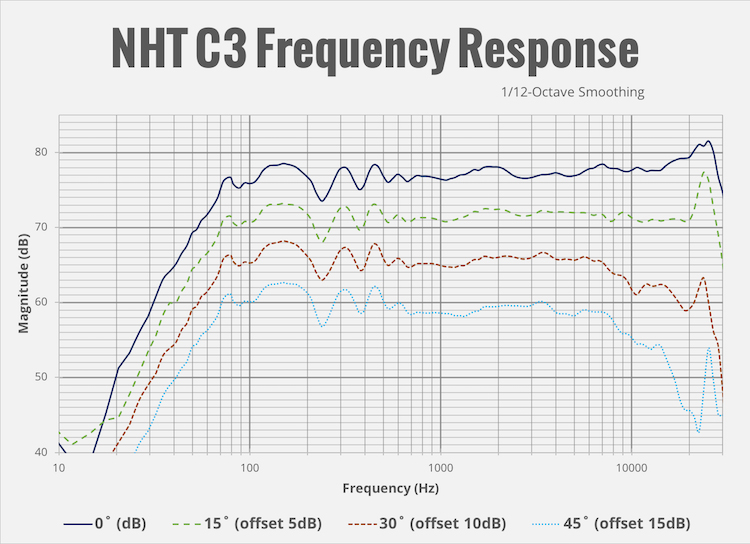
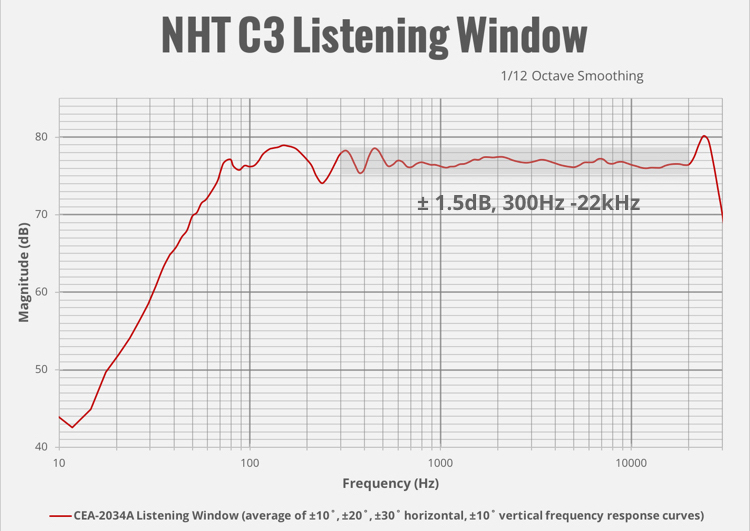
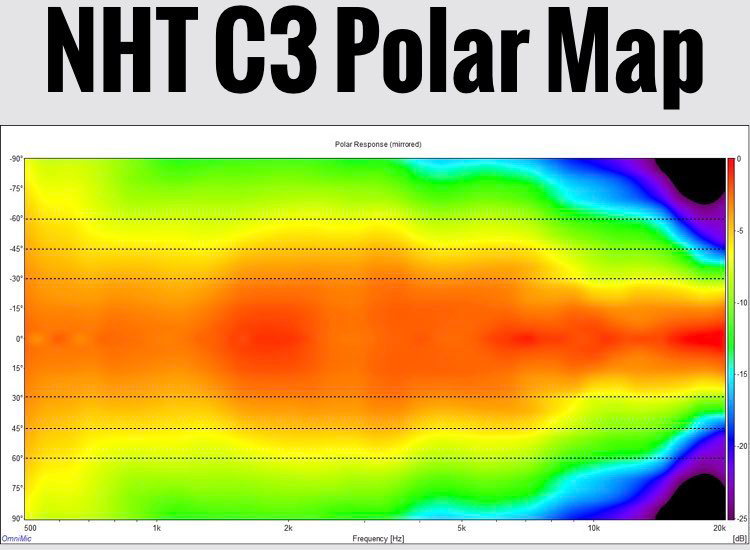
Fair warning: this section is necessarily quite dense. If you skim this section, pay closest attention to the following three measurements: on-axis frequency response, CEA-2034A listening window, and the polar map.

Research indicates that a few measurements dominate our perception of speaker sound quality. These measurements are: bass extension, on-axis frequency response flatness and smoothness, and off-axis frequency response smoothness. Other measurements, such as distortion, correlate poorly with perception. Accordingly, my bench sections focus on frequency response both on and off-axis, the latter through polar maps that are a huge pain to make but graphically illuminate previously mysterious aspects of speaker sound in rooms. I also measure impedance to determine how hard a speaker is to drive and confirm the speakers were not damaged in shipping.

Aside from impedance, I measure after listening to avoid biasing my audition. For this review I took frequency response measurements outdoors, except obviously the listening room response. All frequency response measurements are 1/12-octave smoothed.

Impedance

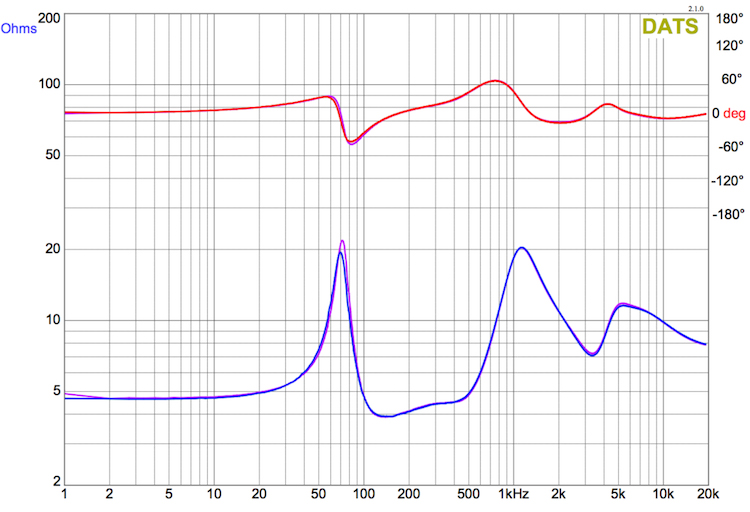
Let’s start with the NHT C3’s impedance curve.

The peak at ~70Hz indicates the box tuning frequency. The minimum impedance is just under 4 Ohms between 100 and 200 Hz. The NHT C3 is not difficult to drive. The two samples show excellent consistency, with just a small and irrelevant difference in the impedance peak around box tuning.

The NHT C3 has a single set of binding posts, so I was unable to measure the woofer and midrange/tweeter sections separately. The frequency response of the whole speaker is below, on axis and at 15, 30, and 45 degrees off axis.

The most obvious takeaway from this set of measurements is that the NHT C3 is just superbly flat overall. The most notable deviation is a small but broad plateau starting just above 1kHz and going to 5kHz. Many speakers, such as the Bryston Mini A, are slightly depressed in this region. As expected from the impedance measurement, the -3dB point is about 65Hz. Bass rolloff is the expected 12dB/octave. The tweeter’s resonance falls at about 24kHz, which is very good for an aluminum dome.

I initially thought the dip and bump from 300-500 Hz was a measurement artifact. However, they both show up in the listening position response (below), and the measurement height was different from the listening height. So I believe they are real. Measurements of the Classic Three (below) show similar behavior.

Given the broad dispersion of a 2″ midrange dome and no foam to mitigate edge diffraction, I was curious to see if there were measured diffraction effects that were not apparent to me in listening. Nope: the facets work! The curves were remarkably similar.

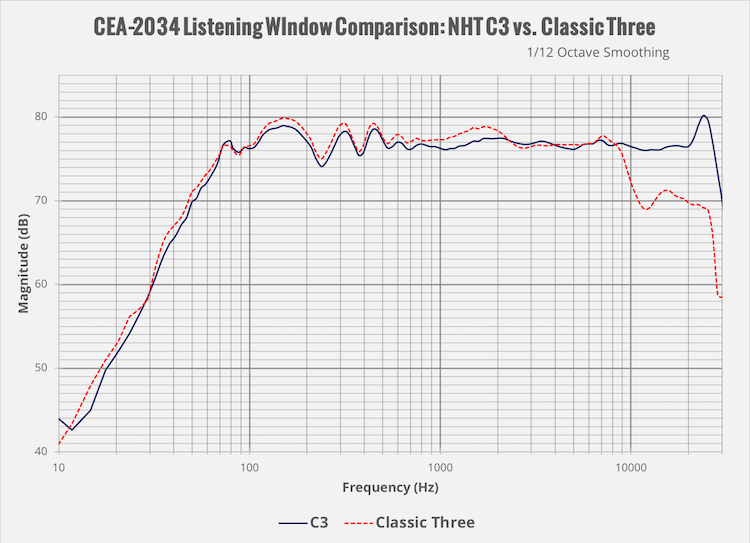
The next graph shows the listening window response. While in previous reviews I calculated the listening window according to the Canadian NRC method, starting with this review I will use the CEA-2034A standard. The CEA-2034 listening window response is an 8-point average: on axis; -10, 10, -20, 20, -30, and 30 degrees off axis horizontally; -10 and 10 degrees off axis vertically.

That is one of the tightest listening window responses I have seen. There is a slight but broad midrange hump, which may account for the slight forward bias observed in listening.

For a more finely-grained view of the NHT C3’s horizontal sound output, let’s look next at the polar map.

The absence of small flares above 500Hz indicates substantially resonance-free performance, which correlates with two of the C3’s best attributes: clarity and detail. Like the Bryston Mini A, the NHT C3 has roughly 120-degree coverage all the way up to about 7kHz, where the pattern narrows due to the tweeter dome diameter. Even in the top octave, the C3 maintains 60 degrees of coverage. That is excellent for a 1″ dome.

The NHT C3’s slight midrange elevation causes the bulge in total sound output visible from about 1.5kHz to 4.5kHz. This bump is small, but the extra energy shows up in all angles because the speaker’s coverage is so even.

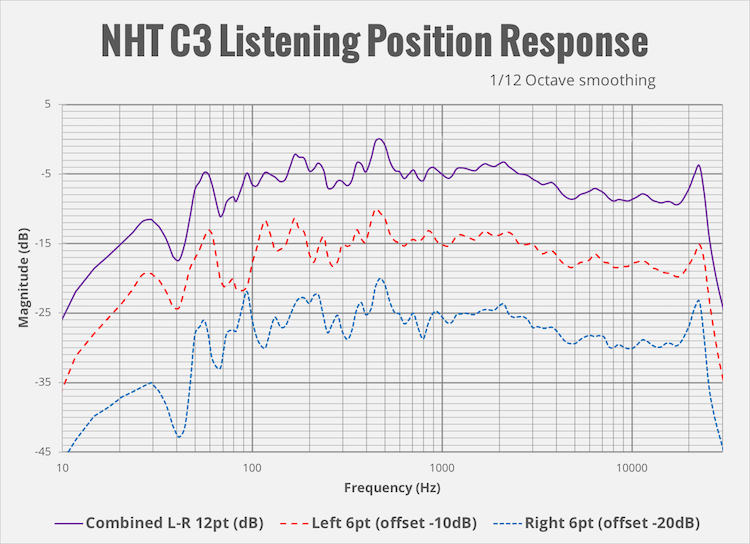
The next graph shows the averaged response at my listening position for the left speaker, right speaker, and both combined.

Both speakers’ response at the listening position matched very well. Bass extension goes down to 50Hz, which surprised me. I perceived them as bass shy without subwoofers. Because of the C3’s shallow closed box bass rolloff, they can excite room modes that a vented speaker with a similar cutoff cannot. The midrange elevation appears in these measurements, but otherwise the midrange and treble smoothly decline as expected from a good speaker in a reasonable room.

Normally I strongly recommend limiting any EQ or automated room correction based on listening position measurements to the modal region and below. However, due to their broad and smooth response the NHT C3 is the rare speaker that may benefit from correction above the modal region. If you use the C3’s with a parametric EQ or room correction system such as ARC, Dirac Live, or the Audyssey MultEQ App, try raising the maximum EQ point all the way up to 5kHz or so and see if you prefer the sound. You may not, but it is worth trying.

As discussed above, the dip-peak from 300-500Hz measured outdoors also appears in the room measurements.

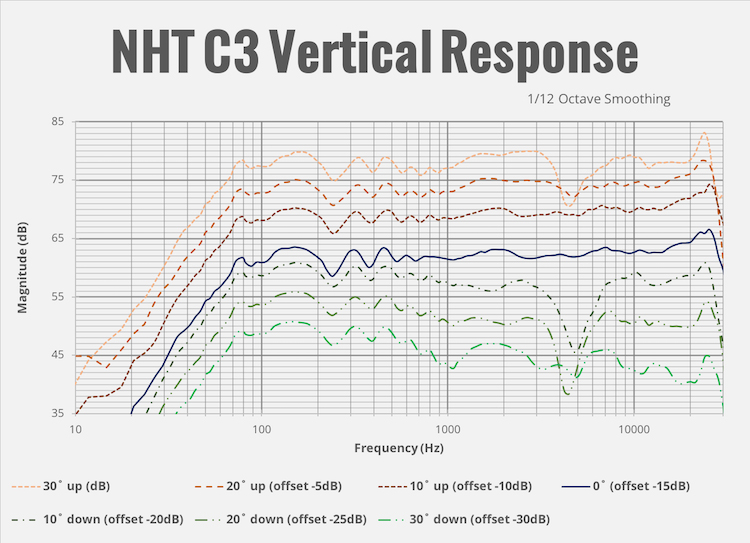
While the horizontal off-axis response is considered perceptually more important, the vertical off axis response matters, too. The next chart shows the NHT C3’s response from 30 degrees above axis to -30 degrees below axis, in 10-degree steps.

I did not find the C3 to sound much different standing vs. sitting at the listening position. The measurements confirm the C3 has very smooth response above axis. The notch that develops at about 4.5kHz may indicate the midrange/tweeter crossover point. NHT later confirmed to me that the midrange crosses to the tweeter at 4750 Hz.

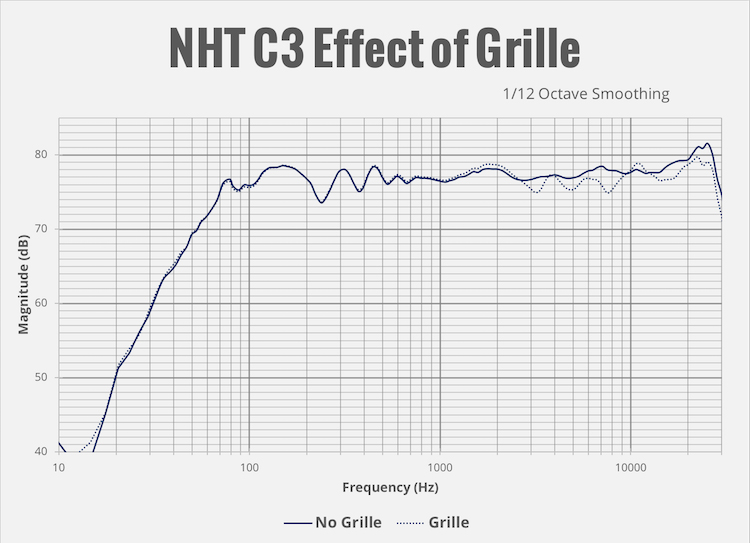
While I did not find the NHT C3’s grilles audibly consequential, the below graph indicates they have a measurable effect in the upper midrange and treble.

Lastly, given NHT’s comments about the C3 being a minor sonic update to the Classic Three, I decided to measure one of my Classic Threes concurrently with the C3’s. While SECRETS has not measured the Classic Three, at least two other publications have. My Classic Three measured similarly to those published measurements.

The first graph compares the listening window of the Classic Three and C3.

No question, the C3 has smoother and flatter response than the Classic Three. My listening window measurement of the Classic Three shows less top octave than the published NRC listening window. This difference is because the CEA-2034A listening window measurement covers a wider horizontal angle, and the Classic Three’s tweeter has surprisingly narrow radiation in the top octave.

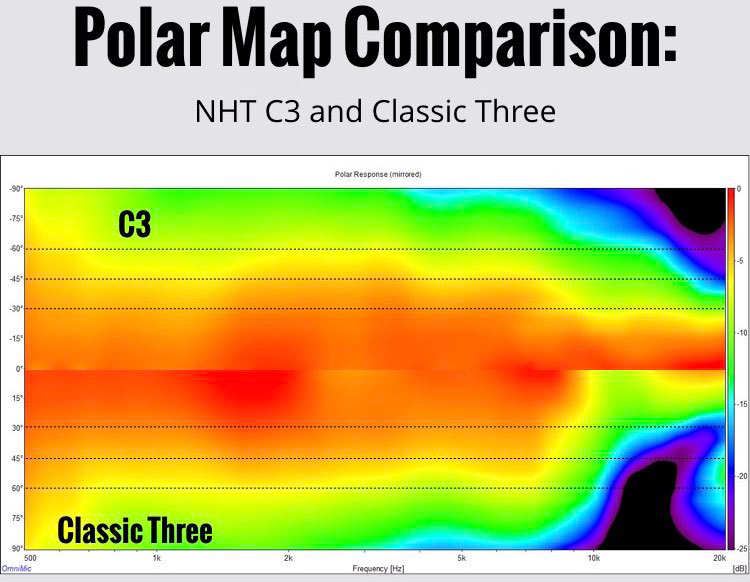
The next graph is a “split polar map.” It shows the horizontal radiation of the C3 on top (-90 to 0 degrees), and the horizontal radiation of the Classic Three on the bottom (0 to 90 degrees).

While both speakers have objectively excellent off axis performance, two differences are interesting. The Classic Three has wider coverage from about 600Hz to about 1.5kHz, and basically the same coverage over the next octave. Thus, the Classic Three does not share the C3’s overall midrange output bump. Perhaps NHT revoiced the woofer/midrange crossover? NHT suggested to me that this difference in lower midrange directivity may result from the different cabinet shape. Additionally, and surprisingly, the C3’s 1″ dome tweeter puts much more sound into the room above 7kHz than the Classic Three’s .75″ dome tweeter.

Conclusions

THE NHT C3 are great speakers to build a system around. Even more so with subwoofers.

NHT’s C3 bookshelf speakers really impressed me. They look great, sound great, and measure superbly. And in true NHT tradition, they accomplish all that at a very reasonable price. While I liked their predecessor Classic Threes enough to buy a pair for myself and deploy them in several systems, I believe NHT is too modest when they claim the C3’s sonic improvements are “relatively minor.” The C3 is better in every measurable way, and I never preferred the Classic Three to the C3 in listening.

For my tastes, the NHT C3 requires subwoofers for optimum performance. Fortunately, their sealed boxes and relatively high cutoff match the assumptions in AVR bass management tools. Thus, integrating subwoofers with a pair of NHT C3’s is less painful than usual. A new system could start with a pair of C3’s and add subwoofers later. Starting with great speakers is generally a more satisfying system building approach than starting with subwoofers. For a compact 2.1-channel system with very high performance potential, consider a pair of NHT C3’s with two identical subwoofers and an ELAC EA101EQ-G or MartinLogan Forte to integrate the speakers and subs. Such a system would punch well above its weight, cost, and ease of setup.

Based on my audition, audiophiles who resist subwoofers may be better served by NHT’s C4, which appears to be a floorstanding C3 with two supplemental 6.5″ woofers. It has about the same footprint as a C3 on a stand. But if you’re less of a basshead than I am, or you’re willing to add subwoofers, the NHT C3 bookshelf speakers will provide a wide open window into your favorite music.

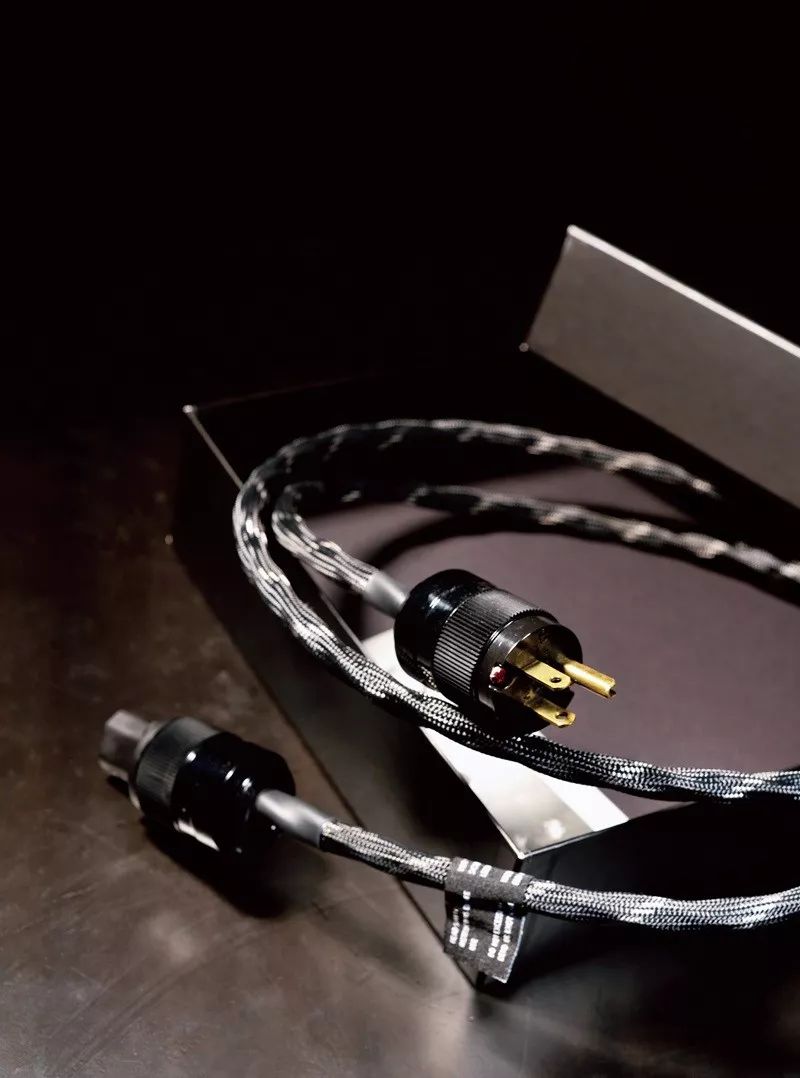
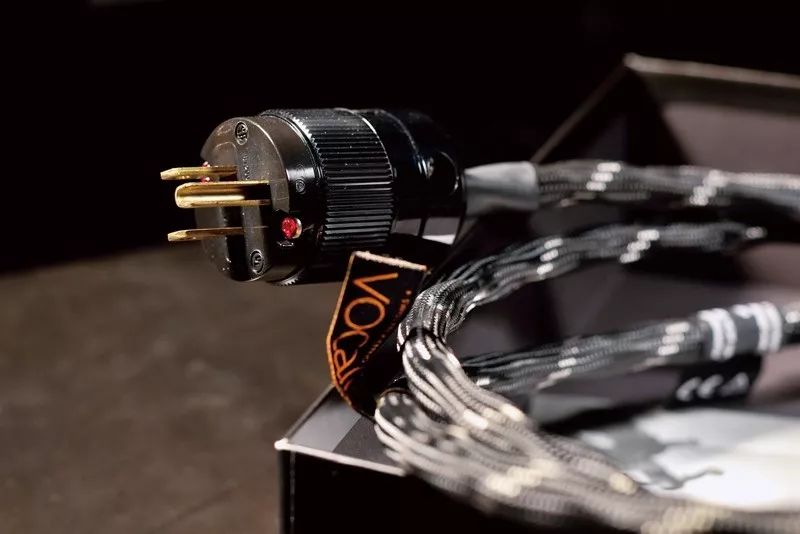
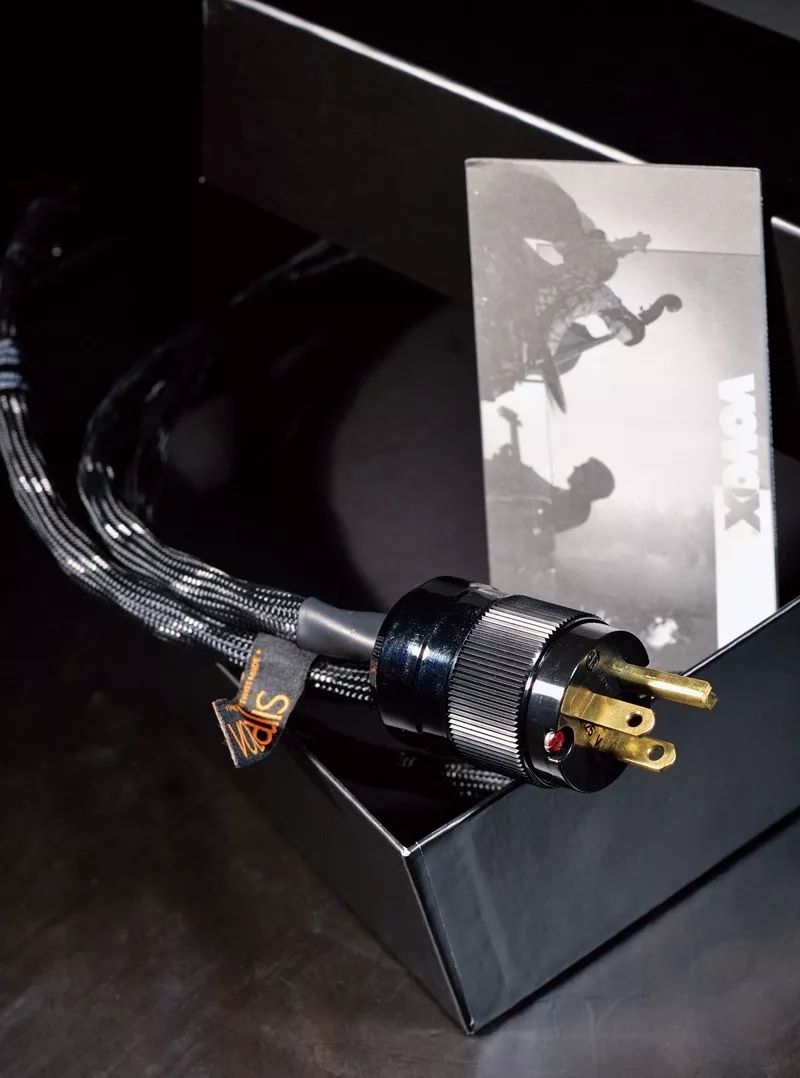
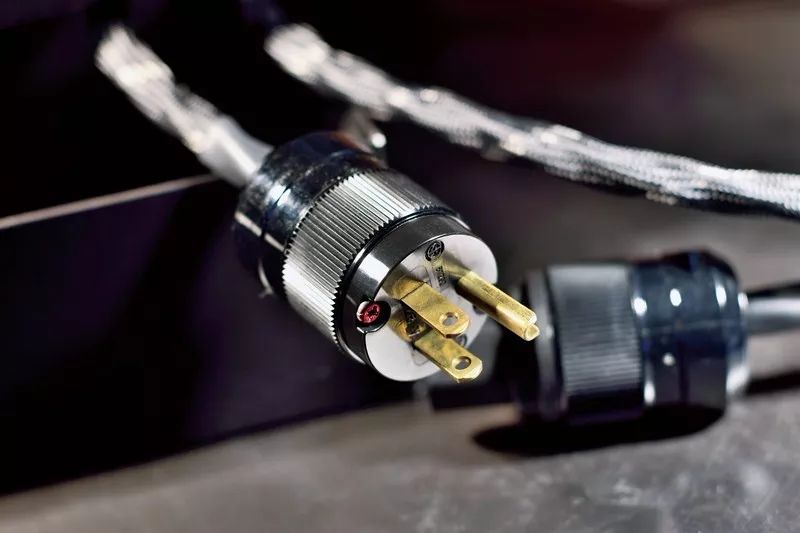
極具性價比的瑞士線材: VOVOX Vocalis 電源線

仔細觀察這幾年音響圈的發展,線材早已經從原本配件的角色發展成音響器材般的重要地位,而決定線材地位的因素不是別的,就是價錢。當許多線材廠不斷地設計出高價位線材的同時,一款兼顧技術與價錢的性價比產品似乎變成一種苛求了。近幾年,在眾多天價線材品牌當中,一個來自瑞士的專業線材公司進入了發燒友的視野,這家公司成立僅十多年時間,但是他們不做別的,就是專心研發線材,其生產的產品得到世界多家知名錄音棚的認可,並為他們提供專業線材,同時還是世界幾大知名Hi-End音響廠商的機內指定用線提供者。更重要的是他們的線材售價非常有吸引力!這就是 VOVOX (華豪)。

材料學工程師設計的線材
1997年,業余貝斯手 Jurg Vogt 在演奏過程中,發現線材引入的噪聲以及干擾尤為明顯,此外,很多線材都不能精准地傳送音頻,於是決定給自己開發更好的音頻線。而 Jurg Vogt 的身份正是材料科學工程師。別以為材料科學工程師就能夠很容易設計出優秀的線材,Jurg 經過試驗各種材料以及詳盡地測試,花去近 5年的時間,才設計出滿意的產品,此后,他便成立了 VOVOX (華豪)。

正是因為有著一位材料科學工程師的主理人,VOVOX 的產品才有著很多特別的設計。首先是實心導體設計,一般的音頻線材的中心導體通常採用多股細線繞制而成,而 VOVOX 的產品則採用一根橫截面積是一般細線好幾倍的實心導體作為中心,外部輔以細線包圍,再以特殊材質的絕緣材質,就算採用了實心導體,但是線材的柔韌性不受影響。而材質方面,VOVOX 的產品採用了 OFHC 高導無氧銅,通常這種純度的銅應用在低溫材料學當中。而線身的編織也是與眾不同,大部分音頻線材都採用了整體屏蔽設計,但是 VOVOX 廠方認為,屏蔽網包圍著幾條導線的設計雖然能夠有效地防止外來的干擾,但是對於幾條導線之間的干擾是無法避免的,於是 VOVOX 將導線之間的間距增大,並設計出兩種特殊的屏蔽方式,分別是無屏蔽(整體無任何屏蔽)以及線芯屏蔽(隻是線芯屏蔽,整體不屏蔽)的特殊設計。能夠設計出這樣的線材,可見 Jurg Vogt 對線材的要求非常之高。

瑞士原廠生產
VOVOX 線材都是在瑞士原廠生產。VOVOX 秉承了瑞士一貫以來嚴謹、真實的作風。VOVOX 的工程師們信奉一個原則:所有音頻工程測量的基准應該是人的耳朵。他們認為音頻曲線的差異,可以通過精確儀器的測量進行把握,但聲音色調的差異卻隻能在盲測中聽見。為了迎合不同階段發燒友追求的需要,VOVOX 推出了initio (原音)、vocalis (聲樂)、textura (監聽)三個不同價位的系列,2013年更是研發了 texture fortis (金監聽)系列以給用家帶來最完美的音樂享受。

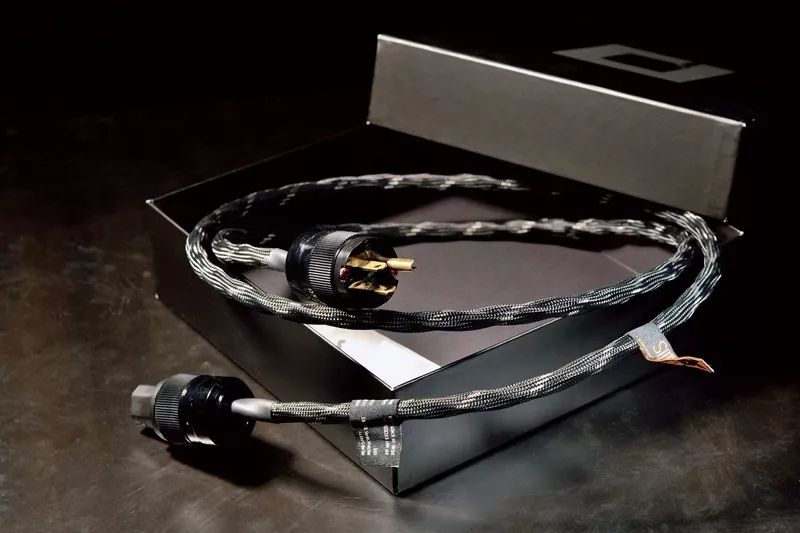
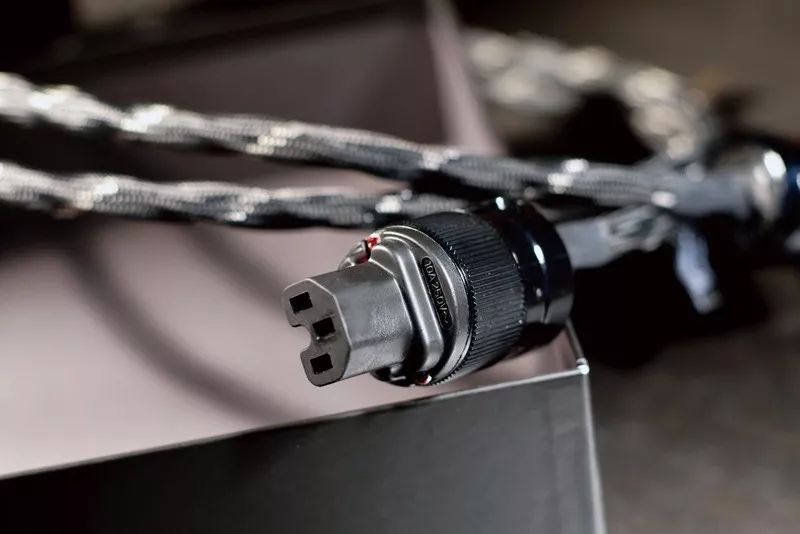
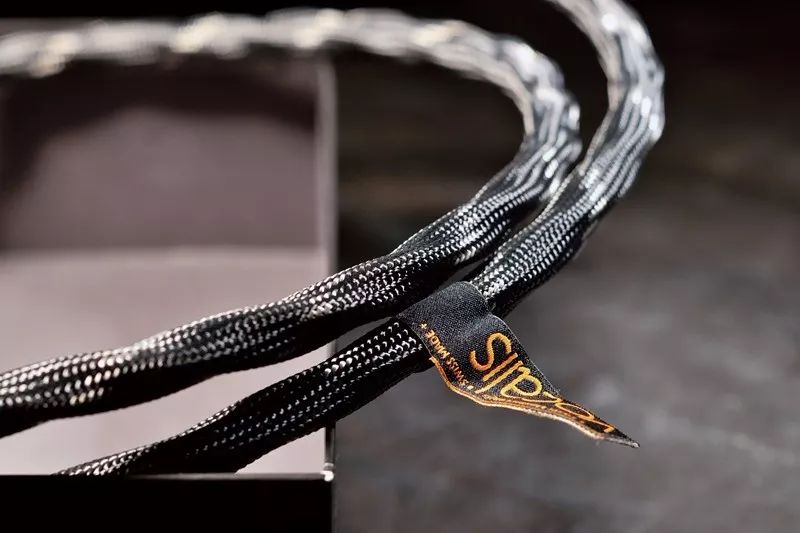
送到本刊試音室的 VOVOX Vocalis 電源線,是在上一級型號 Textura 的延伸出來的更為入門的級別,價錢也是讓人相當驚喜的。Vocalis 電源線採用單導體銅線制造,與絞線相比,單導體銅線的總邊界面減少了 90%,因為導線的每個邊界都是對電流傳輸有一定影響的,因此單導體銅線更利於電流的通過。雖然為單導體設計,Vocalis電源線的線身並非粗壯,但是相當柔軟,而且重量也是相對較輕的,對於較為輕薄的器材如數碼播放機、解碼器等都能適用,並不會因為線身過重使得這些輕量級的器材“翹起來”。

讓人驚喜的聲音表現
筆者先將 VOVOX Vocalis 電源線接到音源上進行試聽,同時採用了一條同價位的台灣產電源線進行對比,試聽《Paganini For Two》,筆者感覺到整套器材的解析力有了明顯的提高:背景更為寧靜,吉他的撥弦、小提琴時強時弱的演奏,還有樂器的定位,甚至演奏家的呼吸聲……這些細節都有了更上一層樓的表現。此外,Vocalis 電源線的聲音非常活潑開放,尤其是高頻的部分,在聽小提琴演奏時,琴音向上延伸的力道很足,因為收尾收得很漂亮,所以完全聽不到任何過於刺激刺耳的聲音,更可以完整地聽出這項樂器的特色與優點。

試聽人聲方面的表現,Vocalis 電源線給了我們全新的印象,VOVOX 不是一般我們對銅線的印象的聲音,它聲音飽滿而豐厚。而聲音的擴散部分,跟高頻感覺一樣,還是屬於開放而直接,此外,對線條的描繪不是非常銳利,而是很自然的呈現出來。特別是試聽合唱片段,合唱團以及伴奏當中的輕微舉動等的細節捕捉也能交代得一清二楚,毫無遺漏。

隨后,將 VOVOX Vocalis電源線接上功放。Vocalis 電源線最大的聲音特色是背景雜質極低,可以充分重放中低頻細節及能量感,因此樂器音像特別飽滿,樂器及人聲充滿朝氣及活力,音樂聽起來就是充滿許多以前聽不到的新鮮感受,好像在新的系統聽音樂一般。重放Mercury出品的《1812序曲》,開頭的弦樂群就是對於線材解析力的一大考驗,而加農炮及鐘聲能量形體更是對線材能量感把控的考驗。難得的是聲音並沒有因為強大的能量而變混亂吵雜,而應有的樂器都能完整地展現出來,隻有極大的場面下定位感略打折扣,Vocalis 電源線在此價格帶卻有全面的表現,令人刮目相看。

選購建議
VOVOX 的線材均有著極高的性價比,這次試聽的 Vocalis 電源線也是值得留意的產品。VOVOX 線材的聲音風格線條感強,聲場自然寬闊,背景極黑,細節豐富,通透,三頻銜接自然。難怪歐洲多家Hi-End音響品牌如 Orpheus、Soulution、FM Acoustic、GOLDMUND 等以及歐洲多家著名錄音室均採用 VOVOX 的線材,就連德國老虎魚(Stockfisch Records)唱片公司也採用 VOVOX 的線材來制作專輯,更重要的是,所有線材全部在瑞士手工制作,VOVOX 可謂是線材當中最具性價比的產品!

原創司徒耀明 “視聽前線音響短評” 2018-03

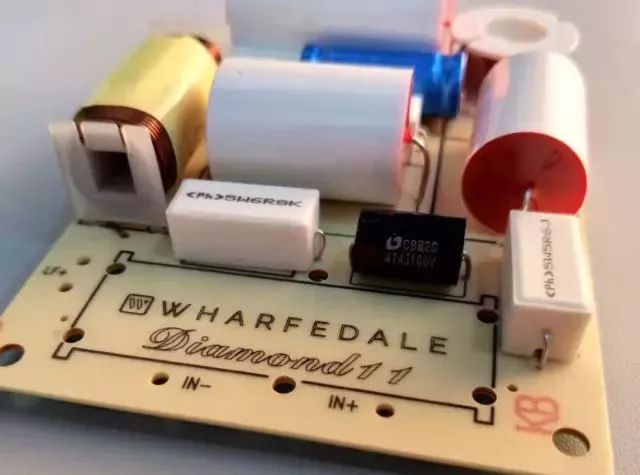
Wharfedale Diamond 11 技術揭秘:絲絲入扣的分頻核心,帶來栩栩如生的“英倫之聲”

Wharfedale(樂富豪)工程師認為:雖然喇叭單元在揚聲器系統內處於核心地位,但如果沒有一個精確的分頻電路,整個揚聲系統的表現也將會大失水准。

因此, Diamond 11 系列在設計時,使用了 Wharfedale(樂富豪)獨家專利設計的分頻設計軟件系統做仿真實驗,力求使低音/中音和高音單元的無縫連接形成自然完美的銜接。

▋多曲反復調試,找到表現最佳的聲音

一旦確認了最終的電路方案,在實際的調試過程中,Wharfedale(樂富豪)的工程師們通過精密的微調和嚴格的聽力測試對分頻器進行了縝密的評估。

一切以聽音測試的結果作為對品質的最終判斷,並以此為基准對分頻器分量值、組件類型和電路板布局進行最精確的調整,從而調試出最佳的音樂表現力。

調音選用的音樂涉及廣泛,包括但不僅限於:古典音樂、爵士樂,電子搖滾和民謠等廣泛的音樂測試范圍,並特別關注聲樂與器樂的品質表現,讓 Diamond 11系列每款產品都能帶來自然細膩、栩栩如生的的“英倫之聲” 。

▋ 精選高質量元器件

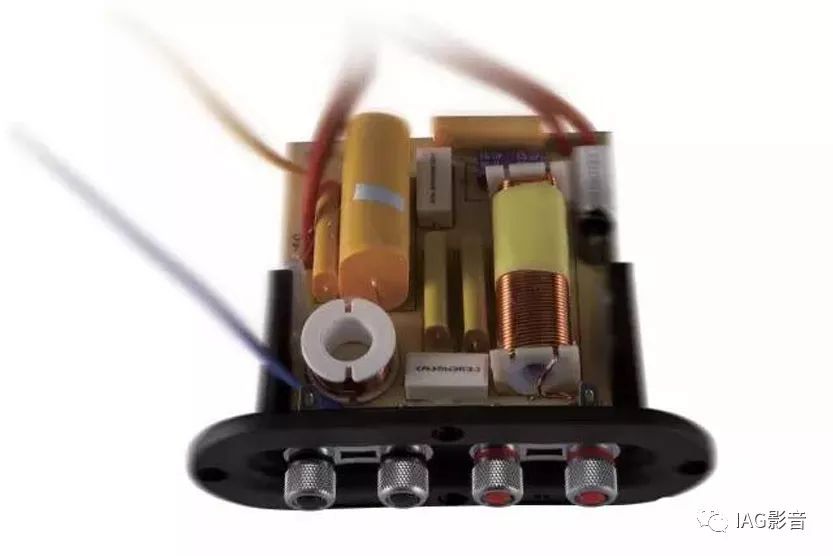
Diamond 11 的分頻器採用高質量元器件,每一個元器件都經過精心挑選,並進行專業的分析儀器進行檢測,務求令每個元器件均符合產品性能要求:

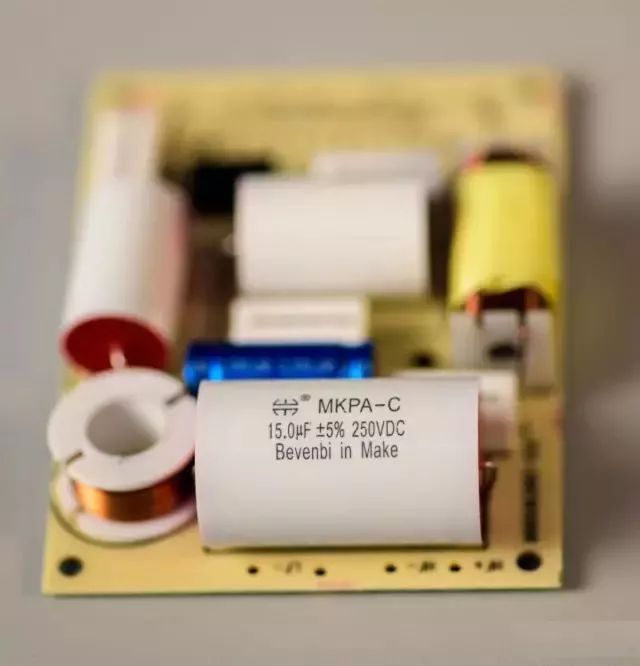
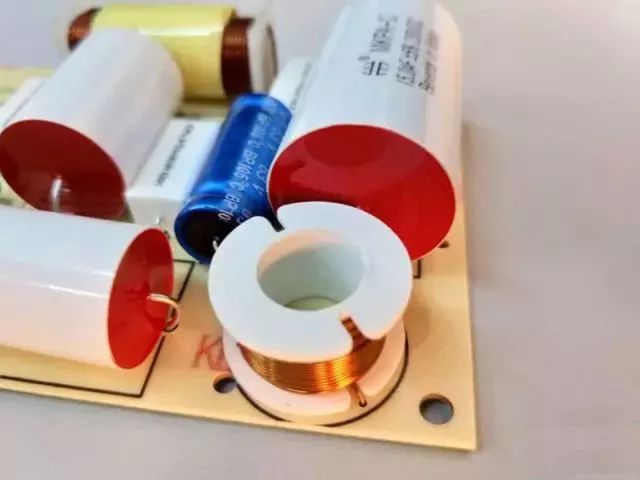
MKP 電容擁有滑順,流暢和音樂味,同時擁有良好的精確度、透明感和細節,使你隨時融入天鵝絨般黑暗背景下的全息聲場;精確配對的電容帶來充沛的低頻量感和綿密的中頻密度感,擁有流暢中頻和自然的音色。

採用高純度無氧銅繞制而成的電感,以優秀的卷繞工藝精致而成。具有高承載力,低功率損耗的特點,從而帶來優異的解析力密度感及動態,賦予耳朵不俗的聽感。

Wharfedale(樂富豪)工程師確信,分頻器的調試重點在於與揚聲器技術設計相結合。最大限度發揮喇叭系統和箱體設計的優點,讓音樂得以完美展現,才是愛樂人士對揚聲器關注的重點。

Step away from the soundbar – Wharfedale DX-2 Home Cinema Speaker Package Review

What is the Wharfedale DX-2?

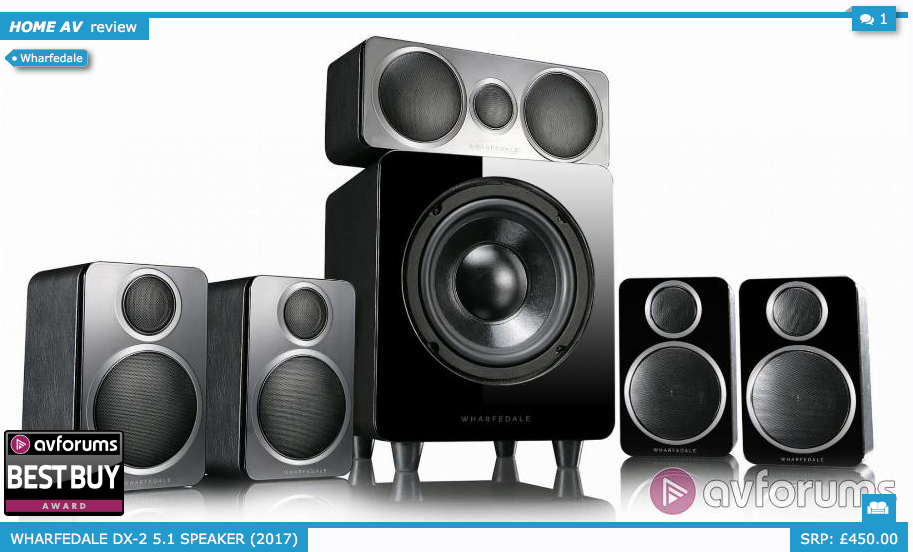
The Wharfedale DX-2 is a 5.1 speaker package and thus something of a rare breed in 2018. Coming in at £450, it is very clearly intended to contest parts of the market that many rivals have conceded to soundbars (and more often than not, proceeded to build one themselves). Paired with an affordable AV receiver, the Wharfedale could be part of a system for £700 which is pretty impressive judged by the pricing of a lot of the competition.

On the face of it, there’s a lot to be said for this approach. Your upgrades can be staggered rather than chopping the whole thing in and the DX-2 offers the promise of real surround rather than an approximation of it. The speakers themselves (as we shall cover) are compact and this shouldn’t be too challenging in most spaces. It’s easy to see the appeal of real AV over a simpler boost to your TV speakers.

Of course, the important question is just how much surround package can £450 get you? What has Wharfedale had to cut out, omit or sacrifice to get the DX-2 out the door for the money? Is the reason why this part of the market is now dominated by one box solutions because it simply can’t be done? Time to find out.

Specifications

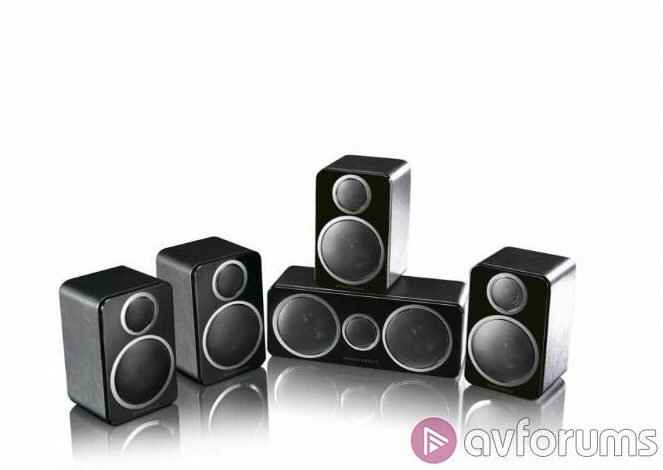
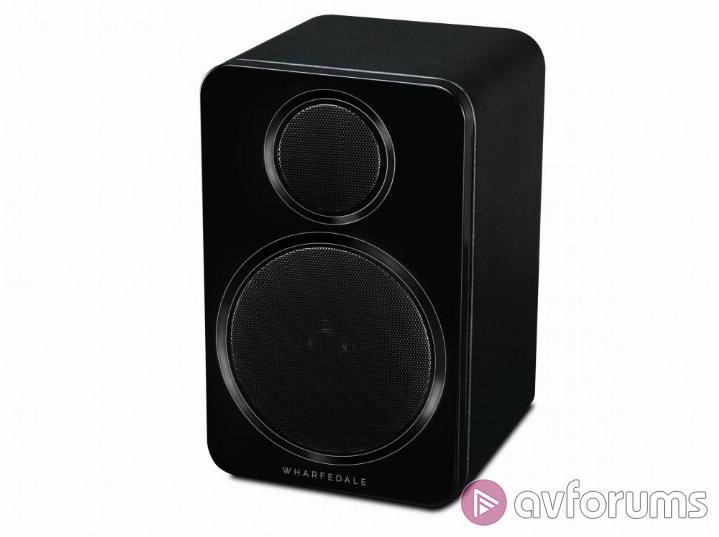
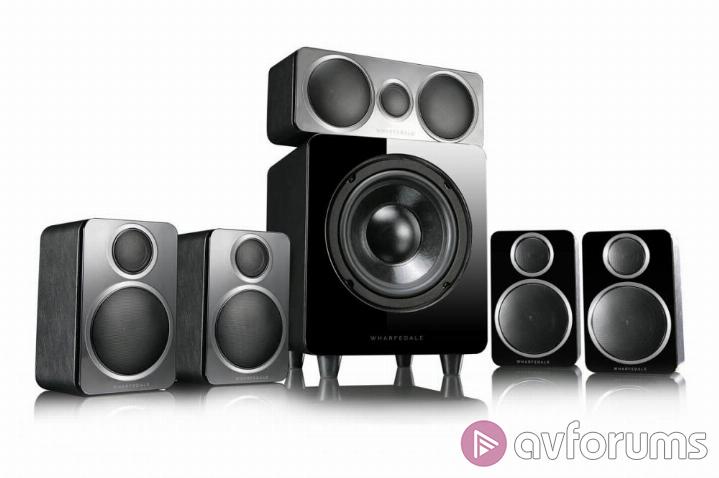
The Wharfedale is a sub sat based design with four upright satellites, a dedicated centre and a small active subwoofer. The satellites are very compact indeed with a height of only 19cm. What is notable therefore is that each speaker is a true two way design with a 19mm silk dome tweeter and a 75mm woven polypropylene cone. This configuration has been key to how Wharfedale has designed and built speakers for at least the last decade and the DX-2 is part of this system rather than something tacked onto the end.

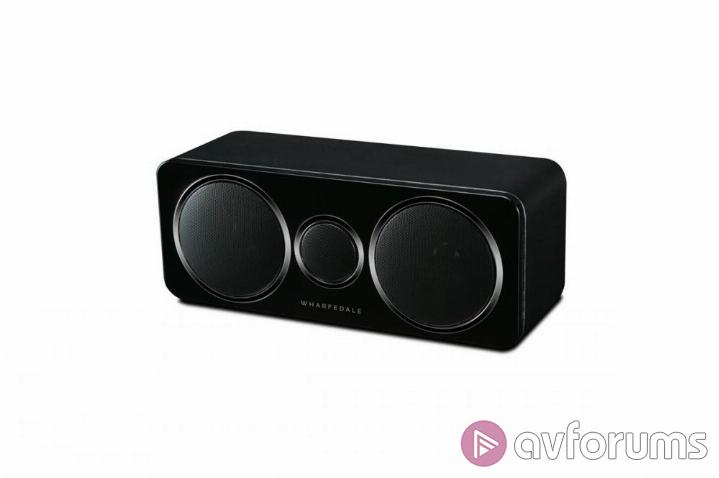
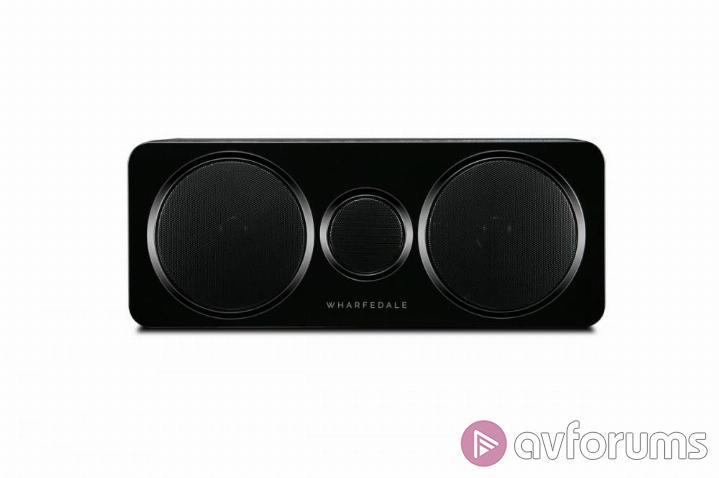
The centre speaker is clearly closely related to the satellites. It is effectively a ‘cabinet and a half’ type design with a second 75mm driver added to the cabinet. The arguments over the use of dedicated centre speakers will run and run but with a speaker cabinet of this size, I think it will help matters. The amount of information normally contained in the centre channel of the soundtrack sufficient that having an ‘anchor’ that manages this information is going to be useful in a speaker package of this size.

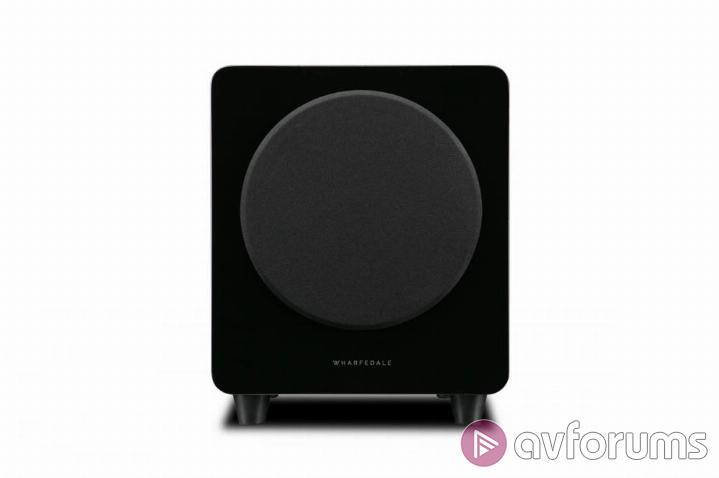
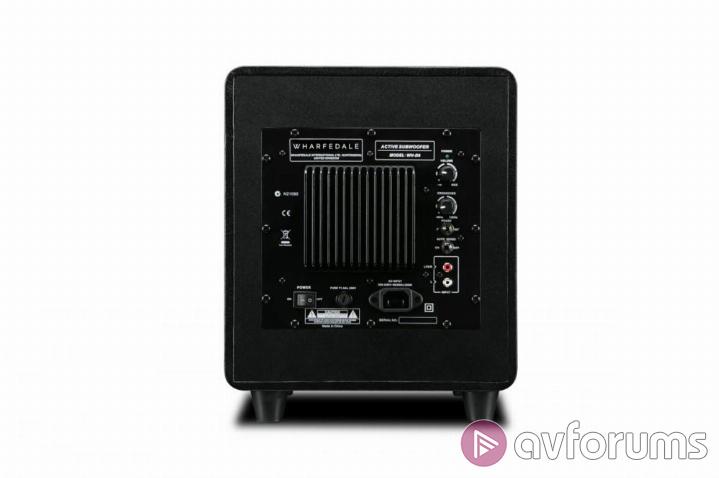
The subwoofer that partners these speakers is a compact design with a forward firing eight inch driver powered by a 70 watt amplifier. In a world of 1 kilowatt monsters, it might not sound terribly exciting but the reality of its execution is rather more positive than you might expect. You get an adjustable crossover (never a given at this price point), phase switch, stereo input and an auto on/off switch that can be bypassed (and that seems to work pretty well too). Given that this is going to be doing plenty of work in a system of this nature, this is very much a good thing.

These speakers aren’t huge and Wharfedale quotes a fairly honest sounding lower response of 110Hz being available at +/-3dB with 100Hz being available at -6dB. This means you will need to put a little thought into how you set the DX-2 up to get the best out of it. That sub will be at least partly directional so it will do its best work on axis with the front speakers – particularly for music. Helpfully, this is made easier by the cabinets being sealed and something you can wall mount without too much issue and the sub is also fairly easy to place. The subwoofer that partners these speakers is a compact design with a forward firing eight inch driver powered by a 70 watt amplifier. In a world of 1 kilowatt monsters, it might not sound terribly exciting but the reality of its execution is rather more positive than you might expect. You get an adjustable crossover (never a given at this price point), phase switch, stereo input and an auto on/off switch that can be bypassed (and that seems to work pretty well too). Given that this is going to be doing plenty of work in a system of this nature, this is very much a good thing.

These speakers aren’t huge and Wharfedale quotes a fairly honest sounding lower response of 110Hz being available at +/-3dB with 100Hz being available at -6dB. This means you will need to put a little thought into how you set the DX-2 up to get the best out of it. That sub will be at least partly directional so it will do its best work on axis with the front speakers – particularly for music. Helpfully, this is made easier by the cabinets being sealed and something you can wall mount without too much issue and the sub is also fairly easy to place.

Design

At £450, Wharfedale would be well within their rights to wrap the DX-2s various drivers in a container robust enough to stop them falling onto the floor and be done with it. That it feels (a lot) better than that is testament to the engineering and manufacturing clout that parent company IAG has.

The satellites are finished in a manner that balances two slightly disparate requirements very well. They manage to feel like they have elements of design and styling to them while remaining usefully unobtrusive. The use of a gloss front panel is smart and the chrome rings avoid everything feeling a little overly black (a white finish is due too). This is then partnered with a faux leather surround for the cabinet. I can’t pretend to love this – I don’t really like actual leather on speakers – but it helps to make the DX-2 feel like something more than a ‘rubber mat’ product. You could be slightly critical of the grills being non removable but, honestly, I’m not sure how many people are going to want to remove them.

No less importantly, it all feels well assembled too. The cabinets are roughly a kilo each (with the centre being a little more) and this is sufficient to make them feel like a meaningful assembly and points of contact like the speaker terminals are of good quality and should work with the majority of cables that the DX-2 is likely to encounter. The subwoofer manages to deal with the standard issues of small affordable subwoofers well. The cabinet avoids any unpleasant resonances and the feet are sufficiently pliant that it stays put when you crank it up.

The long and the short of it is that this is a pack that feels more than worth the asking price. Crucially, it has he measure of most rival soundbars and shouldn’t – cabling not withstanding – present a significant challenge to get in and running. It also shouldn’t be too much of a challenge to most AV receivers to drive. The satellites are quoted as having sensitivity in the mid eighties which isn’t bad for a speaker of this size assuming a largely eight ohm impedance.

“The long and the short of it is that this is a pack that feels more than worth the asking price”

How was the DX-2 tested?

The Wharfedale was placed on a combination of Soundstyle Z2 speaker stands, a Quadraspire QAVX rack and the floor (sub). It was connected to a Yamaha RX-A3040 AV receiver with a Cambridge Audio 752BD Blu Ray player and Sky HD acting as source and a Panasonic GT60 Plasma acting as the screen and supplying Netflix and Amazon as further sources. Test material has included Blu Ray, broadcast and on demand material as well as some FLAC files and Spotify via the Spotify connect function in the Yamaha.
Sound Quality

As the review sample appeared to have done plenty of running before it arrived here, I haven’t put a huge amount of running in into the DX-2 and as the behaviour of the speakers hasn’t changed in the time it has been in use suggests that it is behaving as it should. I’m pleased to report too that the behaviour in question is very, very positive.

First up, the Wharfedale does the one thing absolutely crucial thing that a sub/sat system has to do in order to work and that is that it integrates the sub and the speakers correctly. With the crossover of the sub bypassed and a 100Hz one running in the Yamaha (I did briefly try a 120Hz one but feel that a 100Hz one works better even allowing for a roll off in the output from the satellites), the performance is extremely cohesive. I re-watched Sleepy Hollow with the DX-2 in place and the way that the DX-2 renders the woods from where the horseman emerges is really rather impressive. There’s plenty of low key detail in the mix and those little satellites do a fine job of rendering it.

They also show excellent tonal balance. The driver materials in use in the DX-2 are hardly the stuff of science fiction but they serve as a welcome reminder that the classics work well. Early on in the film, there’s a short (but effective) cameo from Sir Christopher Lee. With the DX-2, even with your eyes closed, the output of the centre speaker is very much Christopher Lee. The presentation is refined, detailed and continuously engaging.

There are limits of course. Even on the end of the capable and unflappable Yamaha 3040, the Wharfedale has a very clear comfort zone in volume terms and pushing too hard will result in it starting to harden up and become somewhat brittle. Watching the catacombs sequence in John Wick 2 at a loud level comes across as a bit breathless and constrained. This being said, in a normal lounge, listening at more day to day levels, the results are still very entertaining.

Interestingly, the sub has more poke in it than the satellites do. For a fairly small and sanely powered box, it has no trouble giving you some decent bass extension and staying cohesive and together even with fairly complex material. The good folks of SVS are unlikely to stop making their instruments of destruction when confronted with it but after a week in situ, it is very clear that plenty of effort has been expanded on it.

Where this effort really shows for me is when you switch over to general TV viewing – conducted at rather lower levels and with less sophisticated soundtracks than on movie night. The Wharfedale is a truly excellent partner for this day-to-day material. It sounds spacious, refined and convincing across pretty much anything you might choose from the visual insanity of Britannia to the eyegasm of The Grand Tour. The latter gave the DX-2 the chance to show off the tonal realism it has by doing a fine job of capturing the effort that had gone into recording the Jaguar XKSS and Aston Martin DB4 Lightweight. The sheer array of mechanical noise from the Aston in particular is superbly rendered and very immersive. The single biggest accolade I can give the DX-2 is that I don’t feel compelled to re-watch anything once it had been re-boxed.

Used in 2.1, the DX-2 is capable if not as capable as using a straight pair of stereo speakers. Listening to The Thread That Keeps Us by Calexico, which is well produced and tonally accurate, that slight dip in output where the sub finishes and the sats really come into their own is noticeable (but again, for me at least, preferable to the 120Hz crossover setting). There is a very good stereo image though and the sub is light enough on its feet to deal with complex basslines without getting slow or wallowy. I suspect that the critical aspect of judging the DX-2 is that no AV solution (soundbar, HTIB etc.) that I’ve listened to recently sounds better.

“The single biggest accolade I can give the DX-2 is that I don’t feel compelled to re-watch anything once it has been re-boxed”

Conclusion

Wharfedale DX-2 Home Cinema Speaker Package Review

My time with the DX-2 has been illuminating. In so many ways, this is not a radical system – it is very similar in concept and execution to the old Mordaunt Short Premiere systems which I used to provide technical support for over fifteen years ago. There’s nothing here that is in any way revolutionary… but… it doesn’t stop the DX-2 being seriously good.
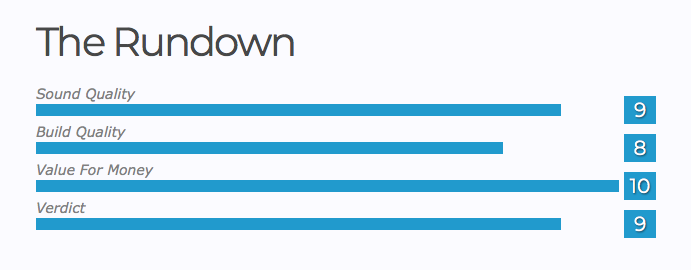
Partnered with a decent affordable AV receiver, this is a package that doesn’t do a convincing facsimile of surround, it instead offers honest to goodness home cinema thrills at a more than sensible price. It does this while taking up very little space and being perfectly up to the job of working in most decors. If you can handle a moderately more complex cabling arrangement than would be required of a soundbar, then the Whafedale DX-2 shows that there is a whole world of fun you can get in on and for that reason this bargain box of brilliant is an indisputable Best Buy.

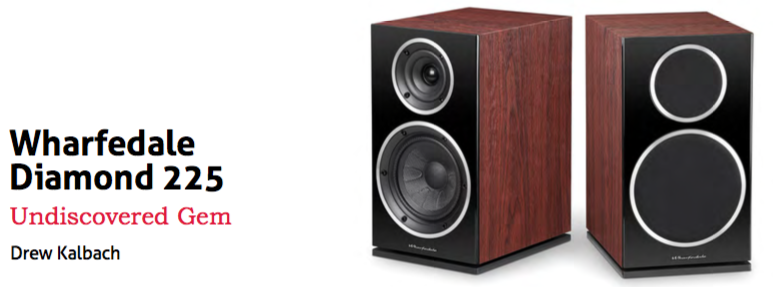
Undiscovered Gem – Wharfedale Diamond 225

This is the world I grew up in: iPods, ear buds, tinny laptop speakers. Most people my age don’t think twice about their equipment, so long as it makes sound. Your average iTunes a cionado isn’t going to shell out big sums of cash on stereo equipment, especial- ly when everything seems to have speakers built in these days. Why bother?

But there is good sound at approachable prices, fantastic sound really, the sort of sound that people obsess about. It’s not a mystical thing; it’s a visceral one; and younger people are nally starting to gure it out. Vinyl’s comeback is proof of that. The iPod generation is ready for quality; it’s just a matter of guring out how to get it. And for me, it always starts with speakers.

There’s nothing better than opening something new, which is probably why people watch videos of strangers unboxing hard- ware on YouTube. The Wharfedale Diamond 225s sat wrapped in plastic covers sandwiched between tight foam inserts at the top and bottom, keeping them secure in transit. When I nally got them up and out, I stared at the gorgeous rosewood-ve- neer boxes, with their black-lacquer MDF baf es and the small Wharfedale logo just beneath the woofer. I leaned back in my desk chair and thought: “Wow, those are pretty.” They’re clean, unpretentious, and clearly put together very, very well.

OK, the speaker grilles were a little weird. They’re two round foam pieces with little plastic rods that snap in over the tweet- er and the woofer, leaving the rest of the baf e exposed, as opposed to something that covers the whole front. It’s not my favorite aesthetic choice, though it’s not necessarily a bad one, either. Just a matter of taste, I guess. At least they’re easy to remove, so I popped them off and forgot about them.

The 225s are fairly compact, though deep and solid. Sound is always the most important aspect of any audio component, but you still have to live with these things, and it’s easier to live with beautiful stuff. Fortunately, they’re exactly what they need to be: simple and attractive. Clearly the people at Wharfedale know what they’re doing, which makes sense, considering how long they’ve been around. Wharfedale is a relatively large British out t founded back in the 1930s, and they’ve been a big name in British hi-fi ever since.  The Diamond series debuted in 1981, and Wharfedale has been slowly improving the Diamond designs and sound without inflating cost, and that’s exactly what I’m looking for.

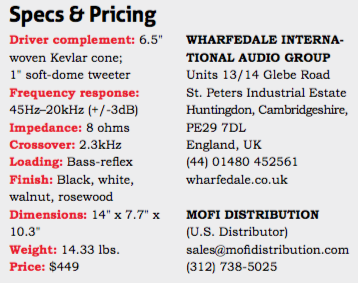
The 225s list at $450, which is a price an actual human with a real job could potentially afford. If you’re like me, and you’re sick of “affordable” equipment pushing easily into the $1000 range, this review is for you. Fact is, the majority of people can’t shell out the cash for the absurdly hyper-expensive audio equipment that clogs up most blogs. If we want to get the next generation to fall in love with great sound, I think it’s about time to accept that there’s some seriously good, affordable stuff worth writing about.

So with all that in mind, I put the 225s on top of my cheap stands, hooked them up to my (also British) Cambridge Audio CXA80 integrated, and turned it all on. Truth is, my listening space isn’t ideal. It’s small, oddly shaped with a sloping roof, and my speaker placement is limited. They have to be up close to a wall, though fortunately for me, these Wharfedales were designed with that in mind.  The slot-loaded bass port res downwards, instead of back, minimizing room inter- action. So don’t worry about sticking them on either side of an entertainment system in the living room, for example, or squeezing them into a small of ce. Like I said, we have to live with these things, and space is sometimes at a premium.

Diving into the sound, I wasn’t sure what to expect. Bookshelf speakers typically aren’t known for deep, earth-shaking bass, and the 225s are no different in that regard. They aren’t going to rattle anyone’s bones and dig deep into that 40Hz bass region, which is fine—that’s what a sub’s for. Still, when I started with “Sparkle,” the rst track on Tatsuro Yamashita’s City Pop masterpiece, For You, I got such a satisfyingly deep drop that I didn’t find myself missing the lowest of the low registers. Frankly, I didn’t find myself missing much of anything at all, especially when that clean, twanging guitar played its insanely catchy riff.  The opening of “Sparkle” features a heavy, show-stopping reveal, and the 225s were more than up to the task of reproducing that big moment. I was surprised by how but I think it’s so much more than enough for my small listening space. I can’t say how well they’d do in a much larger room, although I suspect they’d be up to the task.

The other good thing about “Sparkle” is the way Yamashita’s voice is recorded. There’s tons of reverb and space, his notes just drifting off into the background, and the 225s highlighted that nicely. For such small speakers, these things could create an impressive soundstage. Not the greatest, most spectacular presentation, but plenty to keep me engaged. Sound hung, drifting, projected nicely in both directions. At some points at higher volume, I noticed a bit of gristle in the upper registers, and sometimes the lower end felt a bit soft. I have to admit though, I was having fun just running through my favorite sides, one after the other, looking for any sonic detail that might be worth delving into. That’s the best sign that a piece of equipment is working. These little boxes just seemed to get me.

But I had to push the 225s, give them something challenging.  That’s the whole point of a review, after all, to see how these things really perform. I turned to one of the strangest and most complicated albums of the year, King Krule’s The Ooz. This double-LP is as idiosyncratic as it is fascinating. On the most basic, surface level, it’s an experimental trip-hop masterpiece, but I think it’s so much more than that.  It’s a sonically dif – cult album, with deep, rolling bass lines, up-tempo shifting beats, and Krule’s own morphing, grinding voice switching registers at will. The 225s did not disappoint me. They had a solid grip on the bass, keeping up with the hairpin-turn bumps and rumbles. The horns blaring in the background of “Dum Surfer” were rendered but- ter-smooth, along with that catchy guitar floating over the tight snares. I was drawn to the way the 225s made THE Ooz, somehow more accessible.  It’s such an intricately layered album  and little details such as Krule’s English slang could easily be missed if anything muddy got in the way. I could feel the de- tails of his voice despite the heavy synths and shimmer- ing guitar effects. The 225s did a great job of creating a solid soundstage with minutely differentiated pieces. These songs felt so simple at first listen, but it took a piece of equipment like the 225s to do this level of complexity justice.

Finally, I wanted to hear how the Diamond 225s would deal with rich, complex upper-range vocals. These speakers could handle bass and midrange, but I was curious as to how they’d do when it came to subtlety. For that, I turned to Moses Sumney’s odd, pared-down, R&B-influenced album, Romanticism. Sumney’s music focuses so much on his intense, wonderful, lilting falsetto, which nicely showcased the 225’s ability to highlight delicate high-end and midrange detail as he moved through registers. I had a feeling the 225s would be plenty engaging with a softer sound, and I wasn’t disappointed.  The bass guitar on “Man on the Moon (reprise)” barely kept pace while Sumney’s vocals played above it, yet through the 225s the layers ofSumney’s voice came through clean, uncolored, and almost liquid. I didn’t really understand this album on first listen, but as I went through it again and again on the 225s, I came to really love its low-key cleanliness.  In the end, I think that’s the real strength of the 225s.  They weren’t throwing the deepest bass or resolving the upper registers absolutely perfectly, but they had weight right where I needed it, a;ong with the details and the clarity necessary to resolve complex tracks into enjoyable musicality.

These speakers remind me that the “entry-level” isn’t a bad place to be.  Inexpensive components are getting better and better as high-end design trickles down into supposedly budget hardware.  The diamond 225s take everything good about high-end audio, the power of beautifully reproduced music, and they make it accessible to a wider audience.  I believe the 225s would satisfy just about anybody for fantastic-sounding speakers design by a respected manufacturer at a reasonable price.  They’re not perfect, but man, they’re still more than good.  I highly recommended them.
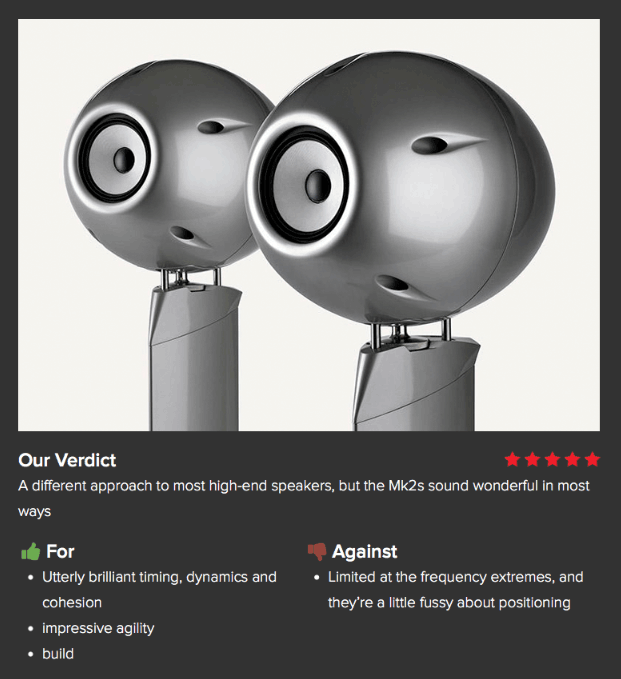
 From “The Absolute Sound” no. 282


After hearing these incredible TS712z Mk2s, you’ll think that everyone else has got it wrong, and Eclipse has got it right!

Eclipse’s range topping TD712z Mk2s are a wonderful mixture of sublime brilliance and mediocrity.

It all stems from the company’s dogged determination to produce a speaker that can properly reproduce an impulse signal.

Impulse? It’s a single transient lasting a very short period of time. Such a signal contains all frequencies, and Eclipse believes if its speakers can produce an impulse correctly, then everything from timing to detail resolution will fall into place.

So, the engineering approach is as distinctive as they come. Eclipse uses a single drive unit to avoid all the phase and integration concerns that are part and parcel of any multiple driver arrangement.

No crossover circuit

It also means there isn’t a crossover circuit – there’s no need with just a single driver – so all the resolution, dynamic and phase issues of such circuits are bypassed.

That single drive unit is held rigid by a dense anchor inside the enclosure, which diverts any vibration energy into the dedicated stand.

The enclosure is also held by the anchor, but is decoupled – meaning little of the drive unit’s energy is fed directly into the cabinet. This reduces resonance to a very low level.

The enclosure’s egg shape helps too, minimising diffraction and improving rigidity. Making it out of ABS – fancy plastic to you and us – means it’s strong and very well-damped.

Design changes pay off

The most obvious changes from the early version of this speaker include a 50 per cent larger enclosure and a new drive unit.

The design aim is to deliver greater bass and smoother treble without sacrificing the model’s traditional strengths. And There’s no doubt Eclipse has succeeded.

The sonic presentation is more tonally even than before. There’s enough bass weight for the speaker to sound balanced without using a sub, and its extra treble energy helps openness.

That said, the 712z Mk2s are still compromised at both frequency extremes. That 12cm fibre glass driver is still a relatively small unit, and has no chance of matching the kind of low-end grunt just about any other five grand speaker has in spades.

High frequencies, despite the gains, still lack the extension and refinement expected at this price level. The 712’s dispersion at treble frequencies is still relatively poor – the driver is too large to disperse high frequencies well – so precise positioning is crucial.

Well defined and precise

But make no mistake, there is plenty to enjoy. When it comes to timing, dynamics and detail resolution, we doubt you’ll find better – at any price.

Much the same could be said of the stereo imaging. No other speaker in our experience, with the possible exception of Quad’s electrostatics, can produce such a well-defined and precise sound stage.

These Eclipses sound more life-like and cohesive than just about anything you can buy.

They play Tori Amos’s Abnormally Attracted to Sin with all the insight and subtlety you’d want, yet still have the power and excitement the likes of Kings Of Leon deserve.

Far from conventional speakers

Multi-driver alternatives put bandwidth ahead of cohesion and timing.

Compare any of these to the Eclipses, and they sound messy and poorly organised. The flip-side is, they’re more expansive tonally and can fill a room better.

All speakers are engineering compromises. Eclipse has a different set of compromises to everyone else: give them a long listen and it’s hard to argue they’ve got it wrong.

From “What HiFi” UK

Size isn’t everything – Wharfedale DX-2

Wharfedale’s commitment to affordable – surround sound cheers Ed SeHey

It wasn’t too long ago that an entry-Level AVR partnered with a sub/sat speaker package was the default starting position for home cinema thrills. As such, any self-respecting speaker brand had one in its inventory. Yet times change — soundbars have left the compact home cinema option looking a bit Less compact.

Not everybody has abandoned the old ways, though. Wharfedale made us very happy with its DX-1SE array [HCC #267 — and our 2016/2017 Best Compact Speaker System award winner], which was very much in the classic sub/sat system mould, and it has now clearly felt that the design had more to offer. so has released the DX-2.

On the face of it, it doesn’t Look like too much has changed. You still get five tittle speakers and a subwoofer. But Wharfedale says that a lot of what you see is different — including cabinet designs, drivers that have been ‘fine-tuned’, and boosted subwoofer power.

So, at £450, is this is a tempting proposition?

Compact convention

In terms of speaker design, the DX-2 doesn’t push any boundaries. It features two pairs of compact satellites that function as left and right channels, front and rear. Each is a two-way design, with a 0.75in soft dome tweeter and 3in woven polypropylene midbass driver, and looks like a shrunken bookshelf speaker. These satellites are joined by a dedicated centre, which adds a second 3in midbass driver to the spec rather than simply placing a satellite on its side.

The system is completed by the WH-D8 active subwoofer. In a world of multi-driver monsters with output power in the kilowatts, a sub with a single 8in driver and 70W (150W peak) amplifier might not stir the blood, but this is still rather more subwoofer than some soundbar rivals possess. Most importantly, it feels like a properly engineered device. The seated cabinet is mounted an feet that are pliant enough to isolate it from the outside world, and ensure it doesn’t make a bid for freedom if you crank the levels up. You also get a crossover control, a phase switch and the ability to bypass the auto on/off function — although, it has to be said, this works pretty well.

The WH-D8 is going to be pretty busy in a system of this nature because the output of the satellites doesn’t drop especially Low. Wharfedale quotes a lower response of 120Hz (+/- 3cI8) and 100Hz at a more severe roll-off (+/- 6dB). As this means the sub’s output is likely to be at least partially directional, I found it does its best work on axis with the front speakers.

Crucially, the DX-2 package doesn’t feel cheap.  The finish of the satellites is fair, with a gloss-black front panel brightened up with chrome trim rings. I’m Less sold on the leatherette wrap on the cabinets, but it’s largely unobtrusive and the speakers themselves seem solid and well made.

At the moment, the DX-2 is available in black, as pictured, but a white finish is due to surface too.  The speakers can be wall-mounted via keyhole fixings, and they benefit from decently rugged speaker terminals. There are no spring-clip holes here.

Overall, I’d argue the Wharfedale system is built to a standard that is entirely competitive with soundbars in the £600-£700 range. This is important because the benefits of separate receivers and speakers are worth repeating. Not only can they offer authentic surround sound, they’re likely to offer better connectivity, improved stereo performance and the ability to be upgraded independently of one another. Wharfedale has an eye on this already, and has announced that an extra pair of DX-2 satellites will be available for £100 to enable expansion to 7.1.

Against this, you do have the greater complexity and cabling to consider, but installing a setup of this ilk is not exactly arduous.

Turning up the Wick

No less importantly, the DX-2 doesn’t sound cheap either. With the bruising core TrueHD mix of John Wick: Chapter 2 (Btu-ray), the Wharfedales cover all the basics correctly. With the woofer at the front of the room, I preferred using a 100Hz crossover to a 120Hz setting. I didn’t perceive there to be any `hole’ in the system’s bass response; the DX-2 instead sounded cohesive and controlled.

The movie’s opening chase through the streets of New York is handled well. The engine sounds of the slower cars that Wick’s Chevelle overtakes were smoothly passed from speaker to speaker.

The enclosures are, in home cinema terms, fairly small, yet the soundstage delivered never sounds small and creates a convincingly room-filling experience. Sure, there are limits. The sequence where Wick falls back through the catacombs can reach the maximum level of what the satellites are capable of handling, meaning they sound more congested, but the volume level that this occurs at is fairly substantial.

It is also worth noting that this limit is much more on the part of the satellites than the subwoofer. The WH-D8 bass bin does a superb job all the way from its handover to the satellites, down to the point where energy is felt rather than heard. It sounds larger and more potent than you would expect, and balances this with a likeable sense of agility and speed.

This all means that the DX-2 is well equipped to tackle fast-paced but deft movie moments. The sequence where Joy and Sadness are ejected from the headquarters in Pixar’s Inside Out (Blu-ray) convinces, with the speakers nailing the movement of the memory balls and general sense of disarray while keeping the score and dialogue distinct from the wider effects.

The use of a dedicated centre speaker really pays dividends in situations like this. Sharing drivers across the front soundstage keeps it uniform tonally, resulting in a robust, believable sound with smooth transitions, and dialogue that’s never lost in the mix even when things get hectic.

The system maintains its clear and cohesive presentation with things like Sky’s deranged (but weirdly watchable) Britannia; is a satisfying listen late at night with the volume dropped low; and turns in a decent presentation with music too. That well-judged handover between satellites and woofer ensures an impressively fulsome delivery of Kraftwerk’s Aero Dyriamik (FLAC, 3-0 The Catalogue), with its bassline rolling along nicely with no sense of overhang or delay, nor any obvious feeling of there being three speakers rather than two. With the more considered and relaxed Losing to You by Stars, the DX-2 delivers the vocal centre of the song with surprising scale and genuine realism, given the dinky nature of the satellites. As with film use, you can push the speakers to run out of headroom, but the sub remains as unburstable as ever.

This 2.1 performance naturally isn’t as refined or largescale as that of a pair of floorstanding speakers, but it is achieved while taking up an awful lot less space in the room. And it’s more than good enough to balance some stereo listening along with multichannel.

A slice of home cinema

Again, Wharfedale has got the balance between price and performance bang an. The sonic chops of this sub-E.500 package are considerable, while styling is good and setup fuss-free. There are speaker wires to run and an AVR to budget for, but the DX-2 is not so much bigger or more cumbersome than a high-end saundbar, while offering much more flexibility. This gives buyers a real slice of home cinema joy at a very sensible price point. Like its predecessor, it’s a bit of a bargain.

From “HOME CINEMA CHOICE MARCH 2018”

Social media & sharing icons powered by UltimatelySocial