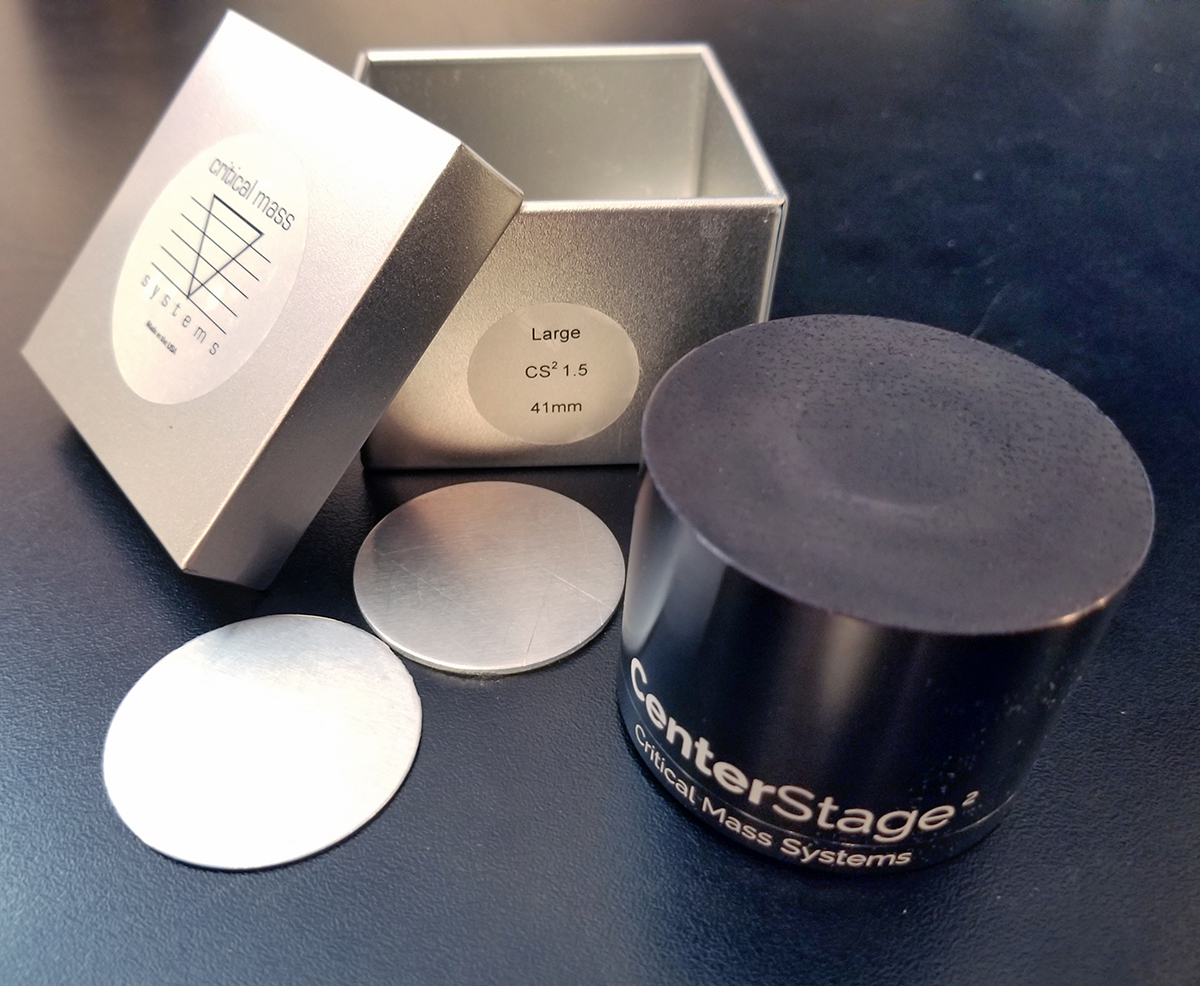
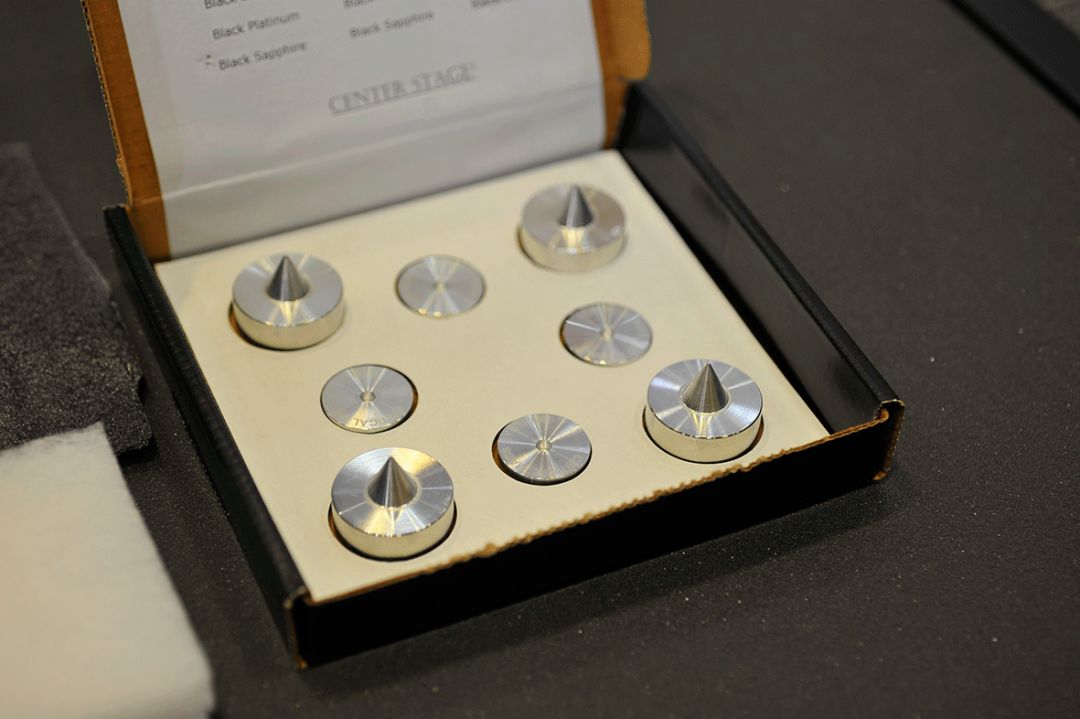
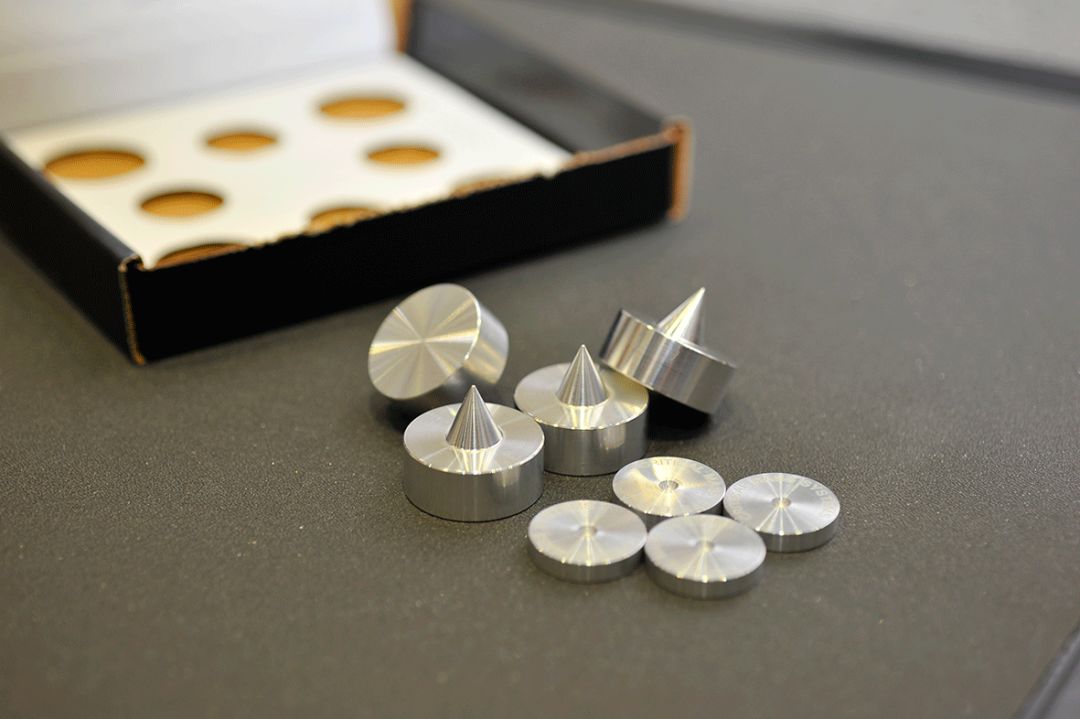
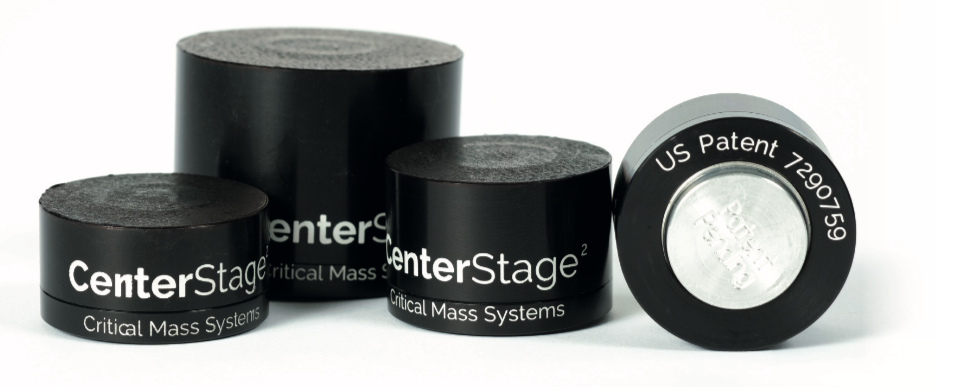
The new 1.5 inch tall Critical Mass Systems CenterStage2 footer with its packaging, and two different thickness of shims, provided to assure the best possible contact.
I’ve honestly no idea why I was so surprised to hear from Critical Mass Systems’ Joe Laverncik this past July asking if I’d like to audition the “new” CMS CenterStage2 footers. He has shown himself to be unrelenting in his pursuit of performance, so I suspect that it was because it was coming so closely on the heels of the publication of my profound experiences with the radically effective original CenterStage footers just some three months earlier (HERE). I must admit to being both skeptical and somewhat curious to see if these groundbreakingly effective devices could be improved upon—especially in such a short period.
Within weeks, my original thirty CenterStage footers were upgraded to thirty of the new CenterStage2 footers…with one additional consideration; he sent along eight additional new CS2footers. Originally, the devices had been available in two height profiles, 0.8 inches and 1 inch tall, both at 1.5 inches in diameter. Now, with the superscript 2 iteration, a new 1.5-inch height is also available, all retaining the same 1.5 inch diameter. He also included four of the original 1-inch CS footers for direct comparison.
In Joe’s original communications to me he mentioned that he felt the CS2 to be so effectively improved as to be regard as a new product. In addition, he indicated that the CS2s effectiveness increased as they got taller, which turned out to be a very meaningful differentiation, as you shall soon discover.
In a very simplistic view, the Critical Mass Systems CenterStage2 footers act as a highly sophisticated “drain,” a mechanical diode or sorts, for induced and generated vibration in the components that rest on them, giving that unwanted, corrupting energy a route out of and away from those components, thereby reducing disordered and chaotic resonance within the component itself, and converting and dissipating that energy as heat. Joe claims the reason that components take so long to settle in on these unique feet, and why the system’s sonic signature swings so widely during that period, is related to the 2nd Law of Thermodynamics.
He explains as follows. “The principle is cross-border entropic transfer in reversible thermodynamic systems. Broadly speaking this principle recognizes that electromechanical systems experience internal disorder at the moment they are engaged (turned on). The commonly recognizable sign of entropy is the generation of heat, but there are others.
“Dynamic systems can be reversible or irreversible. Human beings, for example, are irreversible biodynamic systems where entropy is retained, and equilibrium is ALWAYS reached. As we age, strange things happen at an accelerating pace. Our vision degrades. We might lose hair. Our joints sustain damage through wear and tear. Our muscles weaken. Eventually disease may set in and, after a time, the system shuts down completely. Even then bio-dynamic systems have residual energy. The energy is exhausted when the components of the system turn to dust. The 2nd Law implies that this is perfectly normal. Entropy accelerates in dynamic systems unless some portion of it can be transferred into another system.
“On the other hand, electromechanical systems are reversible. With respect to audio components, a portion of naturally occurring and environmentally induced internal entropic disorder can be transferred into another system. Assuming that an external system (Center Stage, in this case) is specifically designed to facilitate the transfer and the external system is appropriately positioned to facilitate the transfer process, time is required to set the pathway and create a new electromechanical equilibrium point. Once settled in, Center Stage acts like a trash can that takes the “garbage” out to the curb when your system is playing music. There is also a 1st Law component to Center Stage with respect to mitigating noise as vibration moves upward through it (just like your very good Grand Prix racks), but it’s the degree to which they help reduce disorder in the system above them that makes them unique.”
From my ongoing conversations with Joe, the essence of what differentiates the superscript 2 version would seem to come down to both a substantive diminution of the inherent noise of the materials used to fabricate the footers combined with a diminishing of the upward movement of vibrational energy through them. Together with these decreases, Joe also states he has found a way to enhance their entropy, to increase the amount of energy transferred out of the components to the footers; essentially increasing their efficacy as “drains!”
At the time they were installed, my system included my Kronos Sparta turntable, Helena tonearm, and the Air Tight PC-1 MC cartridge, feeding my DSA Phono II phono stage. Digital was rendered by either my own Windows 10 based PC, using either JRiver 24 (64-bit) or Roon 1.5, Fidelizer v8.2, or my extensively modified McCormack UDP-1, both handing off to my Hegel HD30 DAC. My linestage is the Constellation Audio Inspiration 1.0, and I was using a pair of Constellation Audio 1.0 stereo amplifiers in a vertical biamp configuration to drive my Von Schweikert Audio VR-5 Aktive loudspeakers. Signal cabling is from Stealth Audio, with a Helios phono cable, Śakra V12 single-ended interconnects, and the Dream v14 speaker cables, while all power and the USB cables were flagship products from Audience. Power conditioning is managed with the PS Audio DirectStream P20 Power Plant, with the total system investment just eclipsing the $300,000 mark.
My original set of thirty first generation devices included twenty-two of the 0.8 inch units, employed under my source components, DAC, linestage, phonostage, and external music media storage drives, and eight of the 1 inch units, four each under my mono amps. These thirty were initially replaced with the same profile of CenterStage2 footers. By allowing me to duplicate the original installation exactly, I would more effectively be able to judge the degree of improvement, if any, the CS2s deliver over the original CS version.
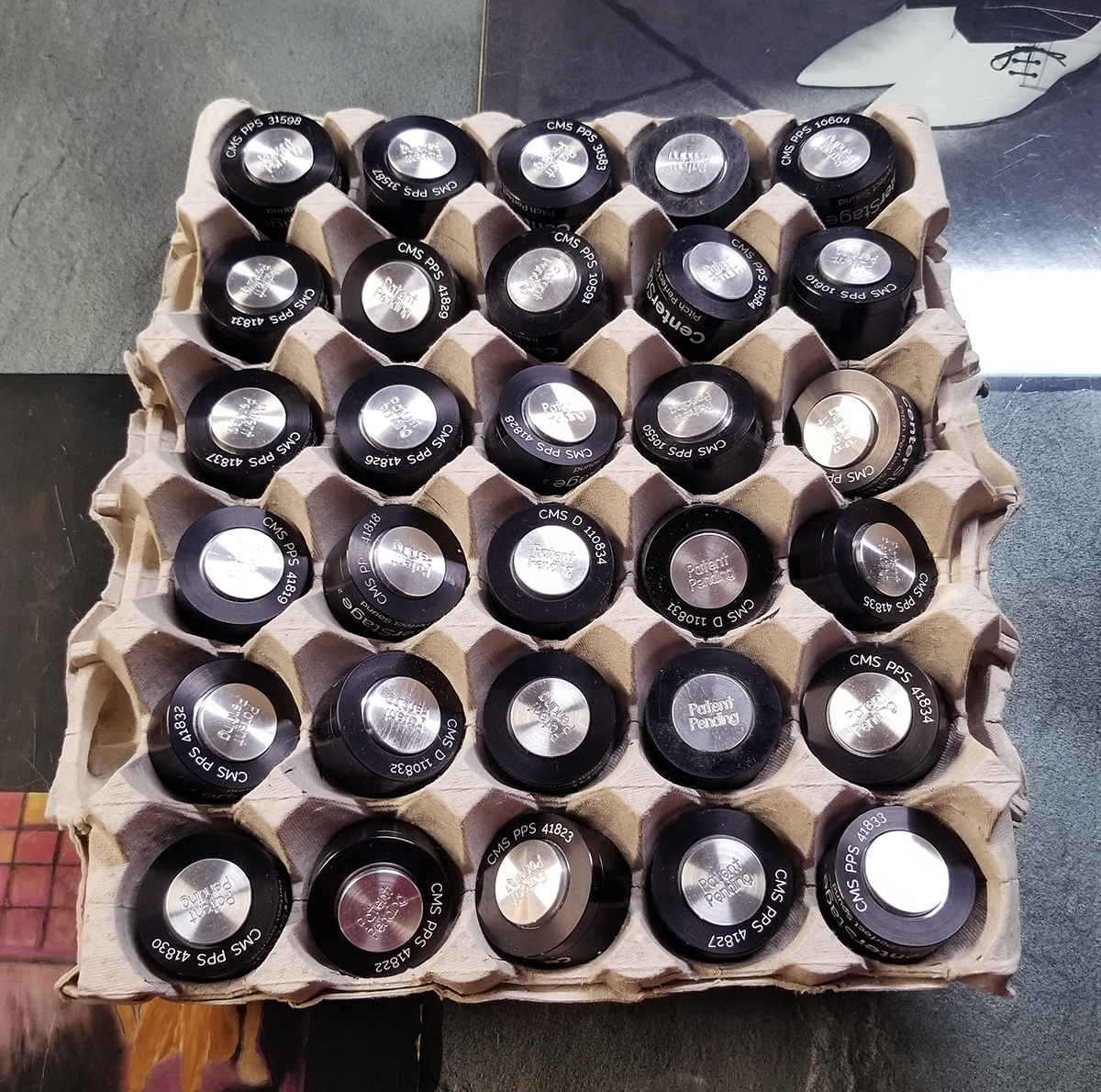
The thirty CS2 footers for my listening, arrived in their bulk shipping “egg carton.”
My listening began mid-day Sunday, Aug 5th, after some 3 days of reclamation listening following the removal of the original thirty CS footers. Once I had gotten used to the reduced level of performance, sans the remarkable magic wrought by the original CS footers, I was ready to proceed with the duplicate installation of CS2s.
Once installed, and the system back on, I immediately noted a clear loss of extension and control in the lowest regions, a lessening of the overall sweetness and air to treble, a general softening of detail from the upper midrange on up through the top octave, as well as a notable loss of focus and specificity to the staging and imaging. So, with those observations, I set my favorite run-in track to repeat on my music server, set the volume to about 60dB at my listening chair, and walked away for the night.
I had time for some brief listening in the late evenings of Tuesday, Aug 7th, and Wednesday, Aug 8th, days two and three. For both sessions I played music from my music server for about an hour, sampling from my most frequently used demo tracks. I found the system sounding rather dull and dry, surprisingly unengaging in nearly every way Tuesday night. But it was almost unrecognizable and unlistenable during Wednesday’s session. Bass extension was severely limited and was bloated and ill-defined. Leading edges were softened to the point of smearing, and midrange focus and specificity were diffuse and amorphous. Worst of all, there had been a distinctly cooler shift in timber. I finished up my notes and restarted the run-in track.
I had no time to listen on Thursday, Aug 9th, but by Friday evening, the 10th, I was treated to a little of the old CS magic. For the entire four and a half hours of that listening session, which I shared with a good friend, sampling his LPs as well as mine (this time it was an exclusively analog session), we were transfixed. Bass and midrange bloom and body had returned, as had a large portion of the previously missing sparkle and air above about 3,500Hz. The sound bordered on beguiling and sounded much more engaging and involving than it had in previous weeks. And not by any small margin. We finished our session excited and moved. It had been a highly emotional listening session. After I bid my friend goodnight, I restarted the burn-in track.
I noticed minor performance variations over that Saturday’s listening, on the 11th, but by the evening of Sunday the 12th, all that Friday night magic, and more, was back. I was transfixed during my early evening listening and took a lot of notes.
The most obvious improvements could be distilled into three categories; a substantially lowered noise floor, remarkably improved warmth, with more realistic body, more natural tone and texture, and a vastly enriched, more enveloping and immersive soundstage.
First and foremost, there was a laid-back, relaxed ease to the presentation that just drew me into the music. The overall noise floor had seemed to plummet, even lower than I had recalled with the original CS footers in place. The resultant stillness this afforded, by way of a darker, starker, background, was just intoxicating, adding a power and persuasiveness to everything I played, allowing me to be informed as much by the silence between musical impulses as by the effortless drive and pace of the musical gestalt itself.
Instrumental tone colors, including their textures and verve, had bloomed. There was a newfound effortlessness and neutrality to every aspect of the music I played now, even with my digital rig, which cannot quite match my analog front end in this respect. And this sense of neutrality, of naturalness, of faithfulness, was broad-band, extending from the deepest reaches of the bass to include a newfound shimmer and sparkle in the uppermost octaves. My Von Schweikert Audio VR-55 Aktive’s custom-built Scan-Speak Beryllium tweeters seemed to be even more unrestrained than ever, allowing them to develop that sense of graceful effortlessness, of unfettered extension, replete with the perception of the air of and around instrumental voices that allows them to regenerate that final, compelling measure of attack, trailing ambiance, and decay.
And what a spatial presentation! My initial sensation of three-dimensionality, that enveloping immersiveness bordering on surround-sound that the original CS footers had created so effortlessly, was back, but was even more apparent and unmistakable. The presentation I was hearing from my reference two-channel system was approaching the spatial characteristics rendered by an exceptionally well setup 5.1 multi-channel music surround system!
Over the next two weeks, I honestly didn’t notice any significant relapses or advances from the powerful performance I had first witnessed on that seventh night. Does this mean the CS2s settle more rapidly than their predecessors, that they are more effective overall? I can’t say with absolute certainty, but I suspect those observations to be true.
But now I had another question. What improvements, if any, might I be treated to if I removed the 1.0 inch models from under my mono amplifiers and replaced them with the 1.5 inch CS2s waiting in the wings, then replaced the 0.8 inch models underneath my linestage and phono stage and with the recently freed 1.0-inch models?
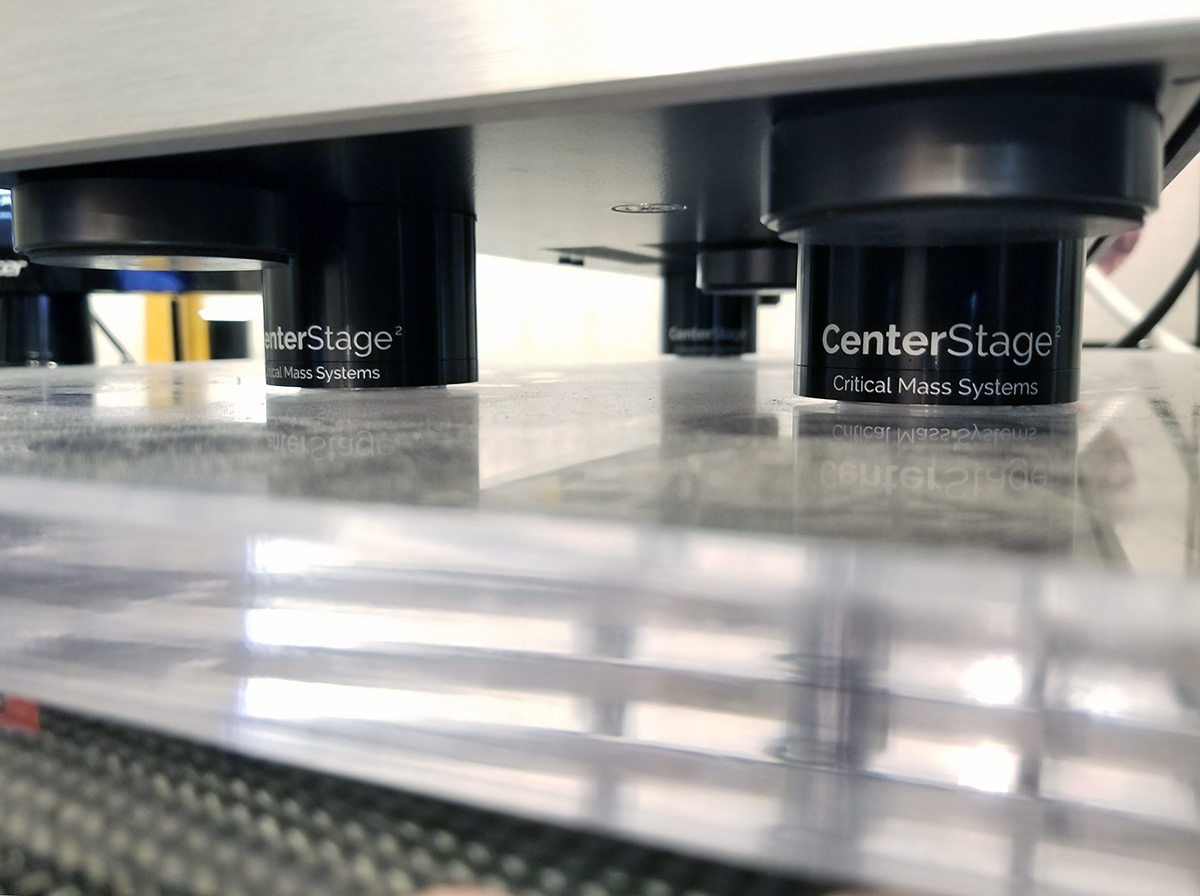
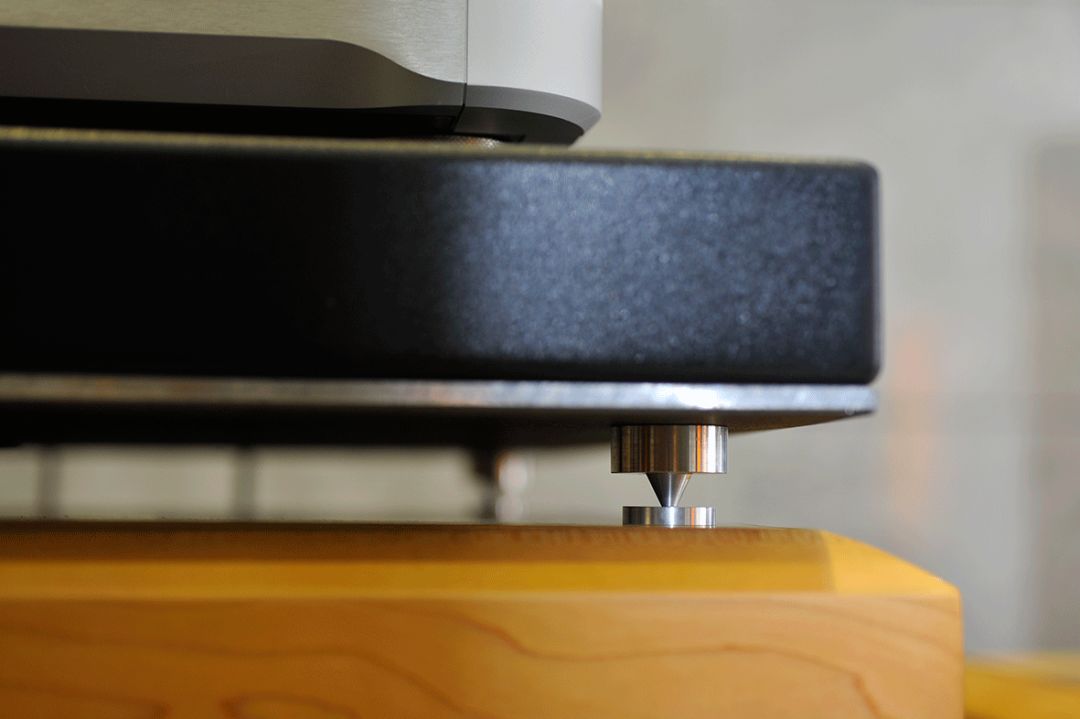
Four of the 1.5 inch (the fourth hidden by the prominent front right unit) CenterStage2 footers in place under one of my mono amplifiers on a separate amplifier stand.
I made that change on Monday night, August 27th, and was somewhat surprised that the change had not caused as great a diminishment in overall performance as had the original reinstallation of the thirty CS2s. After all, I had just disturbed the settled performance of over half (sixteen of thirty) of all the CS2s in play. Honestly, I didn’t spend a lot of time listening after that change and having noted my initial impression. I just set my music server to repeat my run-in track and let it play at about 60dB one more time.
By Thursday, August 30th, I was utterly shocked by what I was hearing, and by Saturday, September 1st, I was simply knocked out by the transformation! The most notable developments after this change were much deeper, more powerful, and substantially more defined pitch in the bass, a decisively more accurate tonal shift, and a deepening and tightening of focus of imaging and soundstaging cues, which had become even more expansive, more enveloping, and more accurately sized. By Sunday September 2nd, I was having trouble believing so much change could be wrought by such ostensibly minor changes. It was as if my linestage, mono amps, and sources, even my loudspeakers, had all been replaced by components that were at least two to three times more expensive!
My initial impressions with the direct replacement of all the original CS devices with the same sized CS2 devices was that the CS2s delivered on the order of 25 to 40% improvement. To be honest, that represents a staggeringly large percentage increase. But the improvements wrought by the application of the 1.5 inch tall CS2s are almost indescribable and otherwise unattributable! What they bring to the game in terms of enhanced, articulated bass, more faithful tonal purity, and more enriched and accurate spatial enhancement is beyond my ability to label. They are that good!
To say that the Critical Mass Systems CenterStage2 footers are game changers may be the father of all understatements. In closing my review of the original CenterStage footers, I opined that they should not be considered as optional accessories but were indispensable necessaries! Doubly so, the CenterStage2 footers. They are so remarkable, in fact, that companies as prestigious as Swiss electronics manufacturer Soulution have begun to install them at manufacture as the factory feet on their products, with several other companies planning to follow suit.
The CenterStage2 footers are so significantly better than any other single footer, cone, or isolation device I have experienced over the past 35 years, that comparing them, or trying to equate their effectiveness in any manner, would be to insult the accomplishments attained by the CMS CenterStage2.
While the thirty CS2 devices employed in my installation carried a retail value of $12,640, that still represented an additional investment of only about 4 ¼ percent. Yet, the degree of performance enhancement they rendered in that otherwise remarkable sounding system was staggering! I honestly don’t believe that I could reap this significant a sonic improvement if I were to double the total invested price of my system, maybe even if I were to triple it! They truly are that effective.
These devices represent a near quantum leap forward in their ability to unlock and release the most faithful and accurate voice your equipment can recreate. They allow the purity and clarity of its true voice, a voice that has previously been masked and contaminated by the unaddressed destructive, polluting forces of vibrational energy, thereby setting a ridiculously high benchmark of performance. What Joe Laverncik has achieved with the Critical Mass Systems CenterStage2 footer is to realize the otherwise unfulfilled promise such products have heralded from their inception in 1983 and should be seen as more than merely an order of magnitude of improvement in the performance of the now 35-year-old “footer” product category. No, they aren’t cheap. But they represent the highest degree of value obtainable from any isolation device known to me, and the single most effective way I’ve yet found to release the utmost best from your system, period.
論音響之富貴,世界上頂級 Hi-End 器材很多,但如果說器材架和承板的話,我想沒有哪個配件牌子可以和美國 Critical Mass Systems 相提並論了,早幾年就聽說他們推出了貴到無論的 MAXXUM 卸振平台和層架,一件層板賣到 6萬元在音響圈中引起了不小的轟動。而今年又聽說 Critical Mass Systems 推出了升級版的Olympus V12,售價更大幅提升了約 50%,差不多要10萬元一件,堪稱是音響架領域裡的勞斯萊斯,實在不是一般發燒友可以消費得起的。但這麼昂貴的器材架層板,卻在全球音響圈掀起了一浪接一浪的換架熱潮,不少富豪級玩家試過MAXXUM 和 Olympus V12 之后,發現用上這款卸振平台(層板)調聲可以令原本已經玩到盡頭的器材再攀上了另一個高峰,此刻仿佛被封印的潛力才真正被釋放出來,簡直是太神奇了。
Black Sapphire MK3 與 Black Platinum MK3 兩款入門級層板
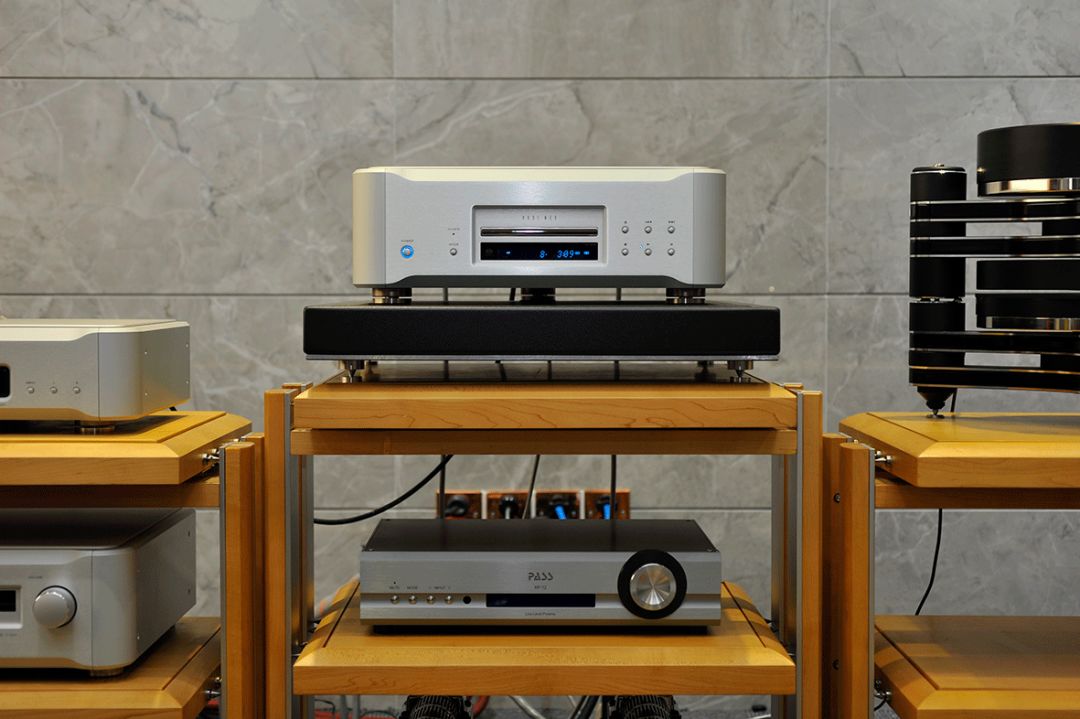
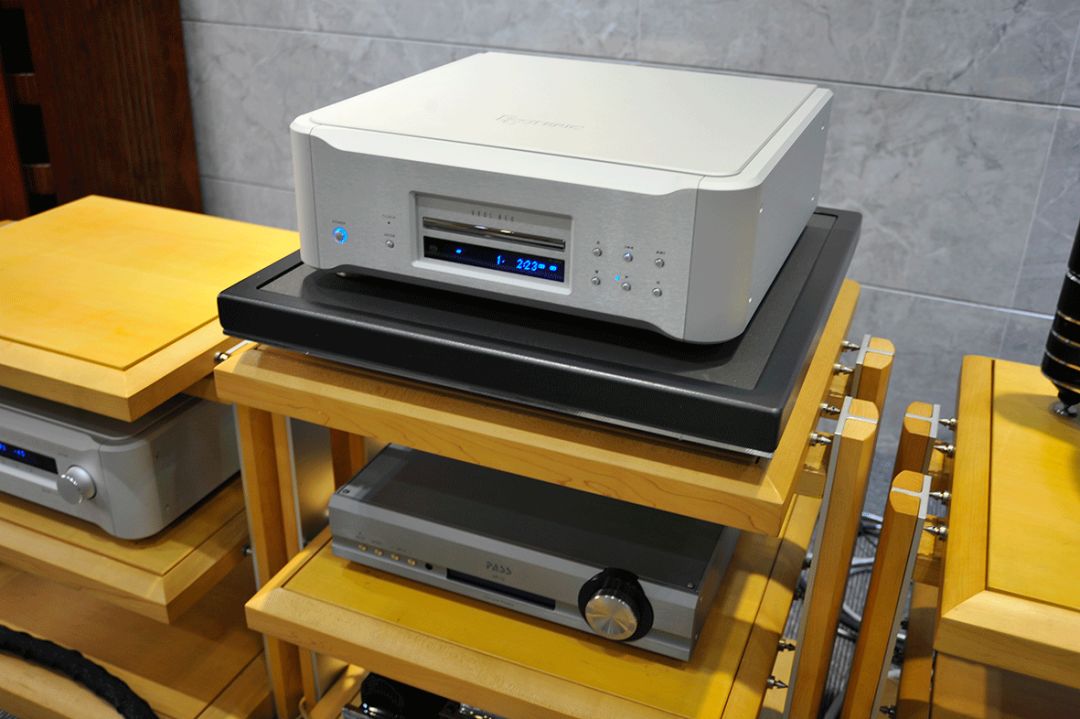
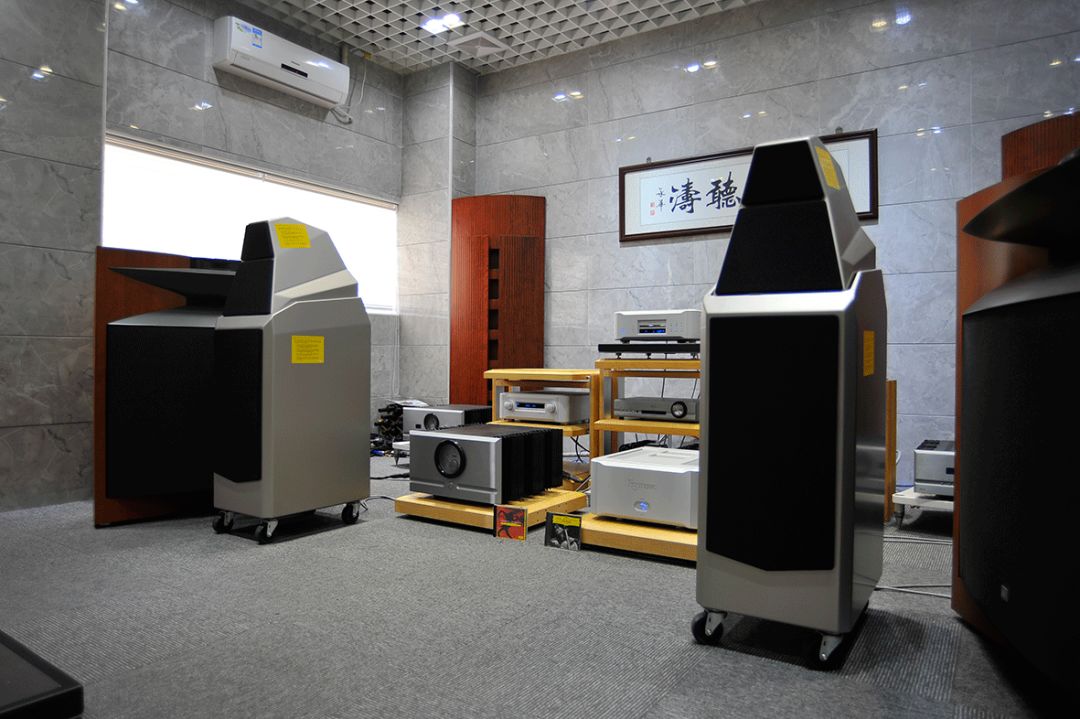
頂級的 MAXXUM 和 Olympus V12 層板的卸振性能無疑極好,但高昂的售價卻令很多音響迷望而卻步,有鑒於此,廠方研發推出了採用相同的原理設計的兩款較入門級的層板產品 Black Sapphire MK3與 Black Platinum MK3。朋友 A君垂涎 CMS 已久,這次約上幾個軍師一同來到廣州經銷商聲越美音響對比試聽兩款層板,打算從中二選一,回家用在他的 Esoteric K-03x SACD 機上。
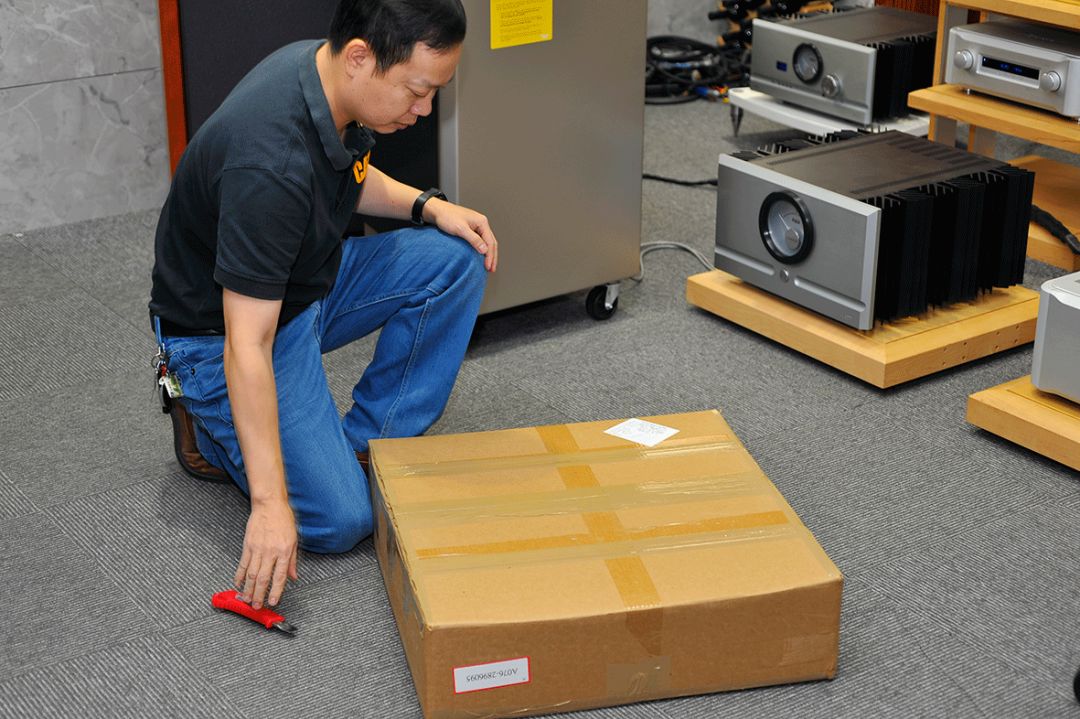
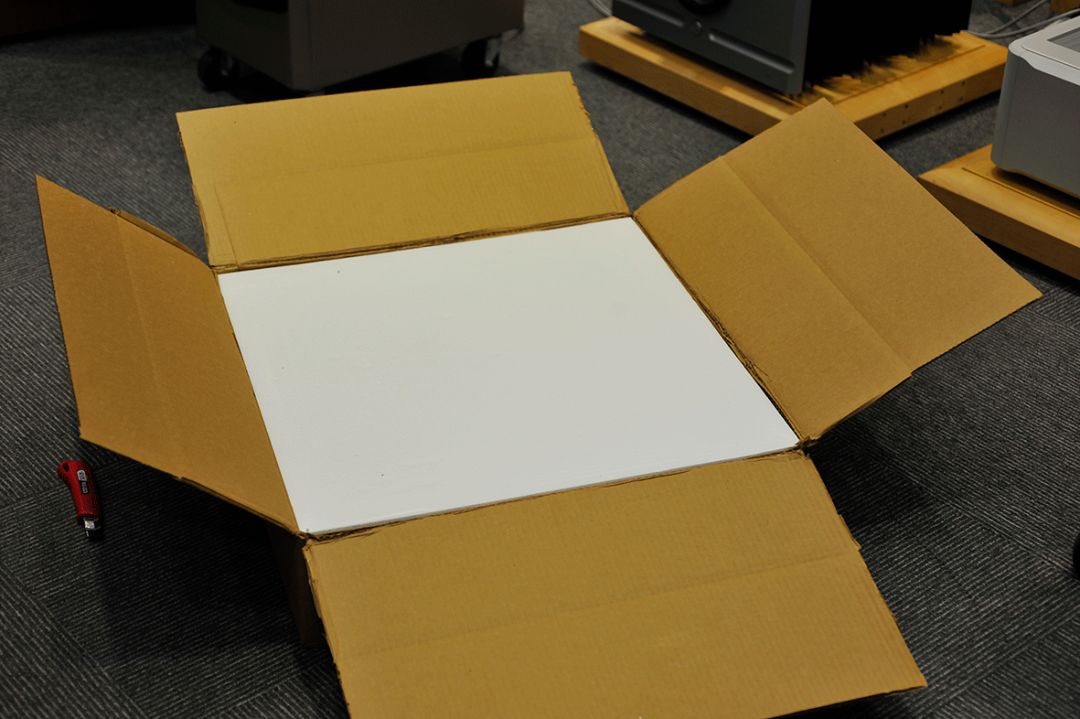
拆包試聽
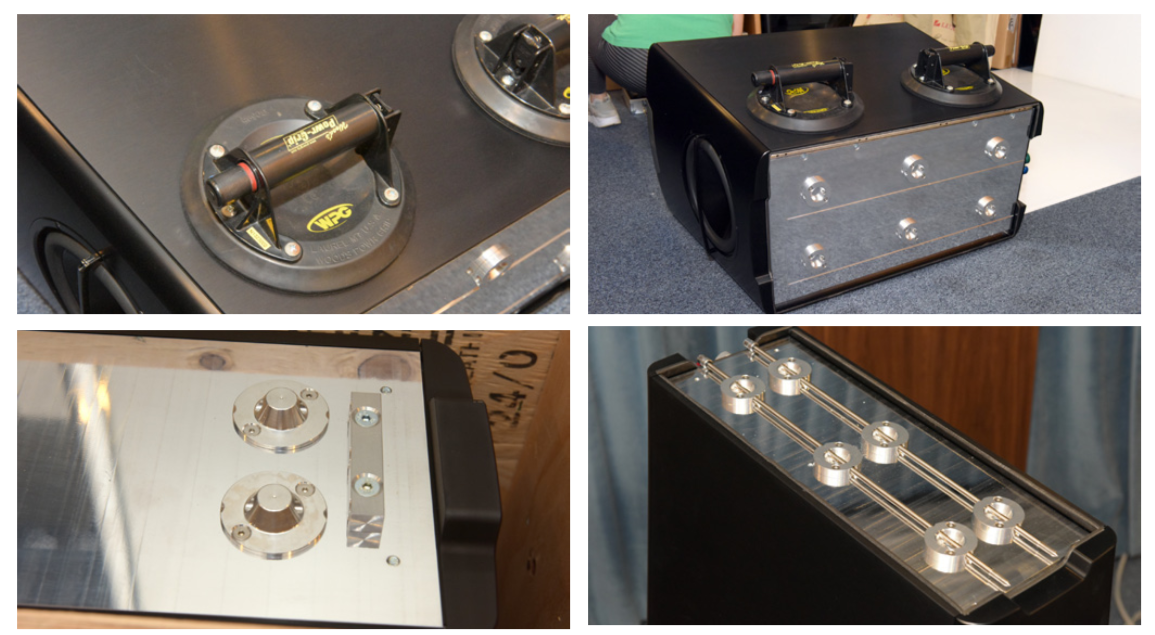
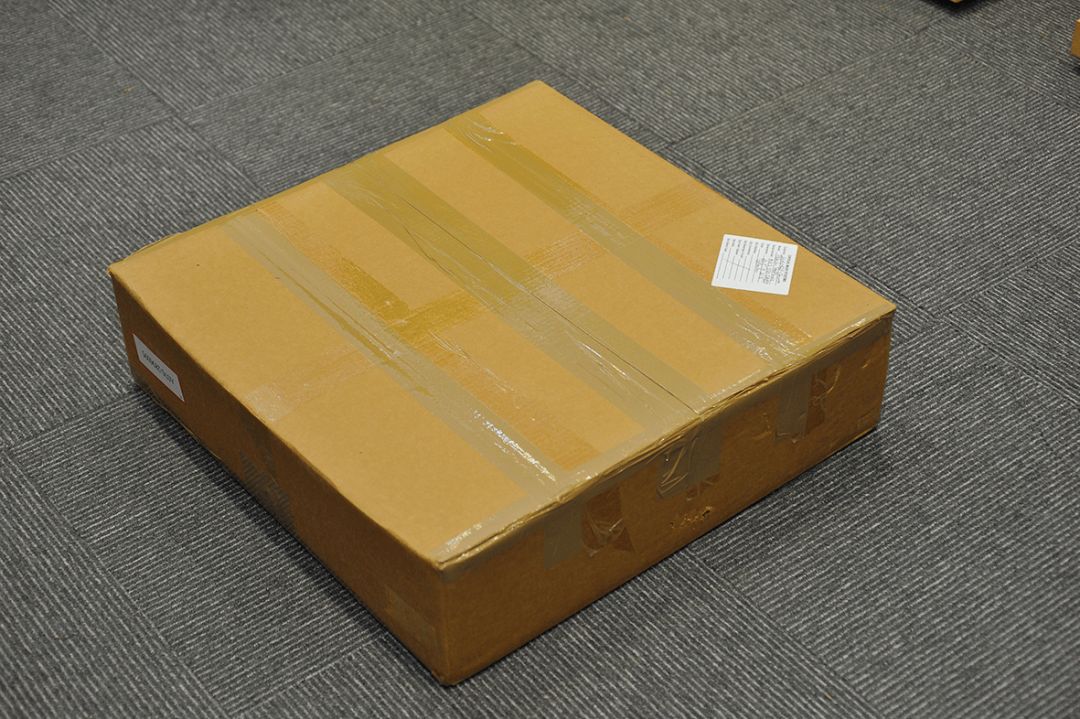
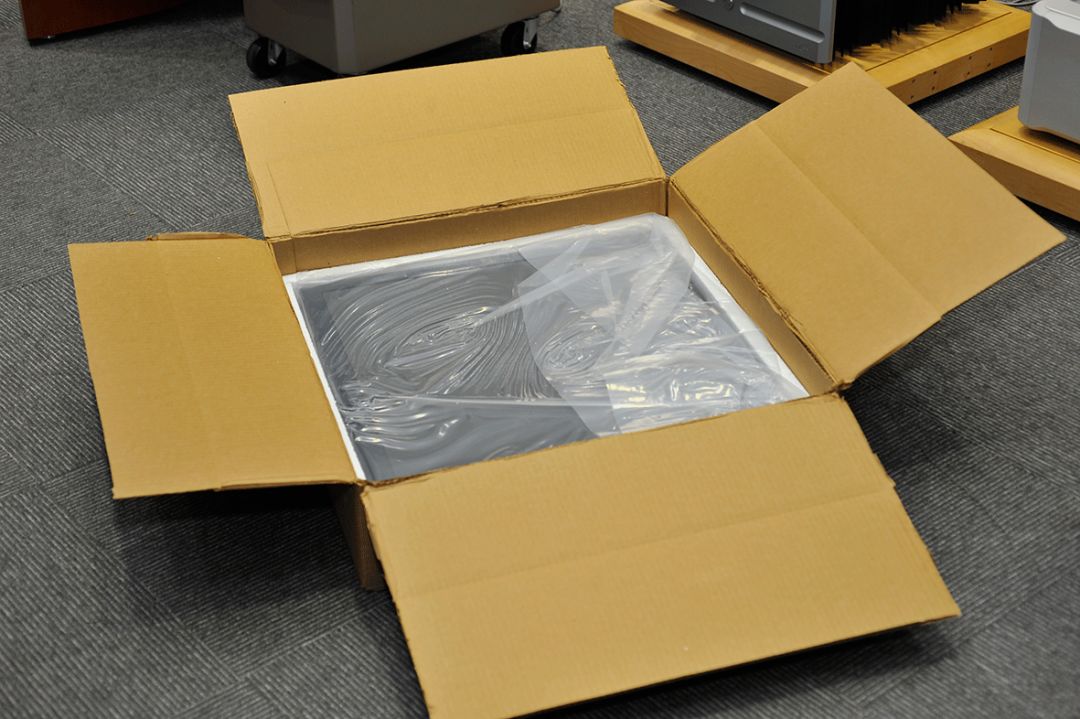
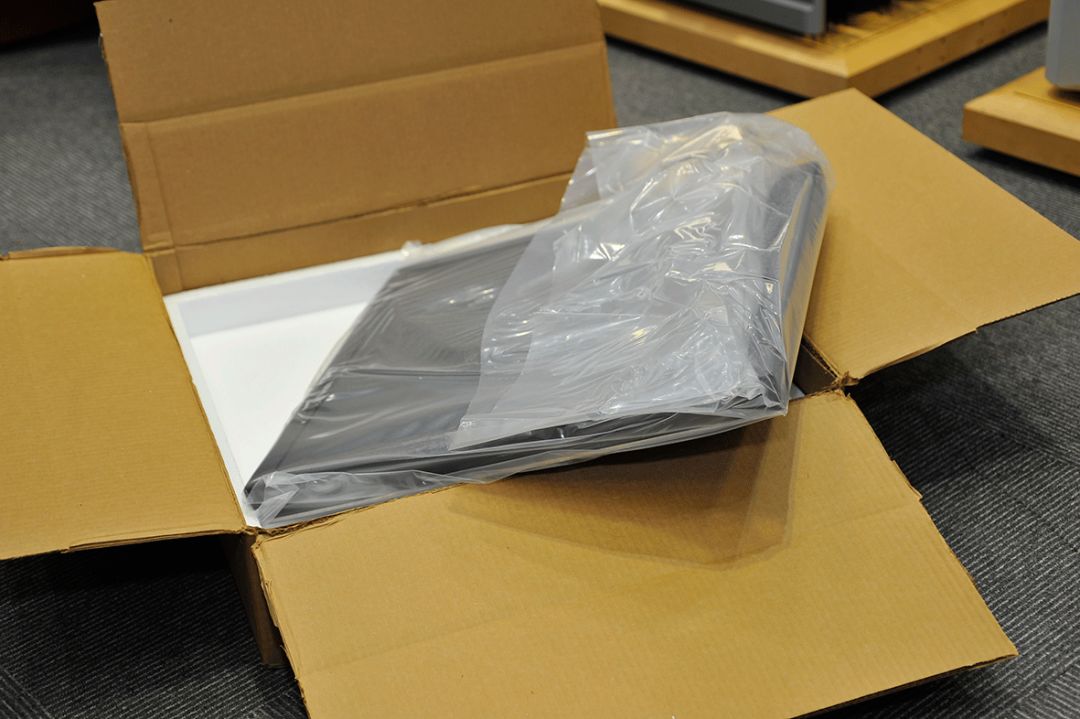
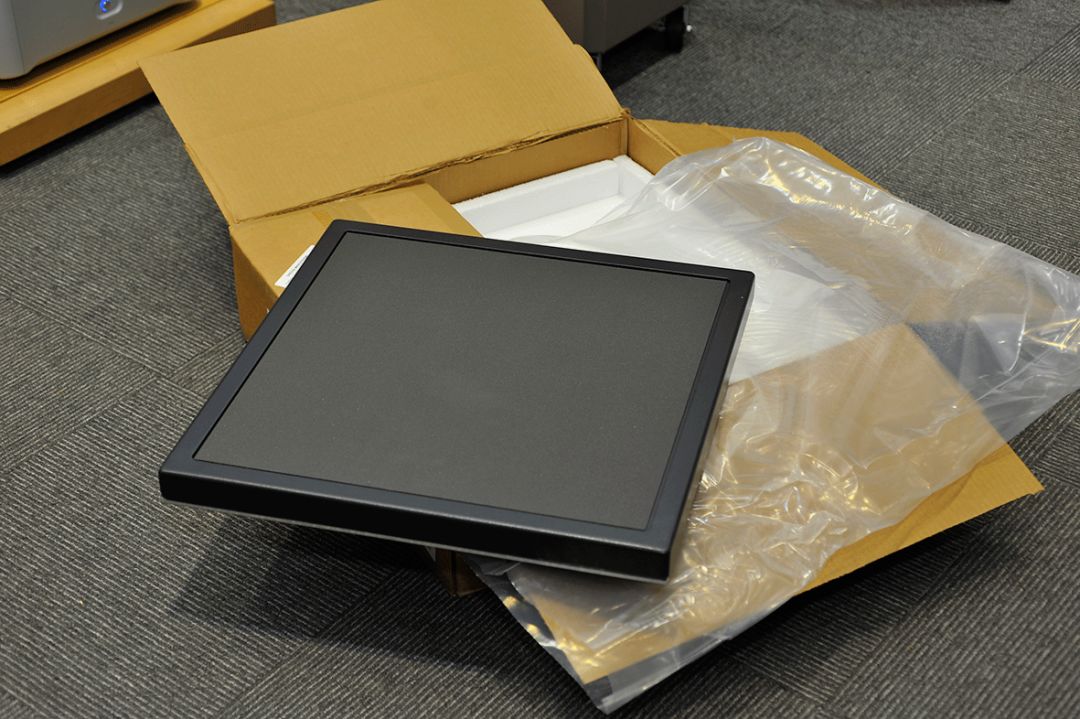
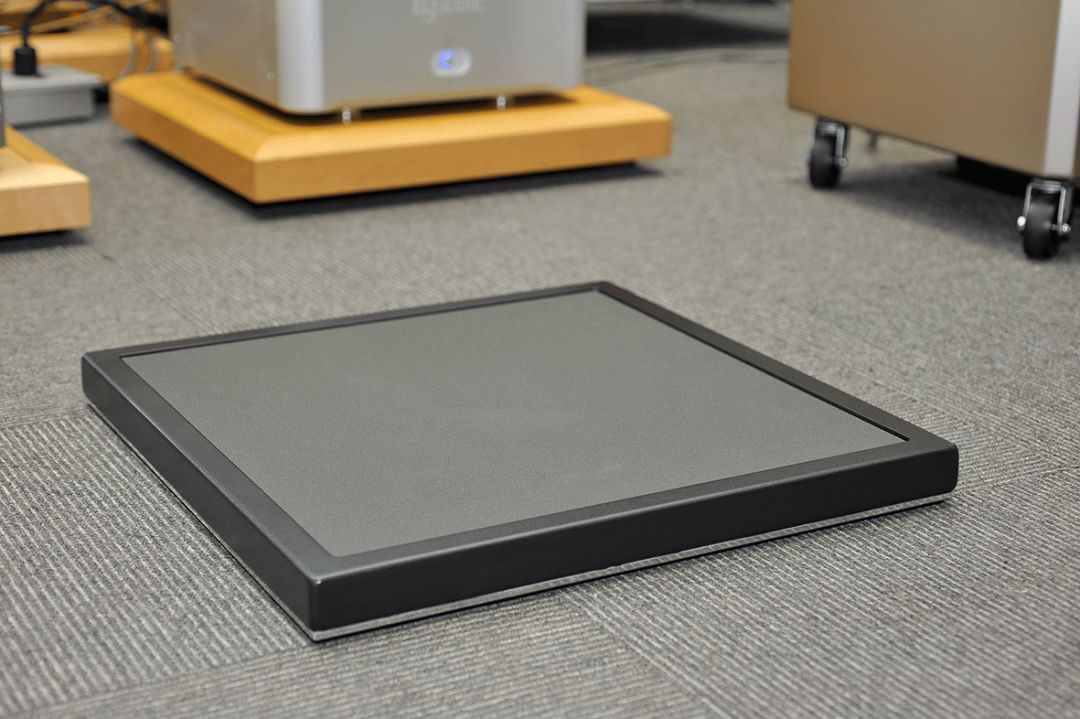
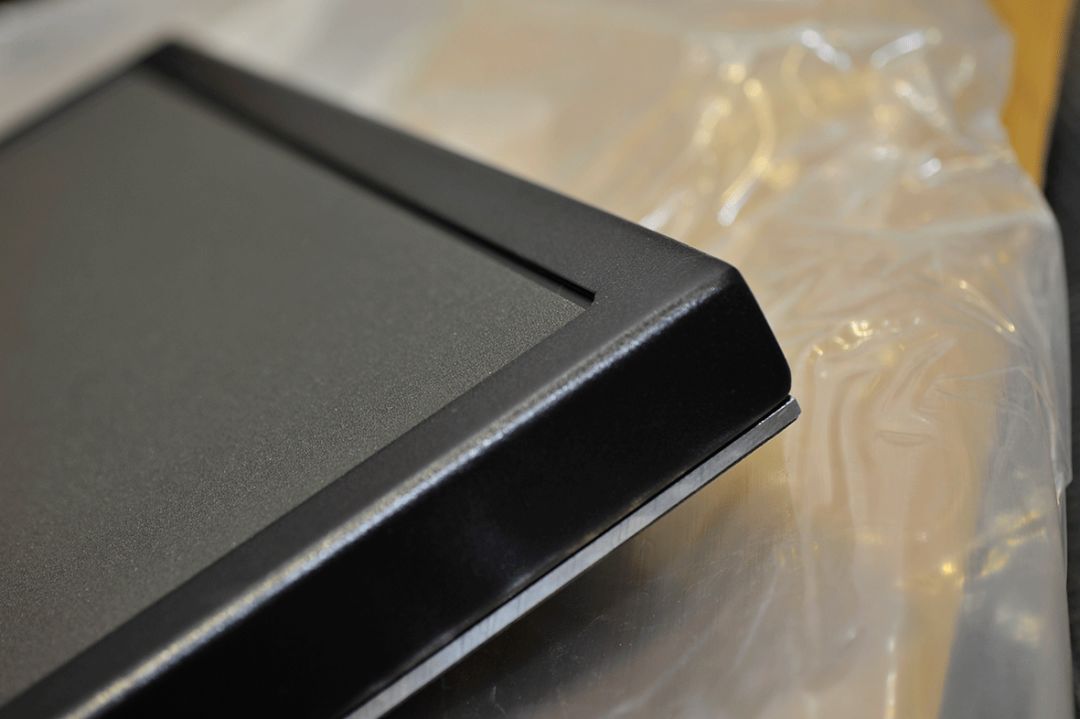
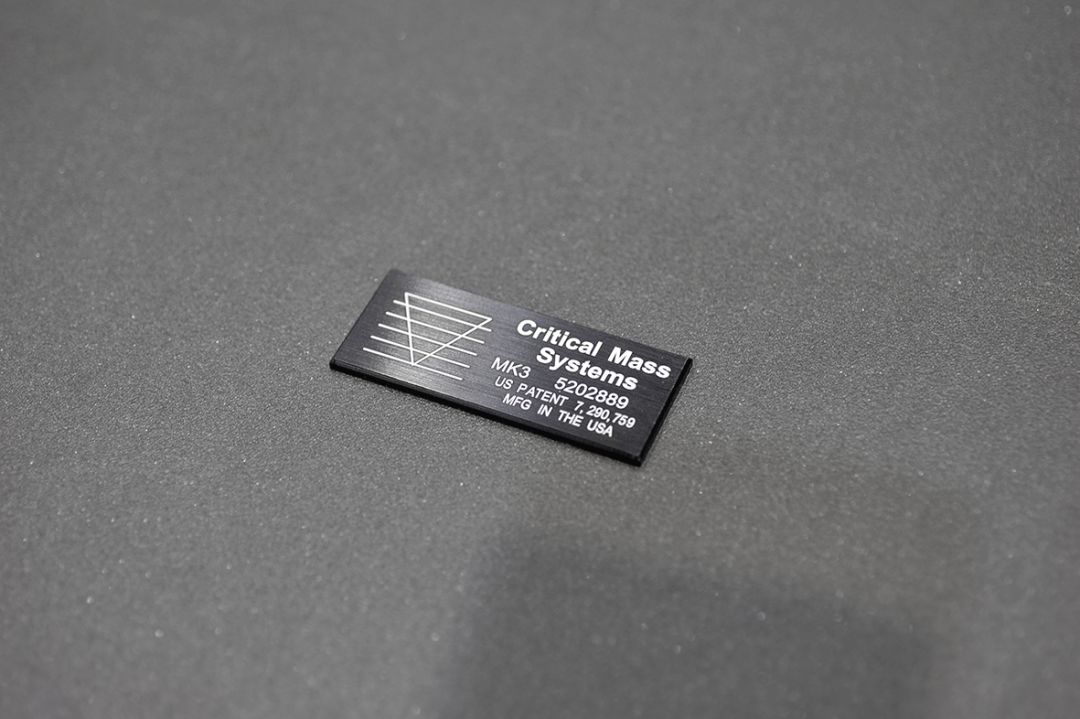
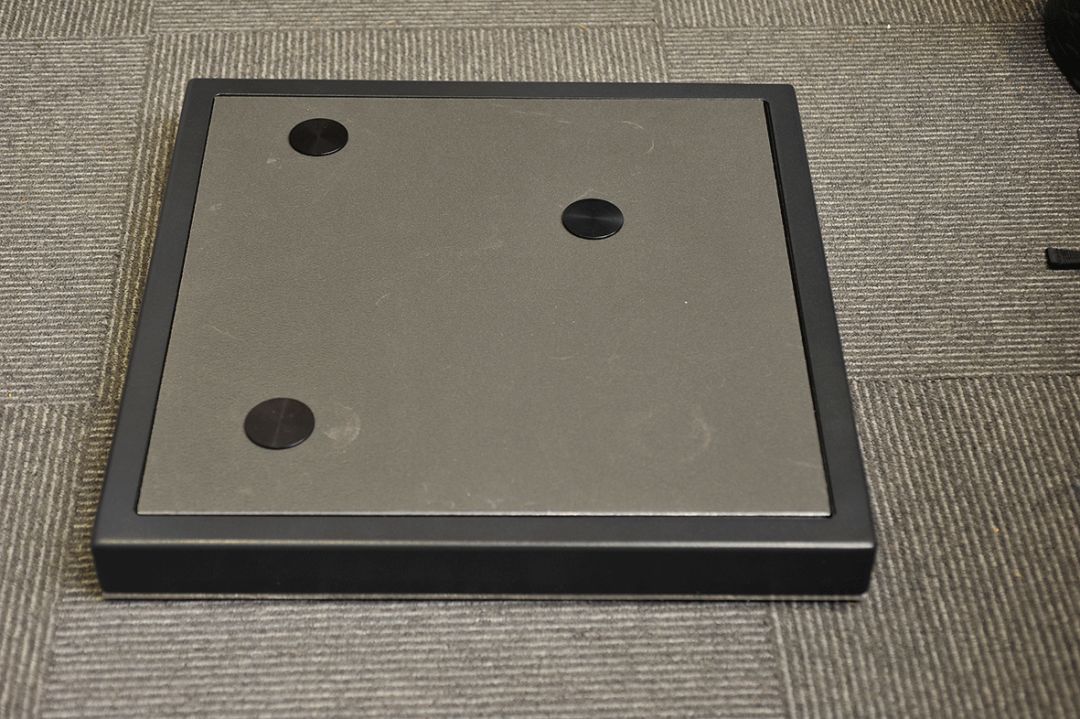
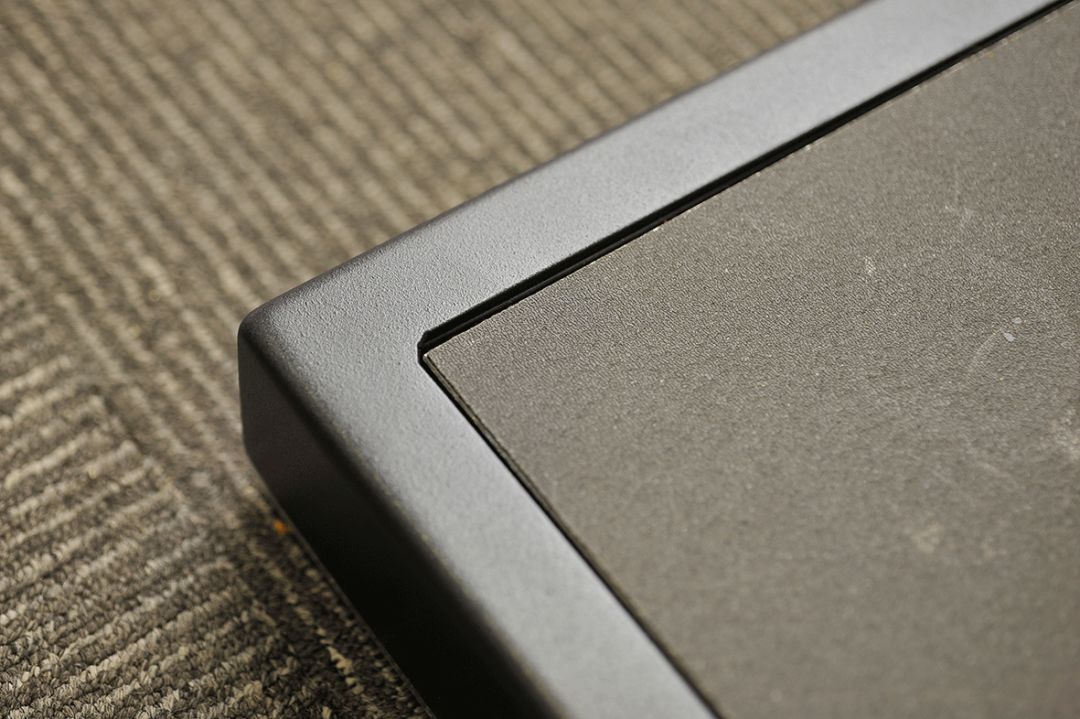
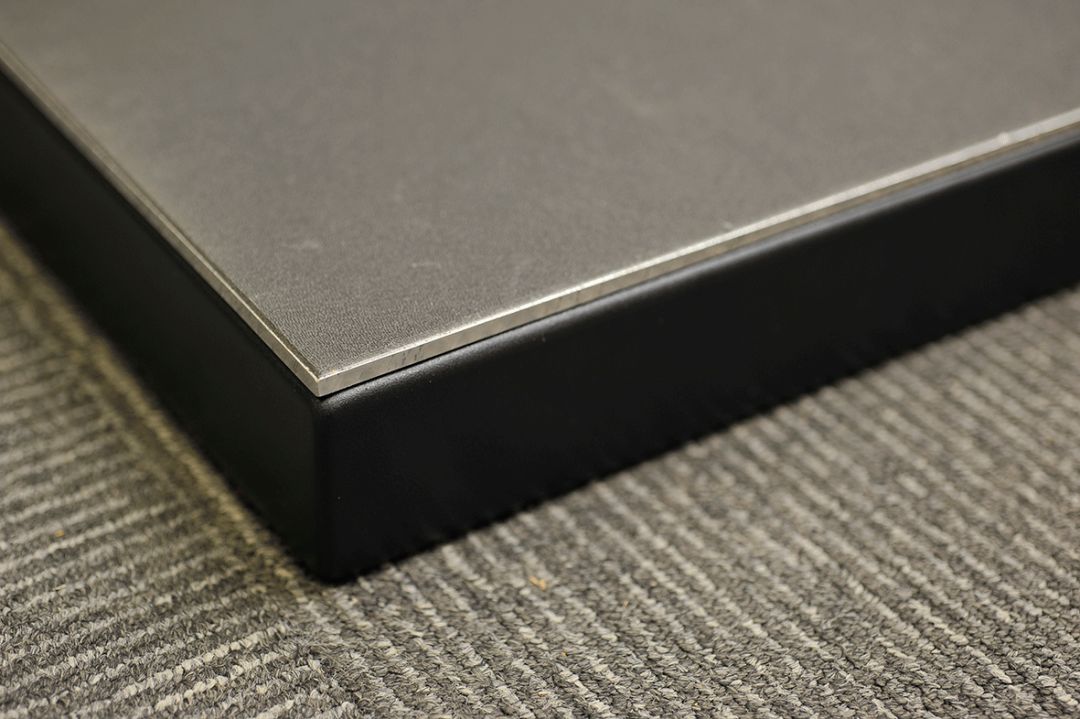
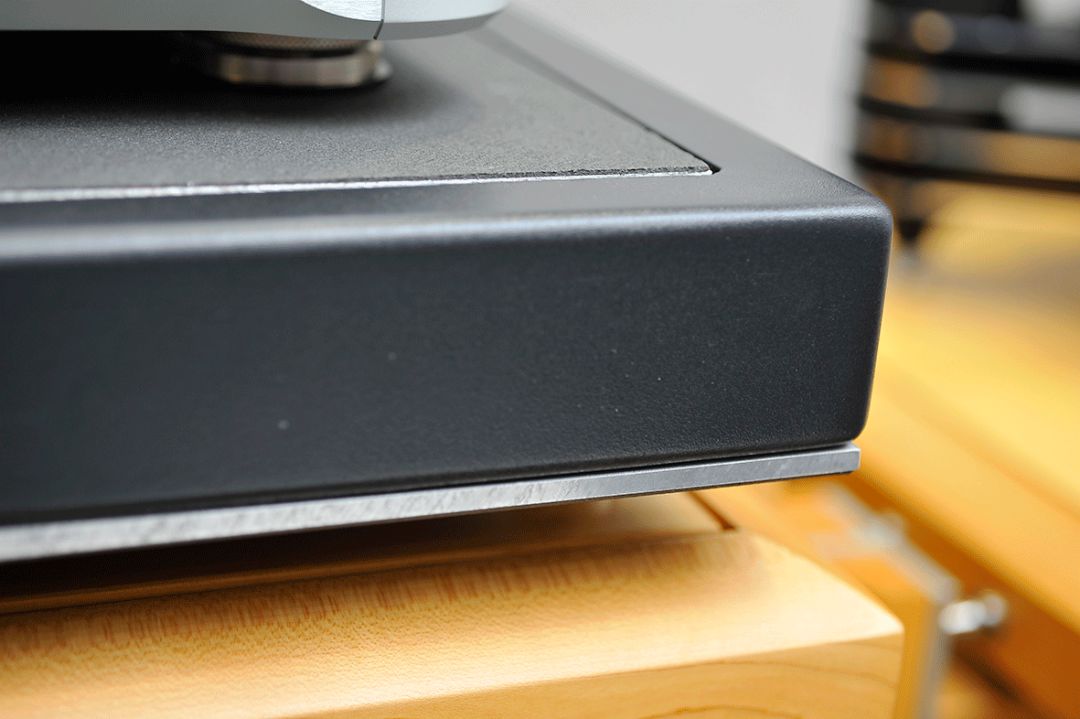
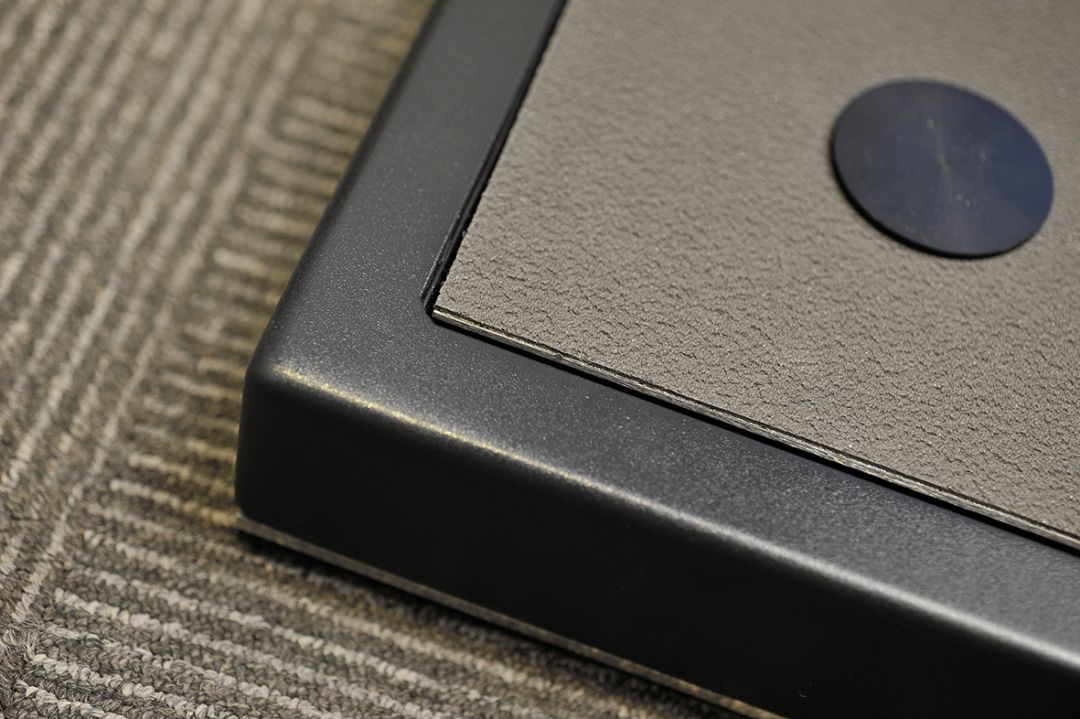
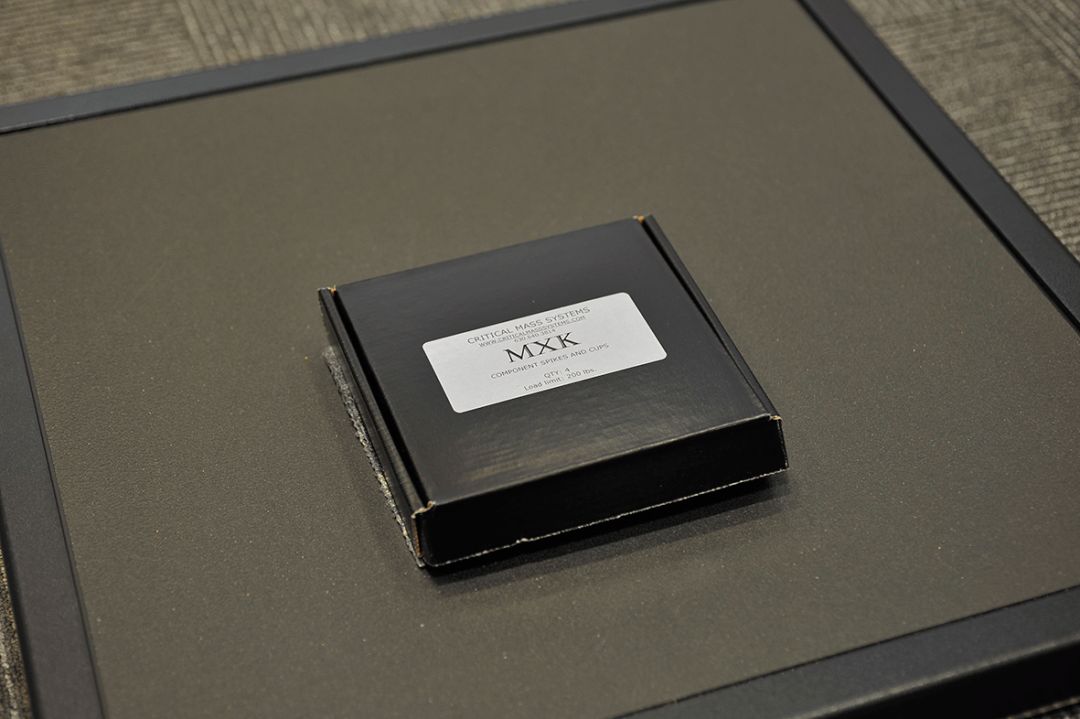
兩款層板的區別在於 Black Platinum MK3 比較厚也比較貴,層板的包裝算不上富貴,但保護還是不錯的。
Critical Mass Systems 的頂級卸振平台產品之所以賣這麼貴,當然是有道理的,廠方的設計理論源於實驗室科學研究,通過結構和材料無所不用其極的研發,才造就了如今令人矚目的成就。在理論上,CMS 產品的概念基於 Thermodynamics 熱力學第一和第二定律的物理現象進行研發的。第一定律是能量守恆;能量既不能憑空產生,也不會無緣無故地消失,隻能從一種型式轉化成另一種型式,而能量的總和是保持不變。第二定率,能量傾向於從集中的狀況散發至逐漸消散狀況,而且不可逆轉。
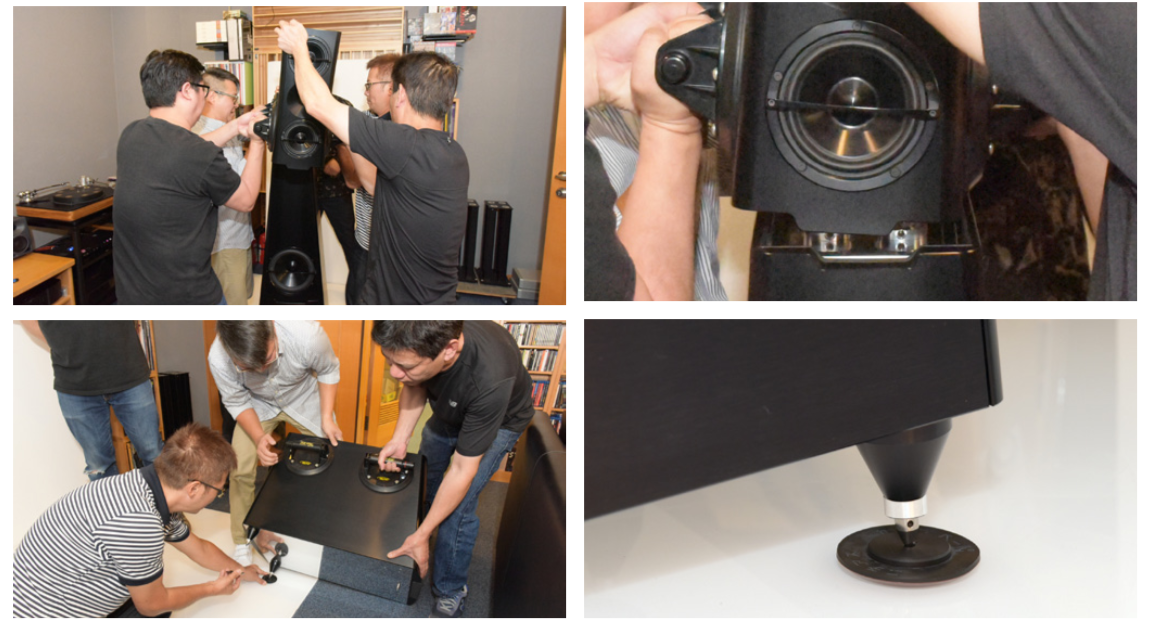
試聽避震板的過程是艱苦而有趣的,我們得反復把參與測試的器材搬上搬下的,以反復比較用與不用 Black SAPPHIRE MK3,及與 Black Platinum MK3 調聲板的之間的區別。當然,聲越美這裡用的素質本來就很厲害的Esoteric旗艦級SACD/CD播放機 K-01X,最后得到的答案都是基本一致的,使用兩款調聲層板獲得了正面而全面的改善功效,對音效的提升(准確講應該是對器材音效本質的發揮)非常有效。
Although Critical Mass Systems is best known for its large and heavy rack systems, perhaps its most important product is the CenterStage2, a range of three equipment support feet designed to correct physical impedance mismatching to greatly reduce vibration moving upward from the floor, the reduction of the noise inherent to the materials used to fabricate the foot, and a means to transfer entropy out of the component. To these ends, each CenterStage2 footer represents an ideal combination of damping, elastic modulus, and thin rod speed. The three model are designed to accommodate different sizes and weights of components, although there is a good/better/best performance aspect, too.
The curious thing about the CenterStage2 is that you know when its working because it makes the system sound a lot worse, at first. Until the footers harmonise and begin to correct those impedance mismatches and beyond, the sound of the system goes thin, light, bright, and the soundstage and dynamic range all but collapse. Then, as it begins to settle, the sound undergoes a quick and significant change for the better, and it keeps getting a lot better. We felt that “You notice this change by a shift in your internal dialogue. ‘I’d forgotten just how good that really is!’ (referring to both record and equipment) seems to be the first sign. About an hour later, you find yourself composing a thank-you email to the designers of the components in your system. Although it’s the bass that first comes back, it’s the midrange that seals the deal: the enhanced clarity, the walk-in detail to the soundstage, which seems to not change a thing, all the while being far more enveloping than before. This is no small change, and as the listening progresses, you begin to find this feeling of being immersed in the music.”
在真空管放大器的世界,輸出變壓器的質素直接影響放大器的性能發揮與音質。 Luxman 的經典放大器產品採用 OY15 型輸出變壓器,採用壓鑄鋁外殼;形狀跟原型看起來似乎一樣,但其實經過重新設計。電源部分採用高穩定的 El 型電源變壓器,並配有定制設計的隔直電容,可提供穩定的音質和出色的驅動力。
略施脂粉 明豔照人
試聽用 Accustic Arts Drive II、Accustic Arts Tube DAC II Mk2和B&W 802 D3 匹配之。不久前,我才評論過 Luxman的 L-509X,那是一款每聲道120瓦(8歐姆)的 A /B 類合併機;個性跟真空管前後級有別。L-509X 彷彿是透明的,播放任何東西你也不會察覺它的存在。毫無癖性是它的優點。不過,有人會另有想法:我花一筆錢去買嘢玩,怎可以像沒買過似的?!追求個性,也是人之常情。
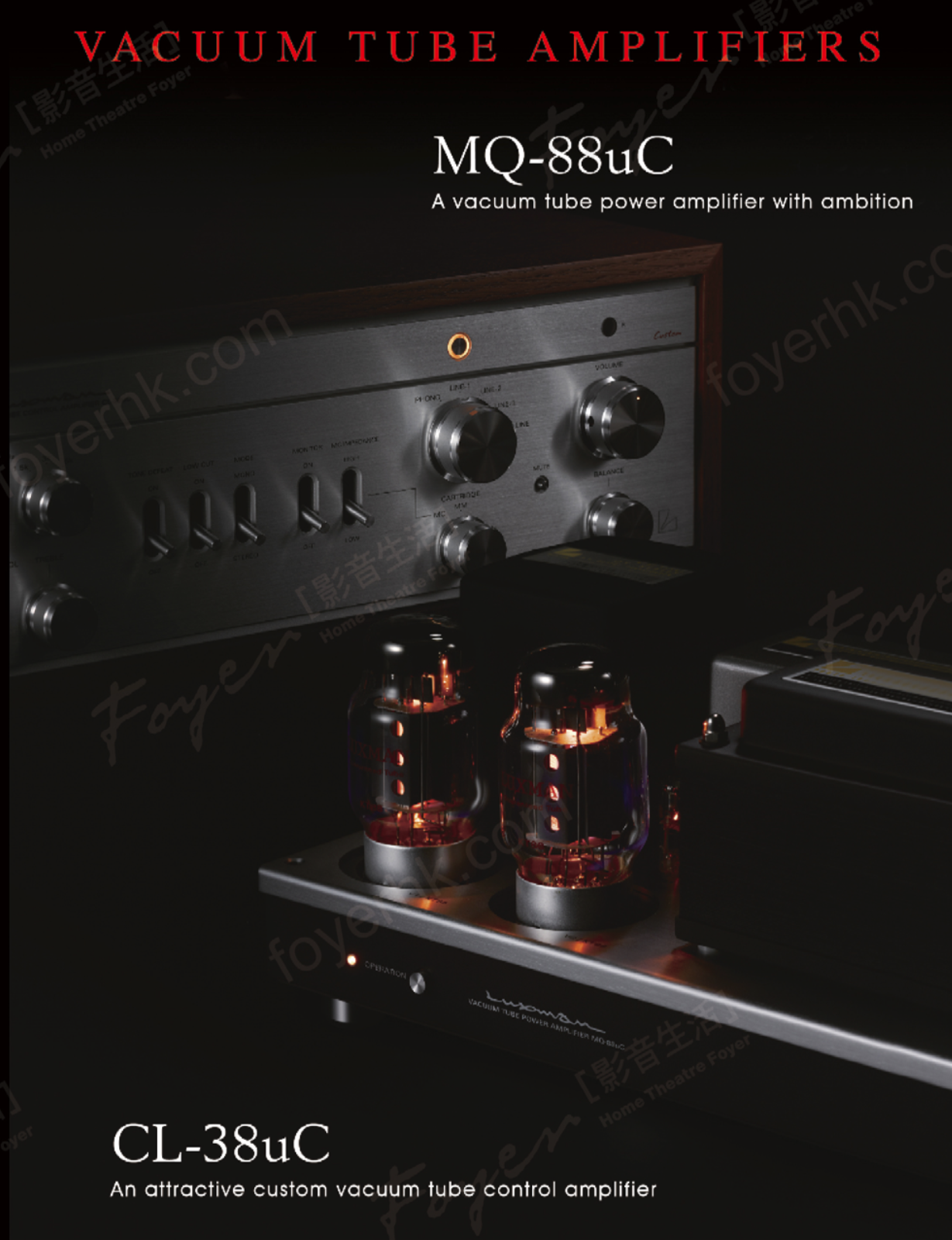
CL-38uC 和 MQ-88uC 顯然有真空管器材典型的魅力但沒有另一些牌子的重口味(我不想用「音染」啦)。如果胆機的聲音是「甜」的,CL-38uC 和 MQ-88uC 不是蜜餞那麼甜,而是蓮霧(天桃)的清甜。如果 Hi Fi 是女人,這對前後級是淑女而不是放蕩的女人。也許,「霎耳嬌」的擴音機會先下一城,吸引你的注意;但買一對前後級是預備長期使用的,CL-38uC 和 MQ-88uC 那種感性與理性有機地糅合一起的聲音(音樂)展現,更會贏得成熟的你的心。
聽《The Very Best of Clearaudio》24K金CD第一首’Hello’,女聲穩重中帶有女性嫵媚,很有代表性。Bella 唱 ‘Soundtrack’ 和 ‘Things To Do’,微醺的結他之音與嬌柔的女聲後面是豐富的人生經歷;還有第七首’Billy, Can you Hear Me?’,女聲二重唱的一輕一重,CL-38uC 和 MQ-88uC 表現真到位啊。CD 上「唯二」古典曲子:「莫扎特D大調小步舞曲」(小提琴與鋼琴)獨特的堂音給準確呈現;結他獨奏 Romanza d’Amore 的清麗寧謐,又是 show 這套前後級 quali 的時機。
Jocelyn B. Smith《Live in Berlin》第二、三首 ‘You Gotta Know’ 及 ‘We Need Love’ 沒有「考機」的極端元素,不過音樂張力的建築,就「考」Hi Fi 是否「夠音樂感」。CL-38uC 和 MQ-88uC 聽得我津津有味,不自覺地踏腳打拍子。





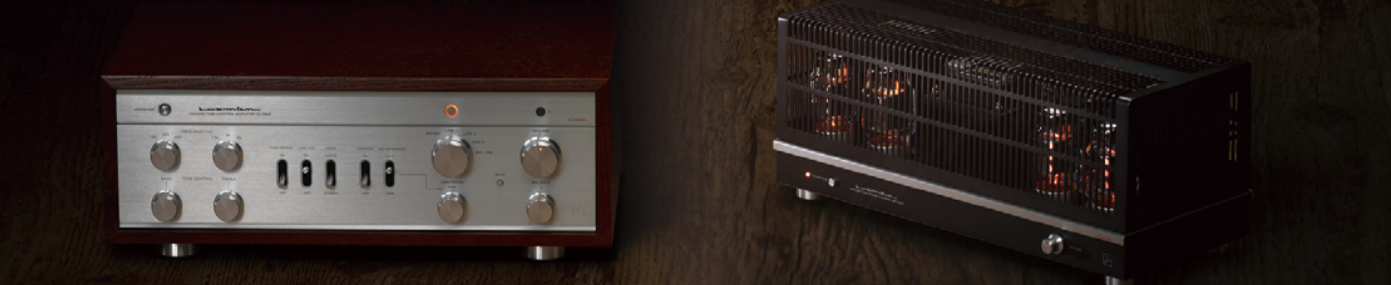
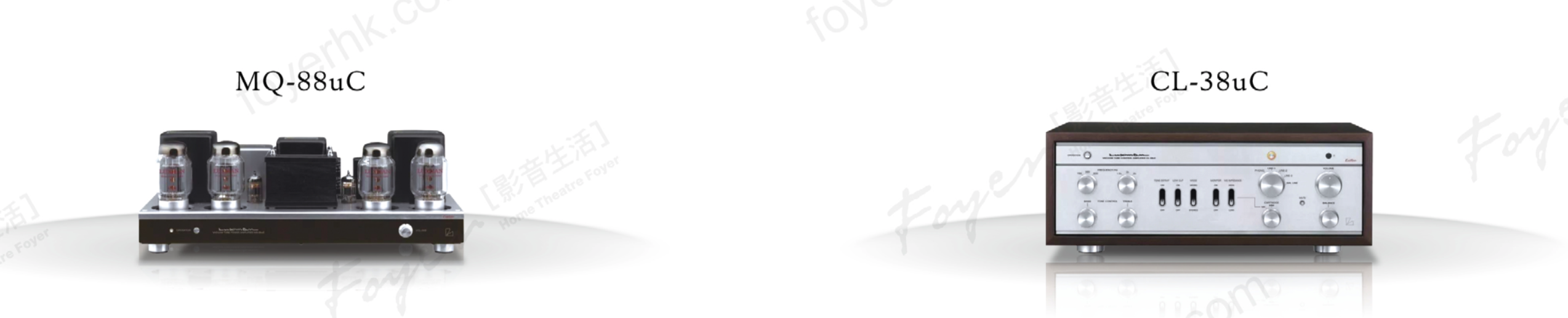
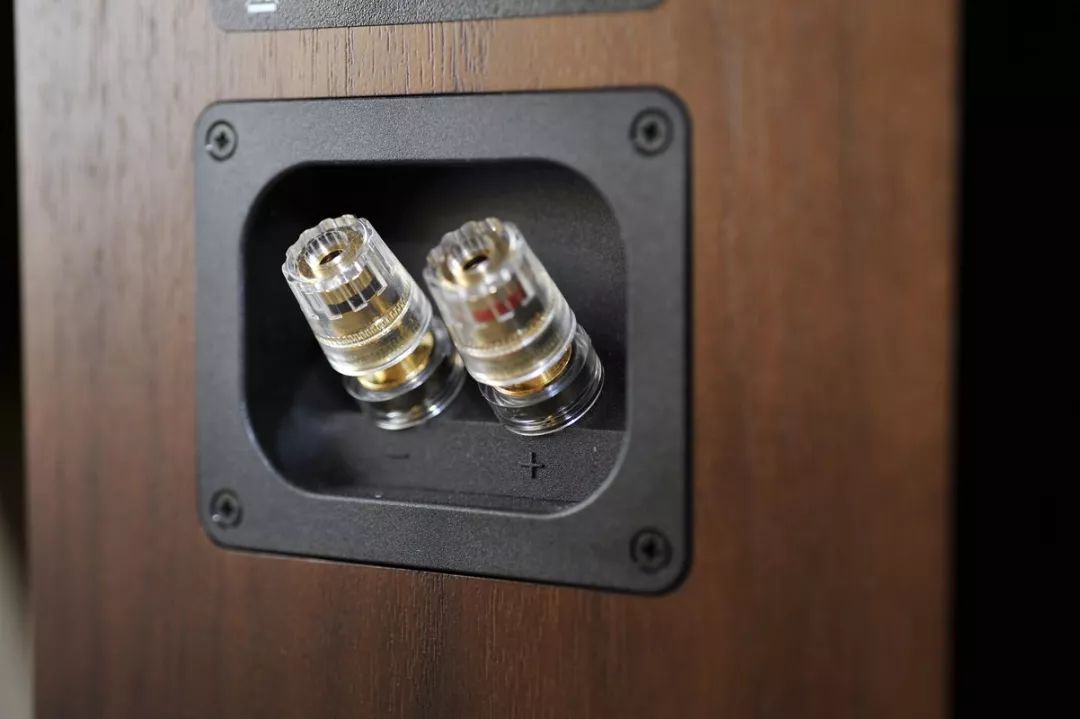
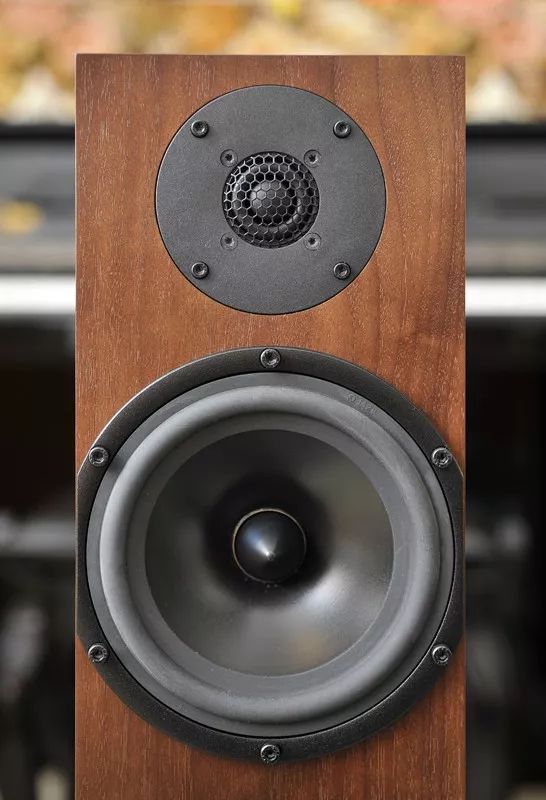
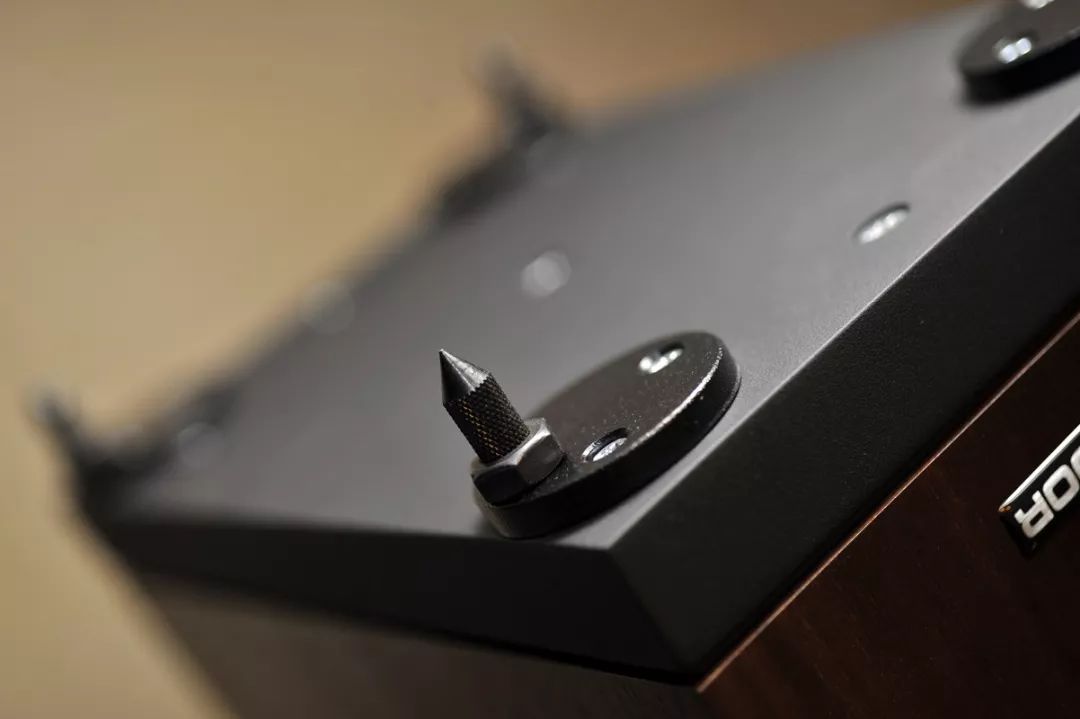
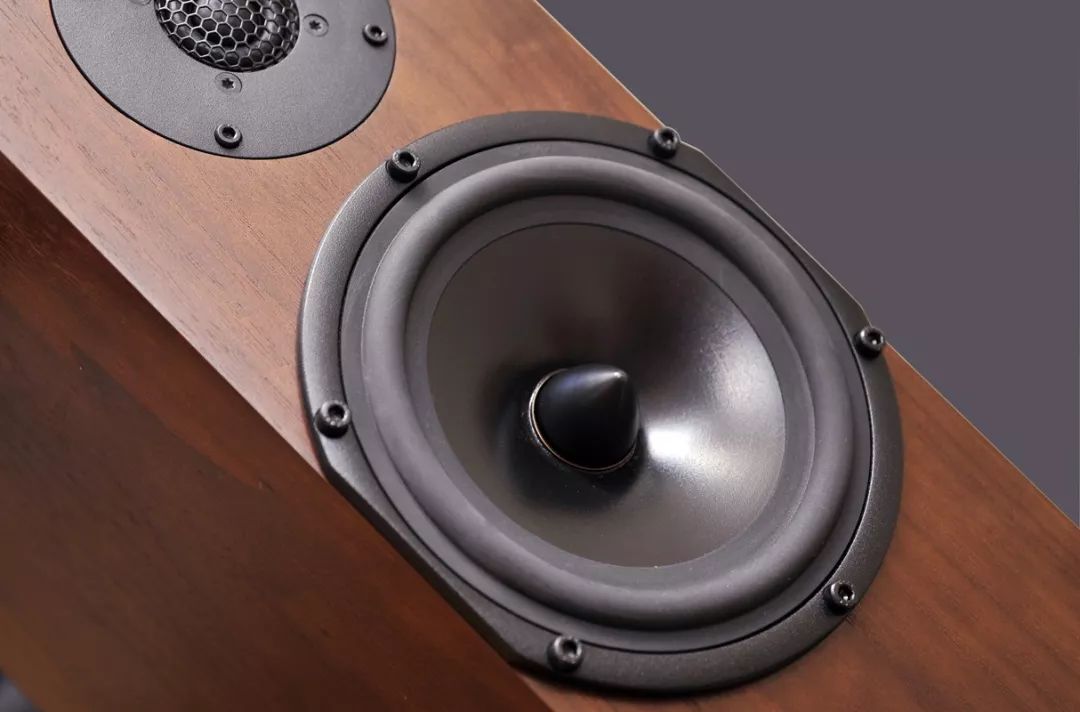
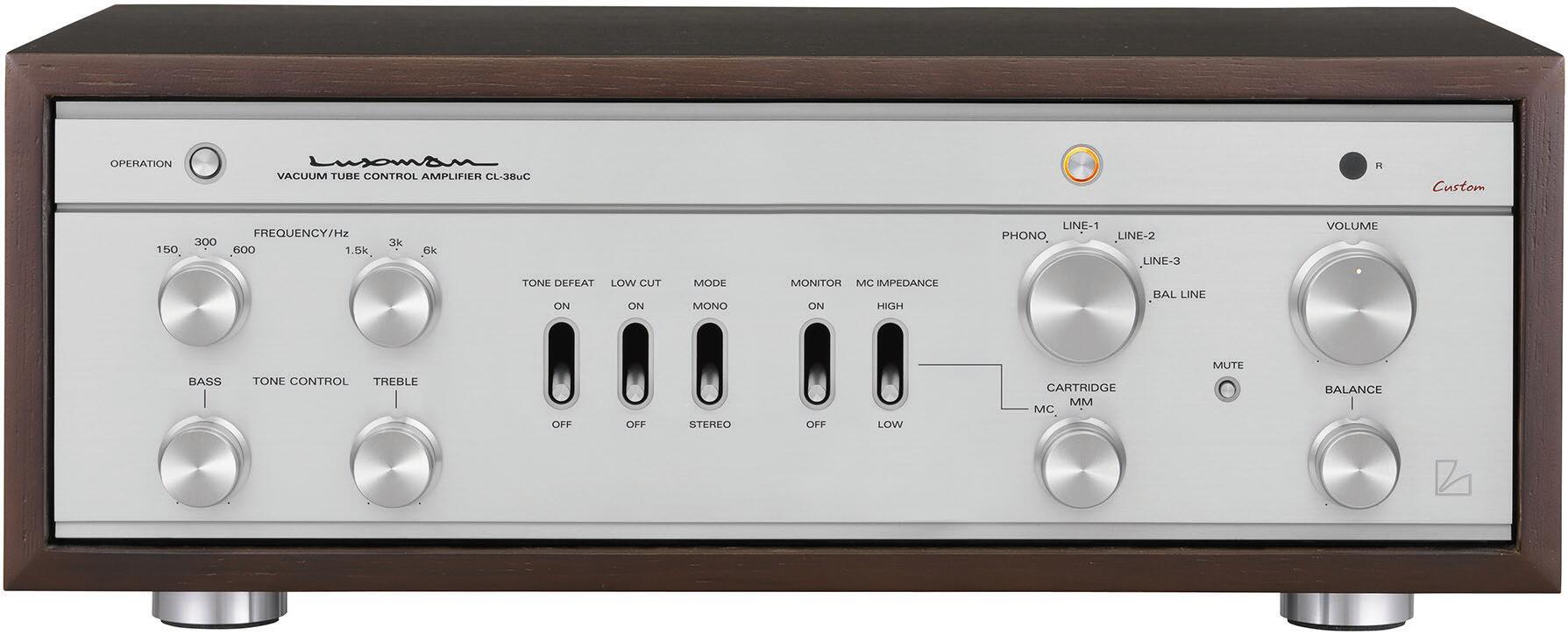
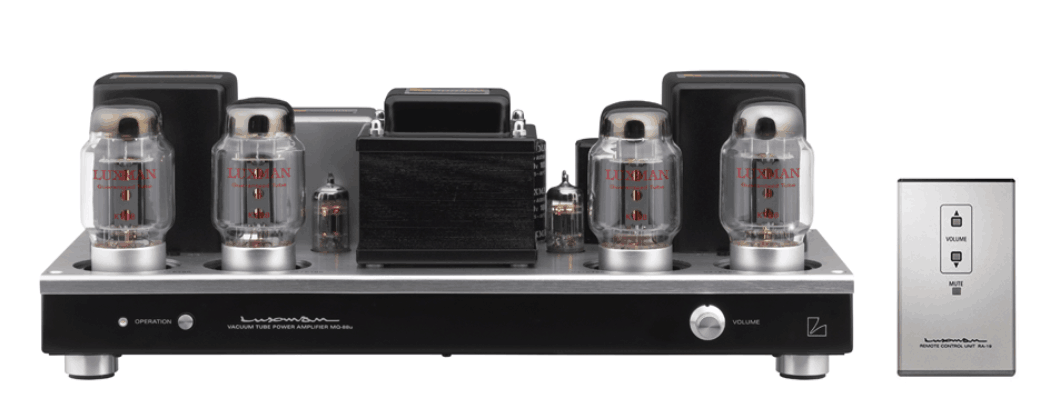
 Luxman 保留了木箱型機殼,因為它代表了38系列的傳統。不過底座已悄悄擴展到440mm 的寬度,這是目前 Luxman 產品的標準尺寸,有足夠的內部空間去安裝各支真空管;內部機箱充當全方位屏蔽金屬外殼。為了防止漏磁和消除噪聲,環形電源變壓器和扼流圈變壓器都有一體化的屏蔽外殼。
 CL-38uC 包含一個真正的唱放均衡器,MC 低阻抗和 MC 高阻抗(增益)輸入都有獨立的 MC 升壓器,藉 MC 阻抗槓桿掣進行選擇。日本機另一得人喜歡之處,是有音品控制(tone control)設施,使用家能夠微調音質,而不是被動「硬哽」個別軟件的不良音質。高音與低音的音品控制,不單是「多/少」的旋鈕調節;有三個crossover 頻率檔位可供切換,讓用家能將信號微調到所需的聲音個性。(高三檔:1.5K, 3K 和 6KHz;低三檔:150, 300和 600Hz)
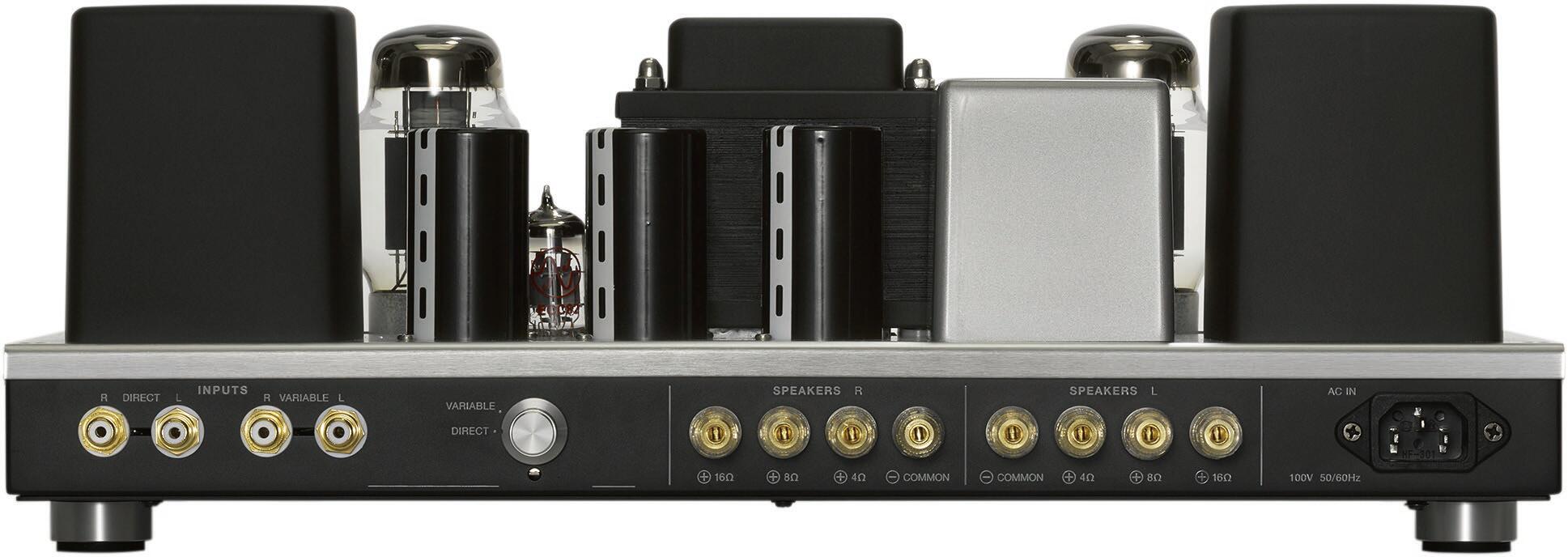
 為追求最高音質,CL-38Uc 每一級都用分流調節推挽電路(SRPP circuitry)。這電路確保了平直的頻率響應,並具有低輸出阻抗(300歐姆)、低失真和延長的真空管壽命等多項優點。由於目前許多 high-end 器材都有平衡式輸出,CL-38uC 具備平衡輸入端子;而且廠方為它們配備專用 transformers。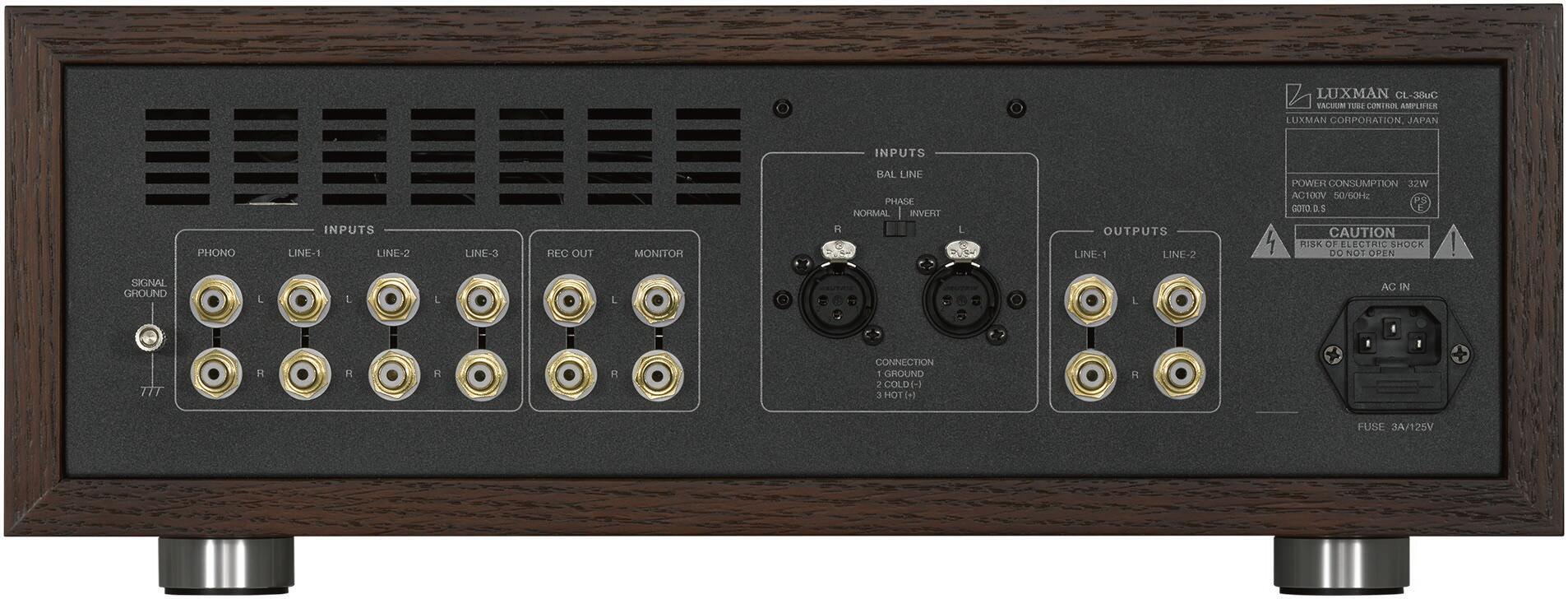
 Jocelyn B. Smith《Live in Berlin》第二、三首 ‘You Gotta Know’ 及 ‘We Need Love’ 沒有「考機」的極端元素,不過音樂張力的建築,就「考」Hi Fi 是否「夠音樂感」。CL-38uC 和 MQ-88uC 聽得我津津有味,不自覺地踏腳打拍子。
 近來愛聽 Patricia Petibon 的《French Touch》,上月試喇叭我也有用。今次喇叭與擴音機轉了,我坦承聽這CD今次滿足感更大。也許是「胆」的功勞,Petibon 飆到最高的音時,聲音還是十足飽滿滋潤的!
 《inakustik Great Voices Vol.1》採用了 UHQ-CD 方式去生產,效果美滿。裏面發燒友最熟一曲,應該是 Chris Jones 的 ‘No Sanctuary Here’。這錄音有朋友說「靚是靚,但低音多了一點」。不在此討論這個錄音低音是否「多了一點」,這可能關乎「個人口味」但更多是關乎你套傢生播出來是如何。想講的是,如果你對低音有甚麼意見/要求,又如果你用的是 CL38Uc 前級,一切迎刃而解——運用音品控制調整:分別試試150, 300 和 600Hz 三個檔,扭高扭低,包你找到最啱心水的低頻質量。
 應該輪到用廣東歌試音了。我播放「新寵」《一屋寶貝音樂廳》,無論男聲女聲、獨唱合唱,都「美聲」(Bel canto)得讓人不知時光流逝,一聽到尾!管弦樂伴奏也交待得毫不含糊。《環球高歌陳百強》有不同年代歌手向Danny致敬,老一輩歌手最寶刀未老的是盧冠廷(唱「突破」),最有驚喜有二:蘇永康唱「從今以後」(碟上流行度較低的一首),關淑怡唱「漣漪」。我家中Hi Fi也是「胆前胆後」,但講到「冧」的感覺,是在公司聽這一套系統時更強、較享受呢。
 最後要用古典CD試。聽的是 Vilde Frang 拉巴托第一小提琴協奏曲與 Enescu 的弦樂八重奏。CL-38uC 和 MQ-88uC 交待小提琴協奏曲的場面與氣勢固然不錯,然而Octet裏八把弦樂器的「七嘴八舌」對話,更引人入勝;可以說表現盡這套系統的分析力與「音樂感」。