

This is the world I grew up in: iPods, ear buds, tinny laptop speakers. Most people my age don’t think twice about their equipment, so long as it makes sound. Your average iTunes a cionado isn’t going to shell out big sums of cash on stereo equipment, especial- ly when everything seems to have speakers built in these days. Why bother?
But there is good sound at approachable prices, fantastic sound really, the sort of sound that people obsess about. It’s not a mystical thing; it’s a visceral one; and younger people are nally starting to gure it out. Vinyl’s comeback is proof of that. The iPod generation is ready for quality; it’s just a matter of guring out how to get it. And for me, it always starts with speakers.
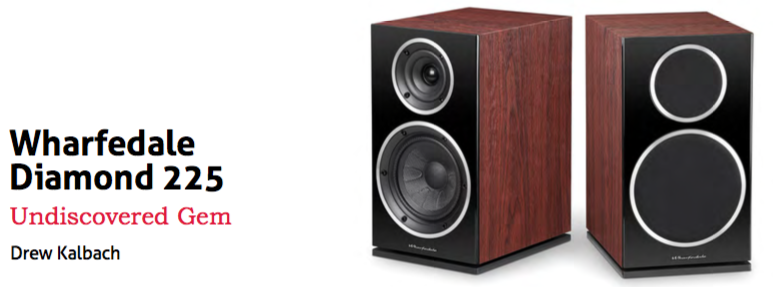
There’s nothing better than opening something new, which is probably why people watch videos of strangers unboxing hard- ware on YouTube. The Wharfedale Diamond 225s sat wrapped in plastic covers sandwiched between tight foam inserts at the top and bottom, keeping them secure in transit. When I nally got them up and out, I stared at the gorgeous rosewood-ve- neer boxes, with their black-lacquer MDF baf es and the small Wharfedale logo just beneath the woofer. I leaned back in my desk chair and thought: “Wow, those are pretty.” They’re clean, unpretentious, and clearly put together very, very well.
OK, the speaker grilles were a little weird. They’re two round foam pieces with little plastic rods that snap in over the tweet- er and the woofer, leaving the rest of the baf e exposed, as opposed to something that covers the whole front. It’s not my favorite aesthetic choice, though it’s not necessarily a bad one, either. Just a matter of taste, I guess. At least they’re easy to remove, so I popped them off and forgot about them.
The 225s are fairly compact, though deep and solid. Sound is always the most important aspect of any audio component, but you still have to live with these things, and it’s easier to live with beautiful stuff. Fortunately, they’re exactly what they need to be: simple and attractive. Clearly the people at Wharfedale know what they’re doing, which makes sense, considering how long they’ve been around. Wharfedale is a relatively large British out t founded back in the 1930s, and they’ve been a big name in British hi-fi ever since. The Diamond series debuted in 1981, and Wharfedale has been slowly improving the Diamond designs and sound without inflating cost, and that’s exactly what I’m looking for.
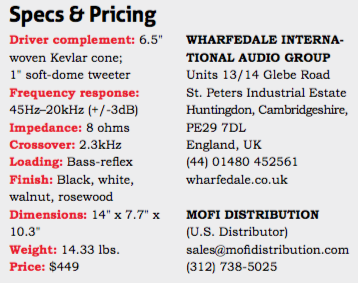
The 225s list at $450, which is a price an actual human with a real job could potentially afford. If you’re like me, and you’re sick of “affordable” equipment pushing easily into the $1000 range, this review is for you. Fact is, the majority of people can’t shell out the cash for the absurdly hyper-expensive audio equipment that clogs up most blogs. If we want to get the next generation to fall in love with great sound, I think it’s about time to accept that there’s some seriously good, affordable stuff worth writing about.
So with all that in mind, I put the 225s on top of my cheap stands, hooked them up to my (also British) Cambridge Audio CXA80 integrated, and turned it all on. Truth is, my listening space isn’t ideal. It’s small, oddly shaped with a sloping roof, and my speaker placement is limited. They have to be up close to a wall, though fortunately for me, these Wharfedales were designed with that in mind. The slot-loaded bass port res downwards, instead of back, minimizing room inter- action. So don’t worry about sticking them on either side of an entertainment system in the living room, for example, or squeezing them into a small of ce. Like I said, we have to live with these things, and space is sometimes at a premium.
Diving into the sound, I wasn’t sure what to expect. Bookshelf speakers typically aren’t known for deep, earth-shaking bass, and the 225s are no different in that regard. They aren’t going to rattle anyone’s bones and dig deep into that 40Hz bass region, which is fine—that’s what a sub’s for. Still, when I started with “Sparkle,” the rst track on Tatsuro Yamashita’s City Pop masterpiece, For You, I got such a satisfyingly deep drop that I didn’t find myself missing the lowest of the low registers. Frankly, I didn’t find myself missing much of anything at all, especially when that clean, twanging guitar played its insanely catchy riff. The opening of “Sparkle” features a heavy, show-stopping reveal, and the 225s were more than up to the task of reproducing that big moment. I was surprised by how but I think it’s so much more than enough for my small listening space. I can’t say how well they’d do in a much larger room, although I suspect they’d be up to the task.
The other good thing about “Sparkle” is the way Yamashita’s voice is recorded. There’s tons of reverb and space, his notes just drifting off into the background, and the 225s highlighted that nicely. For such small speakers, these things could create an impressive soundstage. Not the greatest, most spectacular presentation, but plenty to keep me engaged. Sound hung, drifting, projected nicely in both directions. At some points at higher volume, I noticed a bit of gristle in the upper registers, and sometimes the lower end felt a bit soft. I have to admit though, I was having fun just running through my favorite sides, one after the other, looking for any sonic detail that might be worth delving into. That’s the best sign that a piece of equipment is working. These little boxes just seemed to get me.
But I had to push the 225s, give them something challenging. That’s the whole point of a review, after all, to see how these things really perform. I turned to one of the strangest and most complicated albums of the year, King Krule’s The Ooz. This double-LP is as idiosyncratic as it is fascinating. On the most basic, surface level, it’s an experimental trip-hop masterpiece, but I think it’s so much more than that. It’s a sonically dif – cult album, with deep, rolling bass lines, up-tempo shifting beats, and Krule’s own morphing, grinding voice switching registers at will. The 225s did not disappoint me. They had a solid grip on the bass, keeping up with the hairpin-turn bumps and rumbles. The horns blaring in the background of “Dum Surfer” were rendered but- ter-smooth, along with that catchy guitar floating over the tight snares. I was drawn to the way the 225s made THE Ooz, somehow more accessible. It’s such an intricately layered album and little details such as Krule’s English slang could easily be missed if anything muddy got in the way. I could feel the de- tails of his voice despite the heavy synths and shimmer- ing guitar effects. The 225s did a great job of creating a solid soundstage with minutely differentiated pieces. These songs felt so simple at first listen, but it took a piece of equipment like the 225s to do this level of complexity justice.
Finally, I wanted to hear how the Diamond 225s would deal with rich, complex upper-range vocals. These speakers could handle bass and midrange, but I was curious as to how they’d do when it came to subtlety. For that, I turned to Moses Sumney’s odd, pared-down, R&B-influenced album, Romanticism. Sumney’s music focuses so much on his intense, wonderful, lilting falsetto, which nicely showcased the 225’s ability to highlight delicate high-end and midrange detail as he moved through registers. I had a feeling the 225s would be plenty engaging with a softer sound, and I wasn’t disappointed. The bass guitar on “Man on the Moon (reprise)” barely kept pace while Sumney’s vocals played above it, yet through the 225s the layers ofSumney’s voice came through clean, uncolored, and almost liquid. I didn’t really understand this album on first listen, but as I went through it again and again on the 225s, I came to really love its low-key cleanliness. In the end, I think that’s the real strength of the 225s. They weren’t throwing the deepest bass or resolving the upper registers absolutely perfectly, but they had weight right where I needed it, a;ong with the details and the clarity necessary to resolve complex tracks into enjoyable musicality.
 These speakers remind me that the “entry-level” isn’t a bad place to be. Inexpensive components are getting better and better as high-end design trickles down into supposedly budget hardware. The diamond 225s take everything good about high-end audio, the power of beautifully reproduced music, and they make it accessible to a wider audience. I believe the 225s would satisfy just about anybody for fantastic-sounding speakers design by a respected manufacturer at a reasonable price. They’re not perfect, but man, they’re still more than good. I highly recommended them.

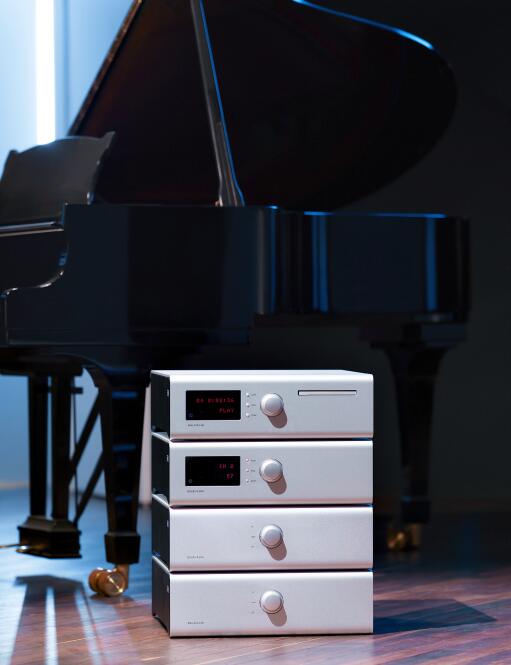
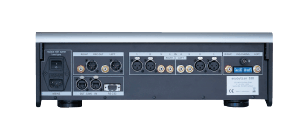
 承襲 7系列,售價相對便宜 簡單講過 Soulution 的來龍去脈, 準備進入本文。Soulution 的高價系列是 7系列,相對平價系列則是 5系列,5系列包括 520前級、501單聲道 後級、530綜合擴大機、540 Digital Player,以及 590 USB Converter,這次要寫的是 520前級與 501後級,先說 520前級。它的外觀跟我寫過的 540 CD唱盤完全一樣,只是 CD 唱盤多了
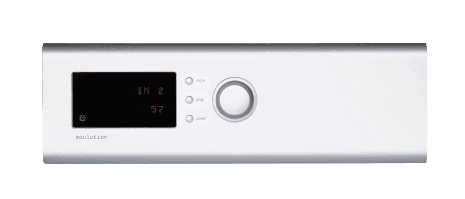 520 前級面板雖然簡單,但那個旋鈕卻同時擁有數種功能。在正常狀態 下可以控制音量大小。再輕按一下會讓音量控制失效,按久一點再放開可以進入輸入端切換選擇,選取您要的 輸入訊源。如果要進入選單設定要怎麼做? 按住 Prog 鈕不放至少10 秒鐘, 就會進入選單模式,接著旋轉大旋鈕來選擇想要的項目,選好之後再按一下大旋鈕表示進入,接著可以轉動大 旋鈕來改變數值,最後再按一下大旋鈕來表示 OK,這樣就設定完畢了。其實這些簡單的設定沒有太大的需要, 出廠時都已經設定好常用狀態,就算 您不去動他都可以正常使用。
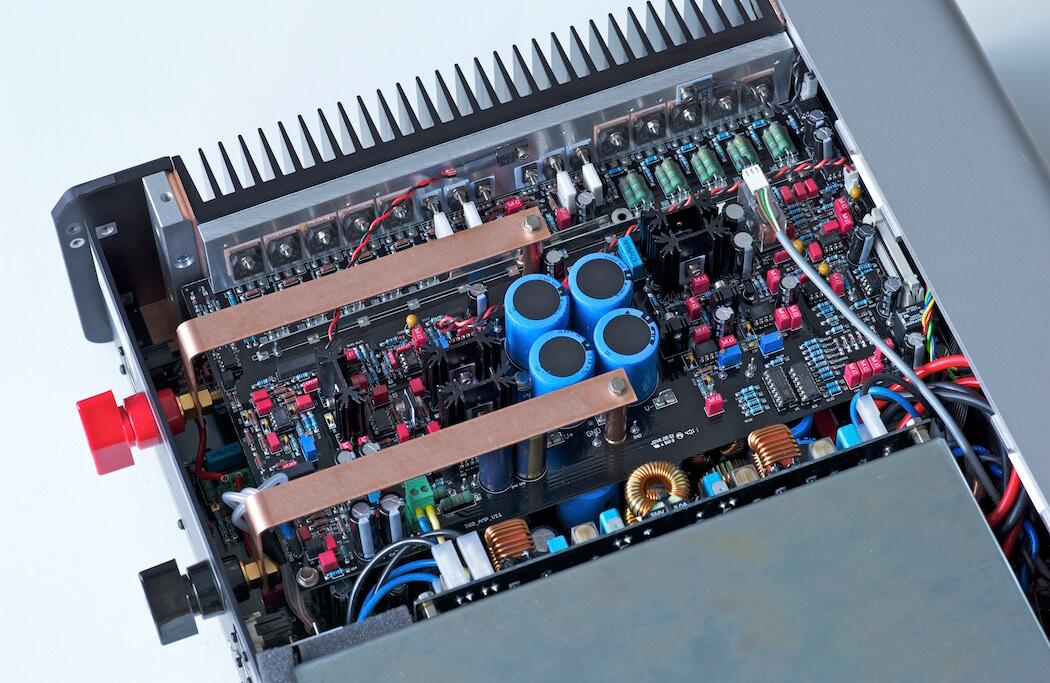
 在輸入端方面,520 跟其他前級一 樣,採用繼電器做切換,避免各輸入端相互干擾。而在音量控制方面,520 採用雙層設計,第一層為精密金屬皮膜電阻跟繼電器所組成的 R2R 級進式音控系統。為了怕改變音量時失誤,突然 產生的強烈音量損及後級與喇叭,另外
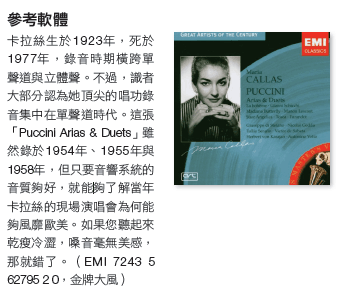 到底這套前後級的音質是怎麼迷人法? 在此我先不用什麼發燒片,就拿單聲道錄音為例。我用卡拉絲那張 「Puccini Arias & Duets」(EMI 7243 5 62795 20),這張CD 的原始錄音時 間是1954、1955與1958年,我要聽的不是錄音的音效,而是卡拉絲嗓音 音質。一句話: 520、501 把卡拉絲嗓音的美質唱出來了,那是如綢緞般滑 潤的嗓音,沒有尖銳,沒有乾澀,不 會削瘦,不會緊繃,反而是豐潤、有 水分、飽滿與寬鬆的嗓音,這樣的嗓 音說明了這套 Soulution 前、後級音質之美。